


On is making a bigger play for American shoppers, one store at a time
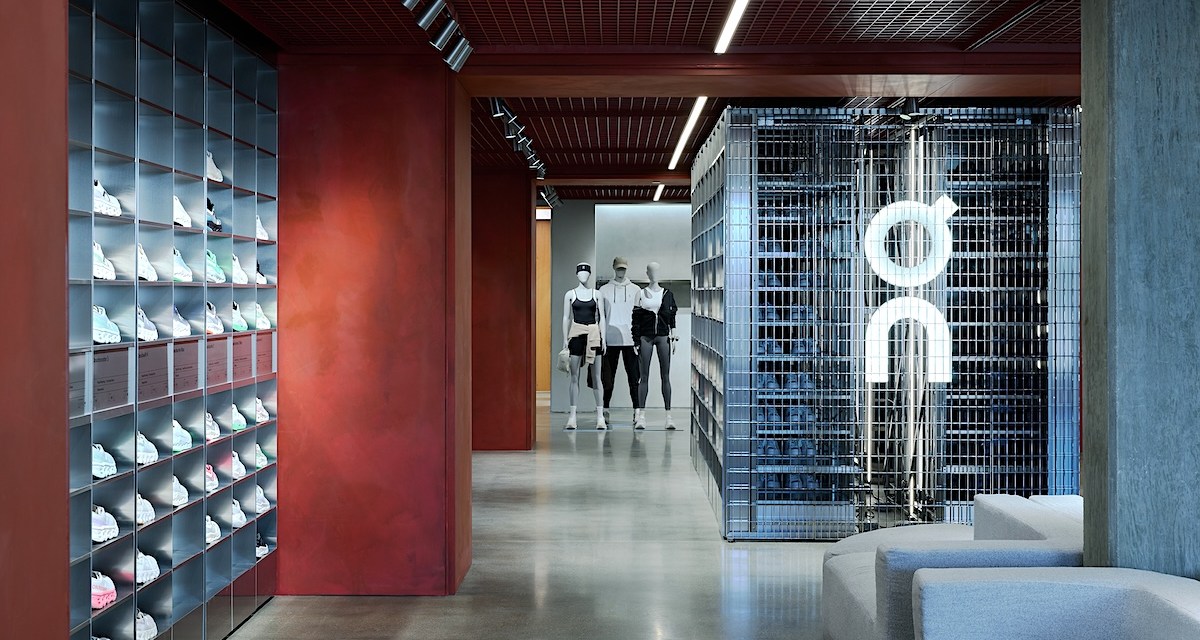
Swiss sportswear brand On is gearing up for a bigger U.S. retail push.
The company, which launched in 2010, has 30% brand awareness in the U.S. today. It’s now stepping up its direct-to-consumer efforts as it looks to convert more shoppers. By the end of 2026, On will have opened nine new U.S. retail stores, bringing its total U.S. fleet to 23 locations. In October alone, it added three stores in Florida, Pennsylvania and Virginia. In December, it will open a 3,200-square-foot store in Southlake, Texas.
On, a challenger to industry veterans like Nike and Adidas, is relying on its stores to connect with customers and point to its differentiators in an increasingly crowded athleticwear space. While much of On’s store assortment highlights running — a sport it considers its core business — it also communicates the brand’s role in other areas, like tennis and yoga. And while some shoppers may know On for its footwear, the brand relies on stores to prop up its apparel, accessories and head-to-toe looks.
Investing in physical retail could help On grow its cachet stateside, said Dan Schade, vp and gm of the Americas for On. “We have a very loyal and committed following, but there are things about our brand that people still don’t know yet,” he said. “There are new sports that we’re going to get into now, or in the future. With awareness being at 30% [in the U.S.], we have this huge opportunity to welcome a large new audience into the brand. … And stores play a huge awareness-building role for On.”
On, even with that white space, has been on a hot streak. In its third quarter, which ended in September, On reported record quarterly net sales of $1.1 billion and its highest gross profit margin in history. DTC accounted for 42.2% of net sales. On is now working toward achieving at least 5.6 billion Swiss francs ($7 billion) in annual net sales by 2029.
In the U.S., On makes sales from its website, its stores and its retail partners, like Fleet Feet. Consumers interact with the brand via different channels, but On has “a really strong DTC business” in the U.S., Schade said. “It’s growing in a really healthy way,” he added. On’s recent quarterly net sales in the Americas jumped 12.4% year over year.
On, still an unknown name to many Americans, sees particular value in stores amid a broader running boom. For one, stores help consumers understand On’s value proposition, Schade said. That includes its technologies around compression, moisture-wicking or energy return. In stores, footwear is labeled according to factors like “lifestyle,” “all-day wear,” “technical terrain” and “trail running.” Many styles have rankings for cushioning and stability.
Stores also help with a “head-to-toe storytelling opportunity,” Schade said. On’s store in the Flatiron neighborhood of New York City, for instance, has a running section and an outdoor section, as well as areas for training, lifestyle, studio and kids’. Apparel — a bigger focus for On — is sprinkled throughout the store, alongside sneakers, baseball caps and bags. Various outfits and accessories are organized by color scheme, like purple and brown.
On is counting on this more complete approach to merchandise as it expands into more sports, like football (which it entered in September) and golf (which it will enter in 2027). “We use our retail stores to bring it all under one roof and to help people navigate the full breadth [of our merchandise],” Schade said. “[We’re] finding more ways of mapping the brand into their lives.”
On’s newest U.S. stores follow other recent openings. In April, On opened its first store in Boston. In August, it opened its first store in Dallas. On opened four locations in California — in San Francisco, Corte Madera, San Diego and Los Angeles — between July and October.
Internationally, On has opened stores this year in Seoul, Madrid, London and Shenzhen. Stores tend to have a halo effect; On sees its e-commerce and wholesale sales rise when it opens a new location, Schade said.
On is one of several brands investing in physical retail as customers seek to browse and buy merchandise in person. For instance, Cotopaxi plans to double its store count from 20 to 40 locations over the next three years, while 2025 was the first time in 18 years that Pacsun increased its store count, rather than decreased it. And for all the hype around digital and AI shopping, Americans still spend 81% of their retail dollars in physical stores, per Capital One Shopping.
On is also opening more U.S. stores as its American counterparts expand into Europe. Saucony opened its first European flagship in London’s Covent Garden last year, and will open a new location in Paris in December. Hoka recently opened doors in Berlin, Milan and Chamonix in France. For the first nine months of 2026, Brooks Running grew its business 24% in Europe, the Middle East and Africa, compared to 9% in the Americas.
Ultimately, as it works to grow market share in the U.S., On is counting on its stores to provide a sensory experience that other channels can’t.
“There’s such a difference between seeing the brand on someone else’s foot or body, or through the window, or even holding the product, [and] really trying it on,” Schade said. “It’s a different level of connection, and it’s usually that ‘aha’ moment.”