


JCPenney’s top-selling brand is a private brand
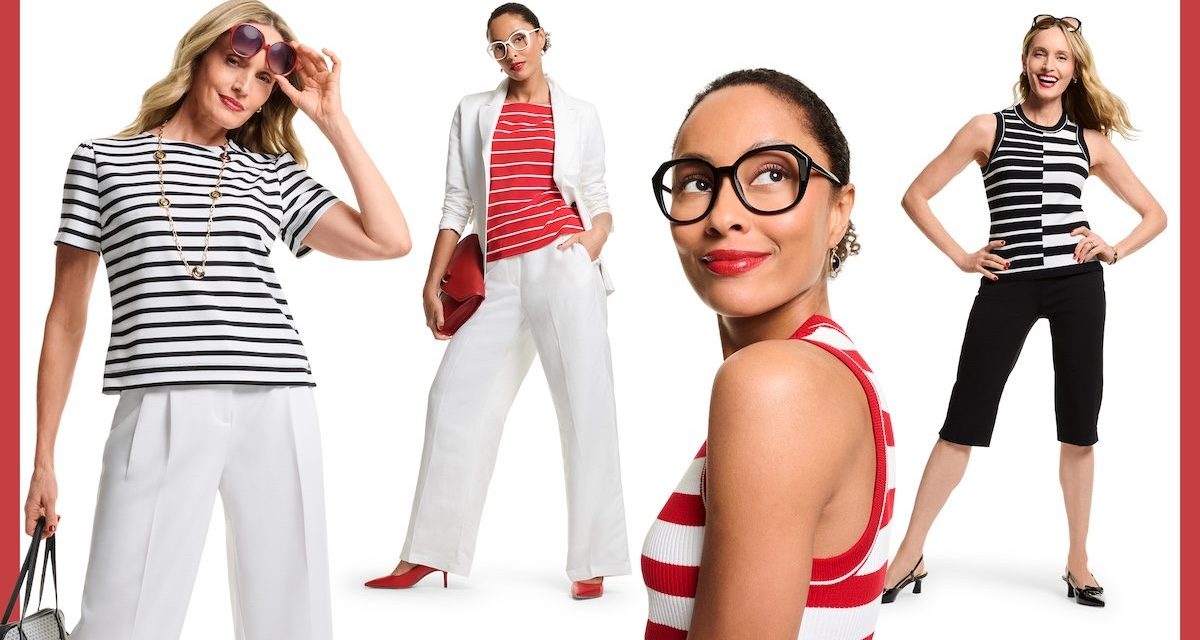
Private brands are winning at JCPenney — so much so, that its top-selling brand is a private one.
St. John’s Bay, a private apparel brand under JCPenney, is ranked first in sales across the entire JCPenney portfolio, beating out national brands like Nike and Levi’s. Meanwhile, the private brand Liz Claiborne is one of JCPenney’s top overall women’s brands, when taking into account different categories like apparel, shoes and handbags.
Private brands, in general, are flourishing at JCPenney as inflation-weary shoppers look for more affordable options. At JCPenney, private-brand sales penetration has increased by 5 percentage points since 2019, CEO Michelle Wlazlo told Modern Retail. Today, private brands represent more than 50% of JCPenney’s total business, with particular momentum across petite and plus sizes. JCPenney carries dozens of private brands, including Arizona (jeans), Home Expressions (bed and bath) and Worthington (women’s professional wear).
Private brands aren’t new at JCPenney. The retailer launched its first in-house brand, Marathon Hats, back in 1914. Big Mac shirts followed in 1928, along with Penco sheets in 1930. But private labels are particularly catching on with today’s cash-strapped shoppers, many of whom are dealing with higher gas prices and rising costs. With more shoppers prioritizing value, JCPenney is making private brands a major part of its marketing and merchandising strategy.
JCPenney has featured private brands like Worthington in recent ad spots such as “Yes, JCPenney” and “Really Big Deals.” It has also paired up with celebrity designers including Jason Bolden on private labels, and it recently celebrated the 50th anniversary of Liz Claiborne with an exclusive capsule collection. Overall, JCPenney is building up its private brands to “ensure every customer can express themselves confidently, without compromising style or quality, regardless of budget,” Wlazlo said.
JCPenney isn’t alone in focusing on private brands. More retailers, encouraged by private-label sales, are pouring money into updating the look, quality and feel of their own lines. Aldi recently revamped its private-label packaging, while Walmart announced a redesign of its Great Value brand earlier this year. Macy’s rolled out four new private-label brands in 2025, as part of a larger private-brand overhaul.
Private brands are becoming popular among shoppers. A 2025 Gartner survey found that 77% of respondents said store brands can be just as good as, if not better in quality, than name brands. Meanwhile, 52% said they would prefer to buy a retailer’s premium or private-label brand over a similarly-priced name-brand product.
“Private-label brands are attractive goods, not just dollar-bin-saving type of commodities,” Kassi Socha, senior director analyst at Gartner, told Modern Retail. “Private label continues to pick up, not just because of discretionary spending pressures, but also because retailers are heavily investing in updating their private-label brands.”
At JCPenney, private apparel brands, in particular, are “customer favorites across age groups,” from adults to teens to kids, Wlazlo said. Many of JCPenney’s private brands are at competitive prices — St. John’s Bay sells T-shirts for $12 — but keeping these brands relevant and stylish remains key, too, Wlazlo said. To quickly churn out new looks and stay on top of trends, JCPenney relies on its in-house supply chain. Designers at Liz Claiborne, for instance, are focused on meeting demand for florals, stripes and polka dots, Wlazlo said.
Apparel, in general, is becoming a bigger field for private-label products. Twenty percent of respondents to Gartner’s 2025 survey said that, when buying clothing, they bought more store brands. Another 40% said they bought a mix of store brands and name brands when purchasing apparel. At Anthropologie, owned brands are so popular that they made up 71% of the business by July 2025. The company has since opened its first standalone store for its private brand Maeve.
“In today’s consumer world, a little black dress is a little black dress,” Gartner’s Socha said. “There are certainly brands that are still succeeding outside of private label, but there’s a consumer who is open to finding cost savings … in their everyday apparel needs, so that they can make more considered, focused purchases in the things where branding really does matter to them.”
To that end, JCPenney isn’t selling its private brands in a silo. In stores, it highlights its own brands along major national ones, “so our customer never feels they have to choose between the two,” Wlazlo said. At the JCPenney store at Stonebriar Centre in Frisco, Texas, for example, men’s Levi’s jeans sit next to the private brand Mutual Weave. Meanwhile, Xersion, a private activewear brand, is right in the mix with Nike, Adidas and Puma. This approach helps drive awareness of private labels, while allowing customers to mix and match styles, Wlazlo said.
St. John’s Bay, which marks its 40th anniversary this year, likewise sits alongside other brands in the casual-wear space. While JCPenney did not break out sales for St. John’s Bay, the private brand has become a “beloved and trusted brand within JCPenney,” Wlazlo said. Customers tend to buy new colors of their favorite styles each year. One of the brand’s biggest selling points, per Wlazlo, is that it is “deep and versatile,” with “offerings that truly feature something for everyone.” Its top performers include cable sweaters, tees and shorts.
JCPenney, as a whole, is focusing on private brands as it tries to get back to growth. In 2023, the retailer announced that it was working to funnel $1 billion back into the business by fiscal 2025. Two years later, it merged with Sparc Group to form a new fashion retail entity called Catalyst Brands. In 2026, JCPenney is still in the process of a turnaround. Earlier this year, JCPenney reported that its third-quarter net sales fell 3.8% year over year, to $1.36 billion.