


Brands Briefing: Behind True Religion’s path to $1B, from TikTok Shop to TJ Maxx
This is the latest installment of the Brands Briefing, a weekly Modern Retail+ column about the growth strategies of modern brands. More from the series →
True Religion is investing more in influencer marketing, TikTok Shop and more to fast-track its quest to become a $1 billion brand.
True Religion set this goal in 2025, and it will get more than halfway there by the end of this year. True Religion expects to bring in $550 million in revenue in 2026, up from $470 million last year, CEO Michael Buckley told Modern Retail. Going forward, True Religion hopes to round out sales by doubling its store count and supplying more merchandise to wholesalers, including off-price accounts. The brand is also entering TikTok Shop in September, and it aims to quintuple the size of its influencer program over the next six months to a year.
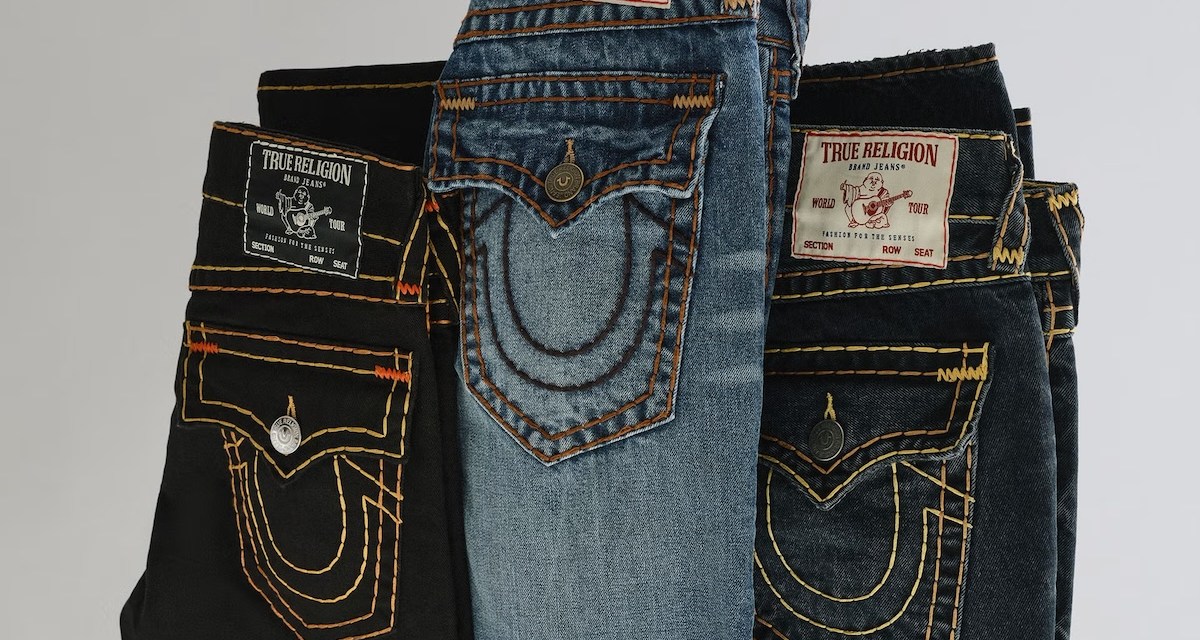
The changes are part of a larger turnaround strategy for the company known for its horseshoe-shaped stitching. Founded in 2002, True Religion was a major mall brand of the early aughts but lost some momentum in the 2010s as consumers embraced online shopping or turned to competitors. After declaring bankruptcy twice — once in 2017 and once in 2020 — True Religion updated its assortment, hired its first chief marketing officer, pared back its price points, grew its women’s business and focused more on digital. The company came under new ownership in early 2025.
True Religion doubled its revenue over the last three years, Buckley shared in an interview. But the company still sees room for growth, especially among women and young people who increasingly make purchasing decisions based off platforms like TikTok and Instagram. True Religion is also benefiting from a larger Y2K revival and hopes to lean into its cultural prestige.
True Religion estimates its total addressable market is about 110 million people. About 5-7 million customers are in True Religion’s database. “We want the consumer we have now coming back,” Buckley said. “But how do we get 10 million, 15 million, 20 million more consumers buying True Religion? That’s what’s going to take us to the top. We believe, long term, this can be a multibillion-dollar brand.”
Channel diversification will be key, Buckley said. Today, the average True Religion consumer is “the urban casual customer” — “someone who cares deeply about the brand, quality, style [and] authenticity,” he shared. Most customers are 15-50 years old, with an average household income of $75,000. Different age groups, though, tend to buy differently from True Religion. Millennials shop more online, while Baby Boomers and Gen Z shop more in stores.
Of the more than half a billion dollars that True Religion expects to see this year, about $200 million will come from e-commerce. Around $130 million will come from its dozens of retail stores. The remainder ($220 million or so) will come from True Religion’s wholesale accounts. The brand has a presence in thousands of doors, including Macy’s, Dillard’s, Zumiez, Urban Outfitters, TJ Maxx and Marshalls. As it expands, True Religion is thus looking to boost its presence across all of retail.
First, True Religion is opening locations in markets with existing demand, Buckley said. In June, the brand announced plans to open four new stores this year in Indiana, Florida, California and New Jersey. True Religion will have about 63 stores by the end of 2026 and aims to bring this up to 150 in North America over the next five years, Buckley shared.
“The entire fleet last year delivered 45% four-wall EBITDA,” Buckley said. “The stores pay back in one year.” Earlier this year, True Religion hired Skechers veteran Kristen Jones as its vp of retail to help scale its brick-and-mortar presence even further.
For customers who want to shop on their phones, True Religion hopes that joining TikTok Shop will power its e-commerce sales. “A lot of it is to drive new consumers to the brand,” Buckley said. “We think it’s going to be a predominantly women’s play.” This is important, he shared, as the company is working to bring its share of the women’s business from 35% in 2022 to 60%. Right now, the men’s and women’s businesses are about 50-50.
True Religion will tap both women and men for its creator program, which it hopes to grow from 200 members to 1,000 by working with an agency. Pairing up with public figures is not new for the brand, as it’s collaborated with Megan Thee Stallion and Saweetie. “[But] I think the consumer sometimes knows that’s a pay-for-play, to an extent,” Buckley said. “With the influencers, it’s more authentic, which is really important for us.” True Religion is funneling about 10% of its overall revenue into marketing alone.
At the same time, True Religion is working to build its business with partner retailers. Its wholesale business is growing 40% year over year. Buckley sees ample room to go into more doors with existing partners, as well as supply more merchandise to wholesalers. “Sales per door can probably go up two, three times from where they are today,” Buckley said.
Off-price partners are taking on more significance too, Buckley said. “Some of our consumers make less than $50,000 a year,” he said. “They absolutely have less money in their wallet because of inflation.” Gas prices are also up, and “we see that impacting the customer,” Buckley said. “We might promote a little more. We might sell a little more product to the TJ [Maxx], Ross and Burlingtons of the world.”
True Religion faces other challenges as it looks to grow. While only about 38% of True Religion’s business comes from jeans, the category has become more competitive. Jessica Ramírez, a co-founder of The Consumer Collective, recently noticed more jeans and jorts at Dick’s Sporting Goods, Adidas and Fabletics, she told Modern Retail. With athleisure brands now leaning into denim, “That just shows you the strength [the category] continues to have,” she said.
Going forward, True Religion is focused on a mixture of unique products and right prices, Buckley said. True Religion recently tapped streamer Wendy Ortiz for an end-of-summer denim collection, and it joined forces with Benefit Cosmetics on a limited-edition pocket keychain. It’s also gearing up for the holidays — its busiest time of the year — and is pushing jeans for back-to-school.
For a brand to be best-in-class today, “You have to be on trend,” Buckley said. “You have to sell [to] the consumer where they want to buy. And you have to have great marketing.”
What we’re reading
- Old Navy, Gap, Athleta and Banana Republic are now enlisting employees as creators. (Retail Dive)
- The CEO of Cracker Barrel is stepping down, nearly a year after its logo-swap snafu. (Reuters)
- Deckers Brands — the parent of Hoka, Ugg and Teva — passed $1 billion in Q1 revenue for the first time. (GlobalData)
What we’ve covered
- The back-to-school denim wars are starting earlier and lasting longer for brands like American Eagle and Pacsun.
- Lettuce growers Gotham Greens and Little Leaf Farms are on an awareness push amid the cyclospora outbreak.
- Welch’s Fruit Snacks is targeting Gen Z with functional snacks.