


Brands Briefing: Why employee-generated content is a priority for brands like Starbucks and Mephisto
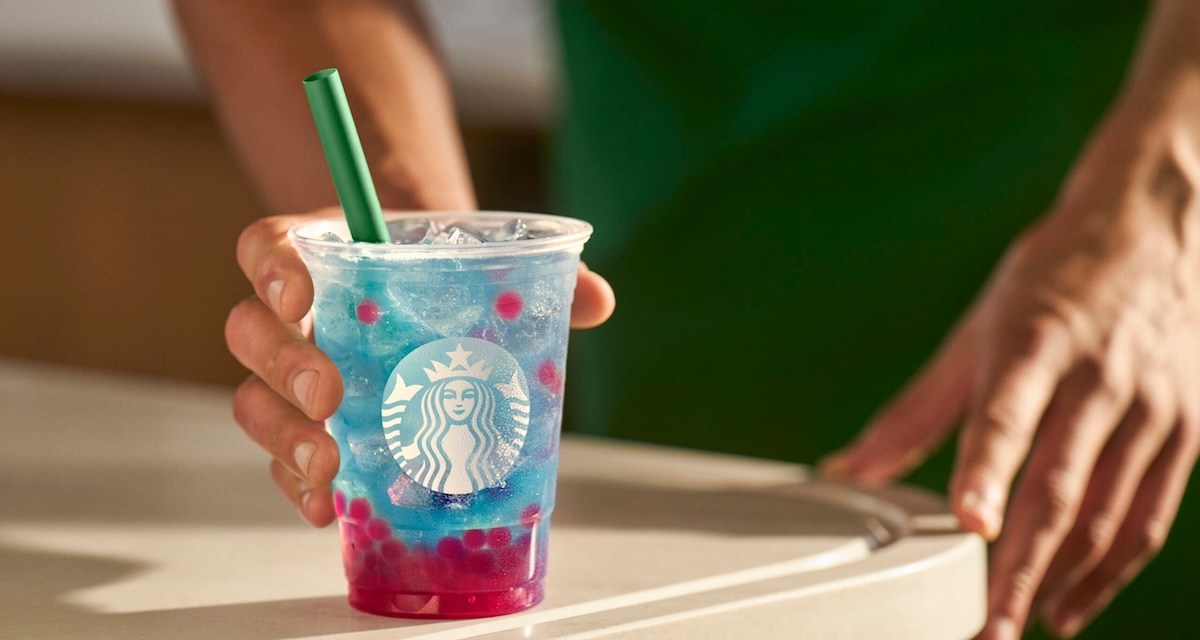
This is the latest installment of the Brands Briefing, a weekly Modern Retail+ column about the growth strategies of modern brands. More from the series →
Earlier this summer, Mephisto USA CEO Logan Bird took to LinkedIn to seek out a store manager for the brand’s new location in New York City. “But this isn’t a traditional retail job,” he wrote in a post. “I’m looking for someone who can sell shoes and create content. Every day.”
The ideal employee, he told Modern Retail in an interview, will appear on camera, drive traffic to the store and have the “influence and connections” necessary to crack New York City retail. They will earn a base salary, but also be treated as an affiliate, and they must be well-versed in fashion and footwear. “I want someone to come in with storytelling ideas and be able to leverage content that is going to make this store matter and make the brand more meaningful,” Bird said.
Mephisto is one of a growing number of retail companies looking for workers who can double as influencers. These employees film and publish what’s being referred to as “employee-generated content” — everything from a behind-the-scenes look at new products to “day-in-the-life” videos. While some staffers have been taping this content on their own — like an employee known as “Staples Baddie” — more brands are creating formal EGC programs in the hope of driving sales.
“A lot of companies, particularly this year, are waking up to the reality that having a creator on staff … is an incredibly valuable thing to have,” said Lia Haberman, the author of the marketing Substack “ICYMI.” “These people know the product, they know the floor, and they can talk, from an educational standpoint, more than someone who just started working with the brand can,” she told Modern Retail.
In fact, employees are already bringing a sense of authenticity and authority to brands’ content. About three-quarters (74%) of people recently surveyed by Harris Poll said employees are more influential than traditional marketing influencers. Meanwhile, a Sprout Social survey from June found that 61% of Gen Z (and 40% of the population overall) said they frequently learn about new products or services from EGC.
“People trust other people much more than [they trust] brand messaging,” Haberman said.
Some brands, happy with early results, are investing even more money into EGC. Starbucks, which established its Green Apron Creators program in 2024, is creating another program this summer, in partnership with TikTok’s Creator Network. Under the pilot, Starbucks will share briefs for content and compensate select creators through ad revenue sharing.
In an emailed statement to Modern Retail, Erin Silvoy, Starbucks’ svp of global marketing, said that collaborating with TikTok gave Starbucks “the opportunity to build a customized tool that allows us to celebrate and amplify our partners’ authentic storytelling.” She added, “We are elevating those who already love Starbucks and share that passion every day. As we continue to innovate in the employee creator space, we see this pilot as an opportunity to learn, test and evolve what comes next.”
Starbucks says its employees already post three times more than employees at similarly-sized retailers. Some of these videos — which don’t even push products — are getting comments like, “This is the best ad for Starbucks I’ve ever seen,” pointed out Lucy Robertson, who heads up the global brand marketing division at marketing agency Buttermilk. “The irony is that, obviously, those pieces of content live outside of this constructed program the company has created,” she told Modern Retail.
Haberman said it’s important that Starbucks employees who have long acted as both baristas and creators are getting compensated. But she also sees the program as a “game changer” more broadly. TikTok and Starbucks are “two of the biggest companies in the world,” and their investments in EGC are “incredibly validating” for the field, Haberman said.
Robertson, for her part, considers Starbucks’ new TikTok program an “interesting middle ground” between employees’ informal content and brands trying to hop on trends themselves. The latter “ultimately ends up being very cringe, which is a Gen-Z cardinal sin,” Robertson said. Starbucks can benefit because it isn’t necessarily creating more content — it’s just empowering employees to be creators, Robertson said. But she also acknowledged that Starbucks will have “an immense amount of content and people to control and have oversight of.”
For help with that process, some brands are partnering with outside platforms. One provider is Staff Start, an EGC company based in Japan that works with clients including New Balance and Levi’s. Using Staff Start’s app, employees upload videos or pictures of themselves wearing an outfit or using a product; that content then appears on the brand’s online product pages. Companies set their own commission rates.
Staff Start helps create a “person-driven form of buying,” CEO Yasuaki Onozato told Modern Retail via email. Customers think, “I want to buy from that staff member,” and even, “I want to meet that staff member,” he said. “In Japan, we’ve even seen a case where a 90-minute line formed for a single store staff member.” In Japan, brands using Staff Start see, on average, a 1.5X conversion rate. So far, the highest sales figure generated by a single EGC post under Staff Start has been 156.48 million yen ($960,000).
Today, interest in Staff Start’s services is “unquestionably increasing,” Onozato said. He attributed this to “rising advertising costs and a growing tendency for consumers to trust authentic, true-to-life content from real people.” The company is now exploring expansion into the U.S. and E.U. and is “redesigning the platform for Western UX,” Onozato said.
Even if brands don’t work with outside partners like Staff Start, some are thinking of ways to train employees on best EGC practices — something Haberman views as a necessity. Dick’s Sporting Goods, for instance, recently appointed “team captains” to help guide members of its creator program, including employees. The program, called Varsity Team, launched in 2021 and was initially only open to staffers before expanding to the general public a year ago. Sprout Social also recommends that brands provide employees tips on how to be confident in front of a camera.
The rise of EGC doesn’t mean that traditional influencers are going away. Starbucks, for example, still works with outside creators and celebrities, including Ciara. But experts like Haberman think there’s tremendous power in tapping employees to make TikToks — as long as the space doesn’t get too saturated.
“This is probably something that we should have all been doing 10 years ago,” Haberman said.
What we’re reading
- Reformation is targeting a valuation of up to $1 billion through its initial public offering. (Retail Dive)
- Adidas, which sponsored both finalists in the World Cup, expects tournament-related sales to reach more than $1.7 billion. (The New York Times)
- Some stores in Germany are opening their doors on Sundays, bucking a century-old ban. (The Wall Street Journal)
What we’ve covered
- Brands like P.F. Candle Co. are lending their retail spaces to other brands for events.
- Clothing company Untuckit is experimenting with robot-made T-shirts.
- Toy manufacturer PlayMonster helped engineer a Hacky Sack revival.