


Brands Briefing: Nike looks to build a football universe ahead of the World Cup
This is the latest installment of the Brands Briefing, a weekly Modern Retail+ column about the growth strategies of modern brands. More from the series →
As part of its larger “Sport Offense,” Nike is creating what it calls “a universe of football” in the lead-up to the FIFA World Cup, its attempt to grow its global market share within soccer.
The strategy is multi-faceted, Nike executives told members of the media at a press preview earlier in June. For one, there’s the product angle, including new federation kits, new soccer cleats and a new sportswear collection. In stores, Nike is making soccer-themed window displays and refreshing the look of some 5,000 retail locations. On the field, the brand is organizing community-led soccer tournaments through a program called “Toma el Juego.” And on screens, Nike is showing the world its love of the game through a six-minute feature film called “Rip the Script.”
Nike is debuting these initiatives ahead of the World Cup, which kicks off on June 11 and ends on July 19. The games will be the largest World Cup yet, with three host countries, 16 host cities and 104 matches. This year also marks the first time the World Cup returns to the U.S. since 1994. It’s a major moment for the country, but also a growth opportunity for U.S.-based sports brands like Nike, as soccer is quickly rising to become the country’s third- or fourth-most popular sport, by various estimates. Nike’s decision to use “football” in many of its marketing efforts, instead of the American term “soccer,” is also indicative of a more global approach to building its market share in the sport.
Nike says its soccer efforts are about global community, culture and a love of the game. “We are a sport company that believes in the power that sport has to give hope, to give joy, and Nike Football stands for that,” Camilo Andrade, global vice president and general manager of Nike Football, told reporters on June 3. “We believe that football can be a galvanizing force to bring the world together in a moment like this,” he added. “But not every story will be the same, and we want to make sure that consumers … can consume, engage and live football, in different ways.”
Nike has sponsored World Cup teams for years, but its bigger focus on soccer comes as the brand leans into sports more generally. Under CEO Elliott Hill, Nike is restructuring its operating model on core sports categories, including running, basketball and training. Nike’s global football strategy plays into this, Andrade said. “[It] allows us to have so much depth and breadth in how we connect all sports,” he explained. “We invite people into football from other sports through different pathways.”
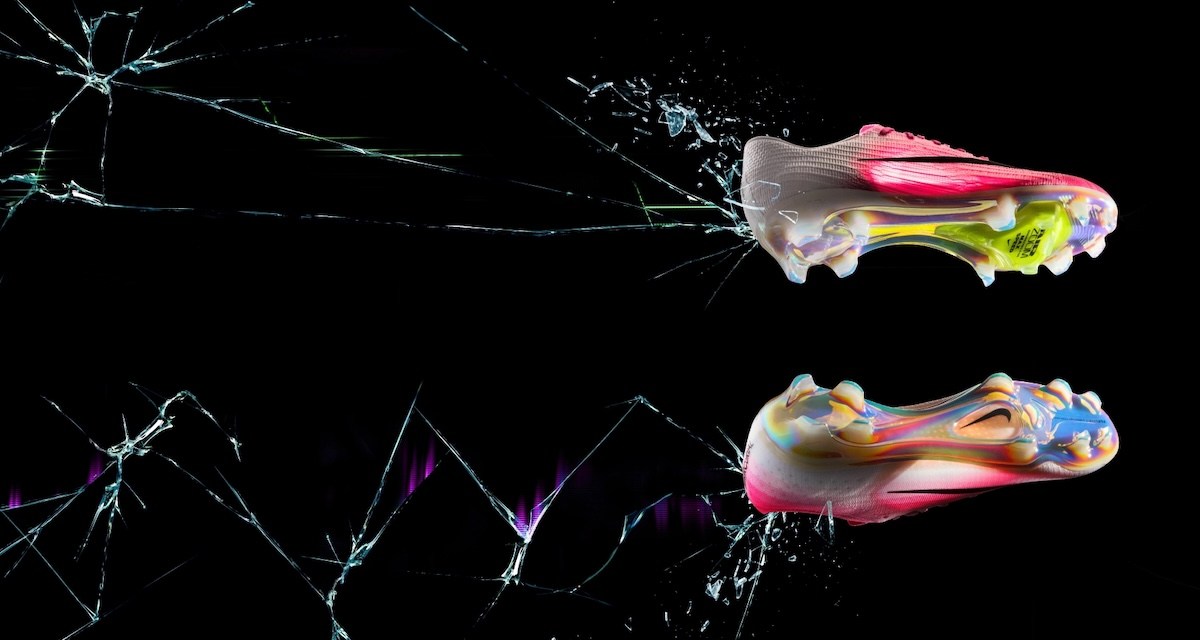
To that end, Nike’s new soccer products appeal to different sensibilities. Nike’s federation kits feature the brand’s Aero-Fit material, which is stronger and more breathable for athletes playing in the heat. Its soccer cleat products (Mercurial, Tiempo, and Phantom) have been updated for the World Cup with a new bright pink colorway. Off the pitch, Nike’s seven X2 collections — in which it paired up different designers, federations and community organizations — lean into a more local point of view. Additional consumer-focused sportswear has more of a skatewear feel, while Nike’s Cryoshot sneaker is inspired by a 1998 Mercurial cleat worn by footballer Ronaldo Luís Nazário de Lima.
In conversations with reporters, Nike executives championed the products’ innovation and versatility. Tom Nikic, a managing director who covers Nike for Needham & Co, took notice of the company’s “impressive assortment.” In a note shared with Modern Retail, he wrote, “While sales directly tied to World Cup product likely won’t move the needle for [Nike], the hope is that the attention the brand receives during the event, coupled with compelling products to be worn both on and off the pitch, results in sustained growth beyond the 6 weeks that the event takes place.”
On June 4, Nike debuted its signature soccer film, “Rip the Script.” The brand worked on the campaign for the last year and tapped a wide range of talent, from Cristiano Ronaldo and Kylian Mbappé to Kim Kardashian and Channing Tatum. The plot revolves around a shoot for a Nike commercial in which players deviate from their director’s orders, “go rogue,” and start passing and kicking the ball around an entire studio lot. “It’s a rallying cry to play football — to play it with instinct, to play it with freedom and to play it with imagination,” Helena Thornton, vp of brand marketing at Nike, told reporters.

“Rip the Script” is a who’s-who of celebrity cameos — Lisa from Blackpink is also there, as is LeBron James — but it’s also about self-expression, Thornton said. “We’ve spoken to players at every single level of the game, and the one thing we’ve heard consistently, time and time again, is that they’re kind of tired … of the voices telling people how to play football,” she said. “Nike Football stands for creativity, for attacking, for instincts and for joy. … The entire Nike Football universe is a celebration of that side of the game.”
“Rip the Script” is also full of “Easter eggs” that will come to life over the next couple months in products, marketing and events, Nike teased. “We have to acknowledge that people don’t just want to consume linear, sequential cinematic stories anymore,” Thornton said. “They want to be able to discover stories in pieces. They want to clip it, share it, remix it, badge it, wear it, banter with their mates about it and experience stories in real life.”
“Rip the Script” imagery is currently rolling out across Nike stores and those of its wholesale partners. But it’s just one component of Nike’s larger retail refresh at this time. The brand’s New York City-based House of Innovation — a 68,000-square-foot, five-story retail space — is setting up merchandise and flags across most of the store, including in women’s and men’s areas. The first floor has a jersey personalization area, as well as large-scale mannequins kicking soccer balls. The fifth floor shows off Jordan’s blue-and-yellow away jersey for Brazil. Window displays — all football-themed — will change depending on which countries are playing nearby matches at MetLife Stadium, a store manager confirmed to Modern Retail.
Farther downtown in New York City, Paragon Sports near Union Square is showing off its selection of Nike jerseys and cleats in different spots across the floor. And in Soho, at 21 Mercer Street, Nike is leaning into its football heritage with an archival exhibit dedicated to the Mercurial cleat. House of Merc, as the pop-up is called, shows off versions of the cleat over the years, as well as two new versions: the Vapor 17 and Superfly 11. The activation runs through July 19.

All across the country, Nike is bringing soccer products and imagery to thousands of stores and sporting goods stores. “Overall, our goal is really to create distinction and dimension in the marketplace, particularly when it comes to an event like the one that’s happening this summer,” Mary Remuzzi, Nike’s senior vp of corporate communications, told Modern Retail. “We do that by working with our partners to transform many of these retail spaces into really immersive football destinations,” she added. “We really want [customers] to have a premium experience.”
Ultimately, for Nike, a moment like the World Cup shows that “football is culture,” Thornton said. Andrade added, “This allows us to connect the dots and show the world how we want the world to feel about football. … We’re so excited, because in moments like this, it’s all about the stories.” Now, Nike just has to wait for the actual kickoff.
What we’re reading
- The daughter of Mrs. Fields is starting her own healthy cookie company called Fields Good. (The New York Times)
- Campbell’s sales declined this past quarter, partially due to a slowdown in its snacks business. (The Wall Street Journal)
- Printemps has named Rémy Baume, formerly of Zadig & Voltaire, its new CEO. (Business of Fashion)
What we’ve covered
- Food and beverage brands like Crumbl and Olipop are getting into the spirit of soccer this summer, even without official FIFA sponsorships.
- Big VC rounds are becoming rare among CPG brands. But some, like Brami and Mosh, are proving to be the exception to the rule.
- Walmart is venturing into restaurant delivery, beginning with Subway.