


Brands Briefing: Stanley 1913’s next era focuses on storage, international growth and sports
This is the latest installment of the Brands Briefing, a weekly Modern Retail+ column about the growth strategies of modern brands. More from the series →
With its bright colors and limited-edition collaborations, Stanley 1913’s Quencher tumbler became the “it” product of the early 2020s. Now, in 2026, the company wants to prove it’s more than a viral water bottle, through various expansions.
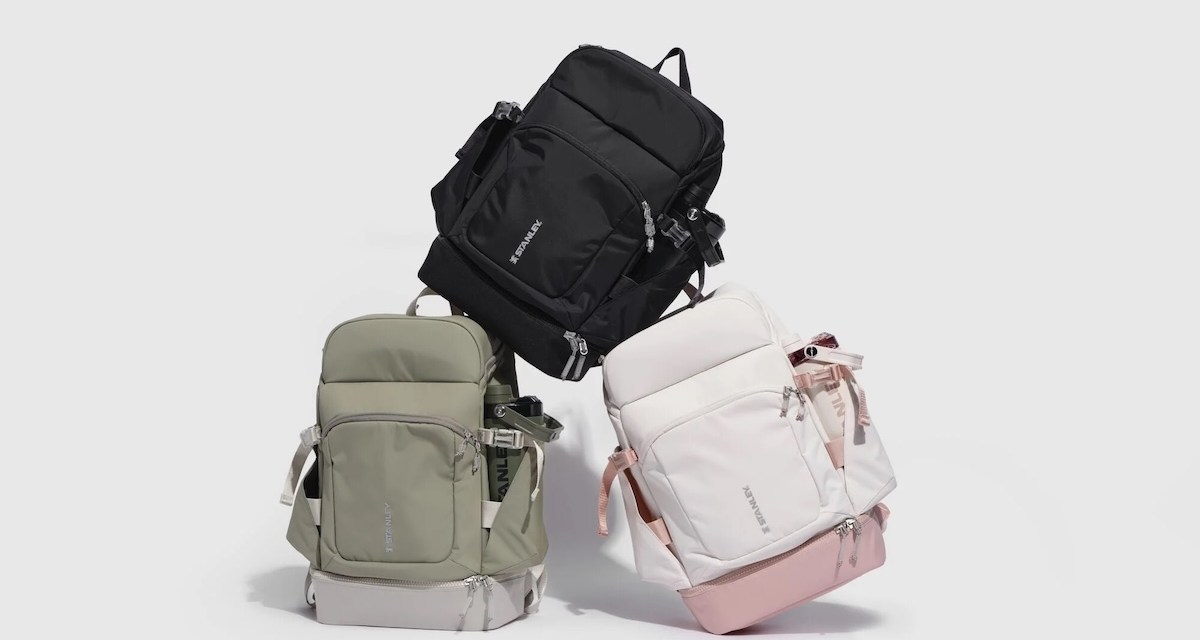
While Stanley still sells Quenchers, the company went into soft goods like totes and coolers in 2024 — a tactic it’s continuing to better establish itself as an accessories brand. Between mid-February and mid-April, Stanley launched three products designed for mobility and storage: the Vitalize Collection (a series of backpacks, totes and shaker bottles), the Clutch Bottle (a non-rounded tumbler with a strap) and the Flowstate Spring Bottle (a leakproof bottle with a lanyard). Stanley is also building its business abroad in the Middle East and Asia-Pacific and boosting its sports partnerships to woo male and female customers alike.
“In the heart of our viral success, in 2023 and into 2024, it became very clear that, for the company to succeed, for Stanley to be successful in our next 100 years, we had to diversify,” Matt Navarro, the global brand president of Stanley 1913’s parent company PMI WW Brands, LLC, told Modern Retail in an interview. “We’re really solidifying ourselves as a lifestyle brand, for now and into the future.”
Stanley, which launched in 1913, has been through several iterations. Originally built as a utilitarian thermos company, it became popular with American workers looking to carry their lunches or coffees. In the second half of the twentieth century, Stanley became known as an outdoors company, accompanying hikers and runners on their adventures. In 2020 and beyond, it took off as a hydration company popular with influencers and younger consumers. Now, in 2026, Stanley is trying to stay on top of travel and café culture as it works to win over even more shoppers, Navarro said.
So far, on-the-go, leak-proof offerings are key growth opportunities, as customers want to carry water, coffee, matcha and whole meals with them, Navarro said. “[We’re] observing consumers, understanding how they live their lives, understanding the ways hydration and food and beverage show up [in their daily routines],” he shared. “We’re looking to make people’s experience better, easier, simpler [and] more enjoyable, whether that’s going to a tailgate [or] whether that’s in the yoga studio.”
Stanley’s investments come at a quickly changing time for the drinkware sector. While Stanley’s revenue shot up during the pandemic — going from $73 million in 2019 to some $750 million in 2023 — the brand has seen its U.S. direct-to-consumer sales fluctuate, according to data from Consumer Edge. The firm, which tracks consumer purchases, found that U.S. DTC spend for Stanley products grew more than 300% in 2022 but fell about 20% in 2025.
So far, 2026 has been volatile for Stanley’s U.S. DTC sales, with Q1 up year over year and Q2 down year over year, said Michael Gunther, SVP of research and market intelligence at Consumer Edge. Competition is also tight, he explained, as brands like Owala, Yeti and HydroFlask continue to win over customers. Consumer Edge estimates that Stanley has about 30% of the U.S. DTC market share within water bottles today, with the most momentum among 25- to 54-year-old consumers.
Stanley’s recent innovations are seeing strong consumer demand, said Navarro. The Flowstate Spring Bottle has been particularly successful, with a 22% sell-through rate in retail partners in its first week, and a 50% sell-through rate in DTC in its first week, according to the company. The Clutch Bottle is “probably the best example of us remaining culturally relevant,” Navarro said, pointing to the product’s different colors and portable strap. “You’re going to match it to your outfit.”
Talking to a core consumer, as well as a new consumer, is also becoming important for the brand. Whereas Stanley skewed younger and more female in recent years, the male consumer is “a more recent target,” said Navarro. Stanley is leaning into sports to help with this goal; it has collaborated with European football teams Arsenal and Juventus, as well as athletes Leo Messi, Caitlin Clark, Nelly Korda and Collin Morikawa. In May, Stanley rolled out seven limited-edition soccer tumblers, timed to the World Cup.
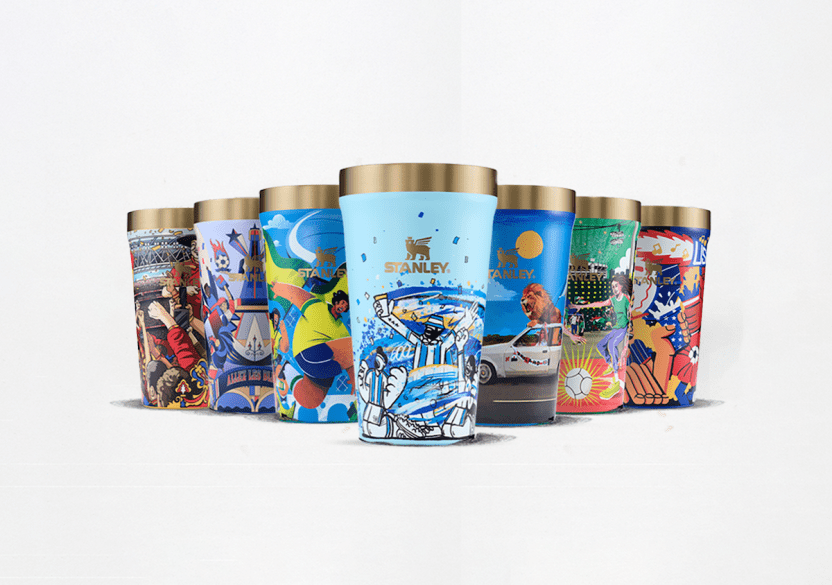
These sports launches “are both to fuel the female athletes who maybe already love us, but also [to] introduce or reintroduce the brand to male athletes and male consumers who might show up in those areas connected to sport,” Navarro said.
Meanwhile, international is “likely the fastest-growing area [for Stanley] for the next couple of years,” Navarro said. The company is eyeing markets that are connected to U.S. culture, but also share an affinity for sustainable products and hydration. It’s currently focusing on expansion in the U.K., Germany, Spain, France, Japan, China, Korea, Australia and New Zealand. International growth “has been our largest growth area for the last probably 12 to 18 months,” Navarro said.
Stanley, however, isn’t without challenges as it expands. In addition to dealing with growing competition in the drinkware space, Stanley caters to customers with discretionary income, some of whom are watching their budgets as gas prices spike. Stanley has also grappled with recent tariffs, as many of its products are made out of recycled stainless steel.
“The reality is, tariffs have been tricky,” Navarro said. “I think how we have built our business — and what has allowed us to succeed before, during and after tariffs — is [that] we have an incredible team building a flexible, agile, resilient supply chain all around the world,” he continued. “We believe that we’re set up for success, no matter the environment.”
What we’re reading
- McDonald’s rolled out a multi-pronged plan to make stores “easier to run.” (Reuters)
- The food and beverage industry is dealing with a whey protein shortage. (Bloomberg)
- Sales are up at Old Navy, Gap and Banana Republic, but down at Athleta. (Chain Store Age)
What we’ve covered
- Quince is testing physical retail with pop-ups.
- Brooklinen has relaunched 80% of its product line.
- Shoe Palace is grouping together brands like Asics, On and Adidas in marketing campaigns.