


Brands Briefing: Teva’s athletes are testing products in extreme conditions, on all continents
This is the latest installment of the Brands Briefing, a weekly Modern Retail+ column about the growth strategies of modern brands. More from the series →
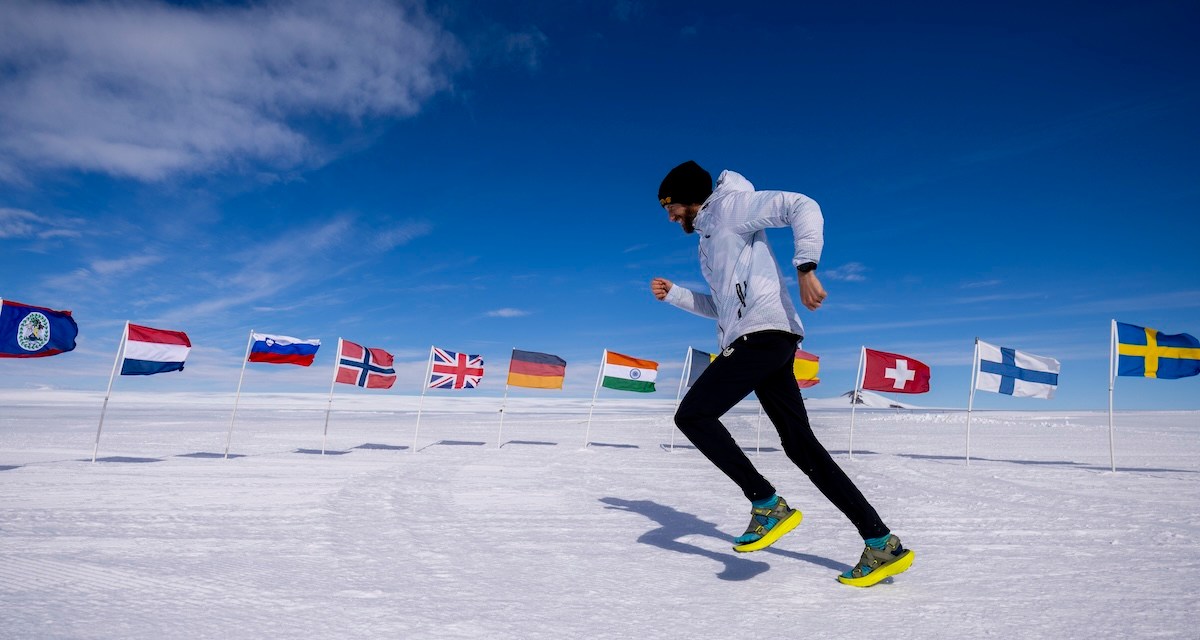
Michael Wardian, a marathoner and ultramarathoner, kicked off 2026 in a way most people didn’t: by running seven marathons on seven continents in seven days. Meanwhile, his fellow athlete Erin Ton, a trail and mountain runner, set a new speed record on Aconcagua, the tallest peak in the Americas. What both have in common is that they were wearing Teva shoes to do so.
Wardian and Ton are two of seven athletes in Teva’s Bureau of Adventure program, an initiative in which athletes field-test and shape Teva’s trail and hybrid footwear before it reaches shelves. Teva sends the athletes prototypes, the athletes provide feedback, Teva makes changes, and the process repeats. Along the way, the athletes document their progress on social media, fueling engagement for the brand. Teva is gearing up to launch a new batch of athlete-designed TBA footwear in the fall, with additional launches planned for 2027.
The Bureau of Adventure, which began in 2025, is rooted in Teva’s long history of working with athletes. Starting in the 1980s, Teva asked rafters and runners to take products into the world and see how those shoes stood up to weather and repeated use. TBA, though, is a more advanced version of the initiative, in that it aims to gather insights throughout the process, not just at the beginning or the end. Teva hopes that involving athletes at every checkpoint will result in better-quality products.
Because of TBA, Teva’s collaborations with athletes now “begin earlier and extend longer,” Zack Paris, director of advanced concepts and innovation at Teva, told Modern Retail. “There are things that we’re doing today that will influence products that come to life toward 2030,” he added. TBA-designed products are marketed as being linked to TBA, although TBA is not a sub-brand of Teva. TBA athletes are also testing all kinds of footwear technologies that can be applied to the mass market, Ton said.
Teva, whose roots lie in a resourceful river guide slapping Velcro strips onto some flip-flops, celebrated its 40th birthday in 2024. It’s now betting on TBA to grow market share, knowing that seasoned athletes and newcomers alike want durable products. TBA is “definitely helping” with Teva’s role in the outdoors, Lee Cox, the current global gm of Teva, said. “Trail and water are our priorities, … and we want to make sure we’re building products that allow someone to experience the brand,” he told Modern Retail.
Teva is one of the smaller brands under its parent company, Deckers; its sibling brands Hoka and Ugg, together, were responsible for 98% of Deckers’ third-quarter revenue in fiscal 2026. However, it wasn’t always this way.
Deckers acquired Teva for $62 million in 2002, and for the next decade, Teva built a following around products for activities like mountain biking and rock climbing. In 2002, Teva became the title sponsor of the U.S. Mountain Running Team, and from 2002 to 2012, it sponsored the “Teva Mountain Games” in Vail, Colorado.
Also in 2012, Deckers acquired Hoka for a reported $1.1 million. At the time, Hoka’s sales were reportedly around $3 million. Deckers then went “all in” on that brand, to much success, said Cox, once the vp of global marketing and sales at Hoka. In its fiscal 2025 year, Hoka did $2.2 billion in sales. But Teva has yet to see similar explosive growth.
“We decided, ‘Hey, let’s take Teva back to when it was really an adventure brand,'” Cox said. “In 1984, it was about adventure, and it was all about a problem on the rapids. … For Deckers, the goal is to finally harness what this brand is capable of, and that starts with building product for end use.”
Tom Nikic, a senior analyst who covers Deckers for Needham & Company, projects that Teva will account for 2-3% of Deckers’ revenue by year-end. A program like TBA “might not move the needle now, but maybe it can generate some momentum,” he told Modern Retail. What’s more, Hoka still has potential, but it’s not growing 50% year over year like it was a few years back, Nikic said. “Maybe that opens the door to the company to pay more attention to Teva,” he shared.
Athletes’ feedback is a key part of this growth plan. Wardian and Ton — along with their fellow five TBA athletes — call Teva from the road, but also sometimes meet in person, to provide insights on everything from strap length to shoe tightness. They communicate if they get blisters and make requests about shoe treads. “We can mold the products into what we know is going to work for roads, trails and mountains,” Ton said.
Last year, while running Hardrock, a 100-mile endurance race, Wardian told a Teva executive on-site that his shoe strap was too long. “One of the Teva guys cut it up and Frankensteined it all together,” Wardian said. “Brands say they care about feedback, but to have a brand that makes adjustments and looks for ways to do things better, that really fills me, as an athlete, with a lot of validation.”
That looks good for Teva, too, Beth Goldstein, a footwear analyst at Circana, explained. Involving athletes in design “not only strengthens product development, but it also enhances the brand’s credibility and authenticity,” she told Modern Retail. Nikic said testing products with extreme athletes “makes all the sense in the world” for Teva, because “if the product satisfies the needs of the top of the pyramid, everything else should fall into place.”
Still, even though Teva’s TBA athletes are setting records and braving cold temperatures, Teva never wants to lose its sense of fun, executives stressed. In fact, the name “Bureau of Adventure” takes inspiration from “The Ministry of Silly Walks,” a sketch from Monty Python. It’s a “seriously unserious” program, Paris said, in that TBA athletes can get out and go anywhere, not just win races. Athletes also can request custom-made shoes, like Ton’s high-heeled trail shoe and Wardian’s “sparkle pony” Aventrail shoes. “Sometimes, you just want to make cool stuff and not worry about the revenue,” Cox said.
Both Ton and Wardian made social media videos about their custom shoes, as well as the many activities they’ve done in their Teva footwear, like running around the base of the Washington Monument. That’s paying off for Teva; TBA-led storytelling accounted for 74% of Teva’s total social engagement in Q1 of 2025, with athlete content seeing 150% more interaction than Teva’s non-athlete content.
Teva executives said they hope to grow the TBA program, with the intent “to have long-term relationships and partnerships.” “We’re not rolling out full teams each year,” Paris said. “It’s adding some core teammates as we build along the way.”
In the meantime, Teva wants to “build epic product for epic adventures,” Cox said. “We have people that have been with [Teva] for 30 years, and they say, ‘Finally, we’re going to do what we always wanted to do with this brand,'” he said. “That’s why TBA is so important.”
What we’re reading
- Estée Lauder is considering acquiring new brands as part of its turnaround effort, its CEO said on Bloomberg TV.
- Wayfair has reported its first annual revenue gain since 2020.
- Business of Fashion has proclaimed that beauty’s “easy growth era” is over.
What we’ve covered
- Hims alum have launched a new startup called Poca, a zero-calorie sweetener with a boost of fiber that’s designed to replace the flavored syrups frequently added to coffee, matcha and more.
- Can Depop make eBay cool again?
- The new playbook for winning over price-conscious customers.