


Marketplace Briefing: What Shein’s acquisition of Everlane could mean for its marketplace ambitions
Shein made headlines this week with what appears to be another attempt to boost its brand credibility in the U.S.
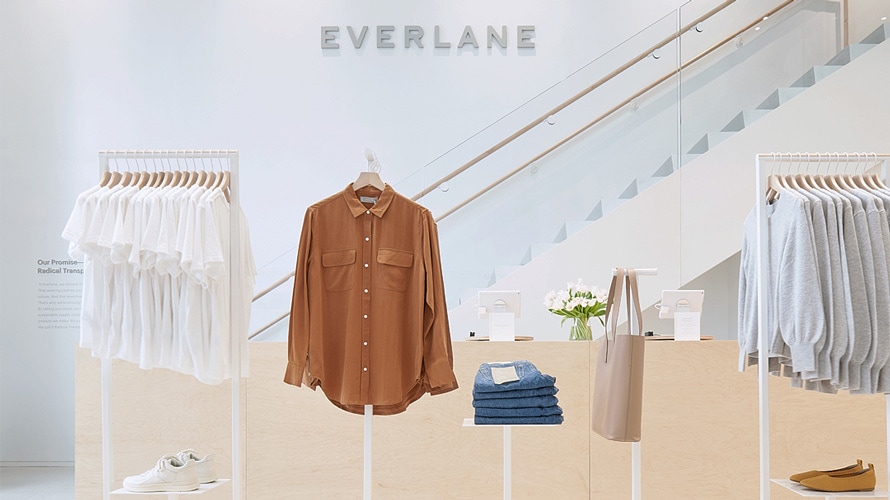
Puck’s Lauren Sherman reported over the weekend that Shein is acquiring Everlane, a former direct-to-consumer darling that built its brand around the concept of “radical transparency.” It filmed videos at its factories to give customers a behind-the-scenes look at how its clothes were made. In its early days, it also published on its website breakdowns of exactly how much it cost to produce a particular piece of clothing.
It’s unclear why exactly Shein acquired Everlane – the company hasn’t publicly issued a comment on the matter, nor has it confirmed that the deal has taken place. Sherman reported that Shein was particularly interested in Everlane’s supply chain.
But it’s easy to see how Everlane serves as a sort of foil to Shein — it built its brand around telling customers exactly where its clothes were made. Meanwhile, Shein’s supply chain has been the subject of congressional reports and news investigations. It has received significant scrutiny over where its products are made, how it has taken advantage of the de minimis loophole and how exactly the platform can offer rock-bottom prices like $12 dresses and $5 shorts. And where Everlane might live in concert with Shein’s other arms, like its third-party marketplace, will reveal a lot about how important credible brand names are as Shein continues refining its growth strategy.
Shein’s purported acquisition of Everlane isn’t its first attempt to bring in well-known brands. It formed a strategic partnership with Forever 21 in 2023 to bring Forever 21 products to the Shein app. That same year, it also acquired the U.K. fast-fashion brand Missguided and launched a third-party marketplace. As Shein positioned it, the third-party marketplace was a way for it to both expand the breadth of products it is able to carry on its platform and to prioritize “localization,” its global head of strategy and corporate affairs, Pernot-Peter Day, said on the Modern Retail Podcast back in 2023. “We want to be closer to our customers and closer to our core geographies in a variety of ways,” he said. Building a more localized assortment, and thus building a closer relationship with customers, would then, in theory, boost brand loyalty and credibility.
Shein has not publicly disclosed how many merchants are on its platform. Modern Retail reached out to a press representative for Shein for comment on the Everlane deal, as well as for data about the state of its third-party marketplace, and did not hear back by press time. Early reports after the marketplace launched in the U.S. indicated that many of the sellers were based in China. But in recent years, some notable brand names in the U.S., like The Children’s Place and Skechers, have also joined the Shein marketplace.
Still, Shein’s acquisition of Everlane suggests that it is in search of new pieces to plug into its strategy to boost brand credibility and reach new audiences, and that the marketplace alone hasn’t been enough to aid in that effort.
“[Shein] wants to stand for more — it has been trying for a while,” Juozas Kaziukénas, an independent e-commerce analyst, said in an email.
Ben Donovan, insights lead at Marketplace Pulse, characterized Shein’s acquisition of Everlane and the growth of its third-party marketplace as “two attempts at the same goal, but not necessarily two separate wins.”
“Shein built the marketplace to localize itself: bring in U.S. sellers, U.S. fulfillment and brands American shoppers recognize. It hasn’t delivered the brand side at any real scale,” Donovan said in an email. “So Shein bought a brand instead. Everlane hands Shein a U.S. identity and an older, higher-spending customer base that the marketplace was supposed to attract on its own.”
To be sure, the lack of a solid brand identity that stands for more hasn’t been enough to severely dent Shein’s growth. Despite disruptions from the death of the de minimis exemption, eMarketer is still projecting that Shein will hit $25.49 billion in U.S. e-commerce sales in 2028, which would make it bigger than Target’s e-commerce business.
“The marketplace started as a way to widen selection,” Donovan said. “Post-de minimis, its more useful role is giving Shein a domestic-fulfillment channel that isn’t exposed to cross-border tariffs.”
Sky Canaves, principal analyst at eMarketer, argues that Shein actually has a “fairly thriving” third-party marketplace in the sense that it now has “a lot of products, and a lot of brands, and a lot of merchants,” which has helped Shein expand beyond the apparel it has been historically known for. Shein’s marketplace has also helped it make inroads in other countries; it now has a third-party marketplace in the U.K., Germany, Mexico and Brazil, just to name a few. In some of these countries, it has given some more concrete numbers about the size of its marketplace. In the U.K., Shein has said it has more than 2,500 active sellers on its marketplace and in Germany, it has more than 600.
Still, “where Shein has been much more challenged is in recruiting global brands, established brands to set up storefronts on Shein,” Canaves explained. In France specifically, Shein faced an outcry after a consumer watchdog group called out sex dolls and weapons for sale, available through the marketplace. The French government attempted to suspend Shein’s marketplace but has not yet succeeded, as that action has been rejected by the country’s courts.
Acquiring more brands like Everlane, then, could help boost Shein’s credibility — if it promotes them. The homepage on the Shein app features images of a dizzying array of products — laundry detergent, floral shoes, cowboy hats, a set of colored markers, plus tags calling out price drops, what’s trending and what’s local. Most products are broken up by category or trend, and there are no sections in the app encouraging people to search by brand name. Missguided, the brand that Shein acquired in 2023, isn’t prominently featured anywhere on the app.
“We’re not hearing about any great brand revival, … and we’re not really seeing them featured prominently on Shein’s website or app, so my concern is that Everlane will reach a similar fate,” Canaves said.
The other way that Shein has sought to build credibility for its marketplace specifically is through partnerships — with local agencies, technology vendors and fulfillment partners — and by hosting more events for marketplace sellers. Last year, Shein hosted its first-ever event for marketplace sellers called Elevate.
In some ways, Shein faces a similar challenge to the one Amazon faced when building out its marketplace in the early days. Over the years, Amazon has made many attempts to court more big brands, but many of them have expressed concern or frustration about resellers undercutting their business. Some, like Nike, have had an on-again, off-again relationship with Amazon.
But right now, the big challenge Shein faces is convincing U.S. sellers that its marketplace is worth the investment. Some of it comes down to perception. As Kaziukėnas put it, “the famous $50 cashmere sweater on Quince is seen differently than a 24 dollar dress on Shein.” But it also boils down to the fact that Amazon and even TikTok Shop continue to grow at a rapid pace, and Shein is tasked with convincing sellers why they should dedicate more resources to its marketplace, rather than investing more in those channels.
“I think as brands are trying to figure out where to get the most bang for their buck, it’s not clear that Shein is a top contender,” Canaves said.
What we’re reading
- Google Search as you know it is over (TechCrunch)
- North Face fuels VF’s return to revenue growth, upbeat outlook (Wall Street Journal)
- Fanatics to launch sports-fan focused credit card in deal with American Express (CNBC)