


Miffy madness: A 70-year-old bunny is the ‘it’ character for brands
Move over, Hello Kitty and Labubu. Retail’s latest “it” girl is a 70-year-old cartoon bunny from the Netherlands.
Her name is Miffy, and she has white ears, colorful outfits and an “X” for a mouth. The brainchild of Dutch artist and author Dick Bruna, Miffy made her debut as a children’s book character in 1955. She went on to appear in TV shows and movies for decades — but she’s also become a merchandiser’s dream. Over the last five years, Miffy has collaborated with dozens of properties, including LeSportsac, Calpak, the Museum of Modern Art, Baggu and Starbucks.
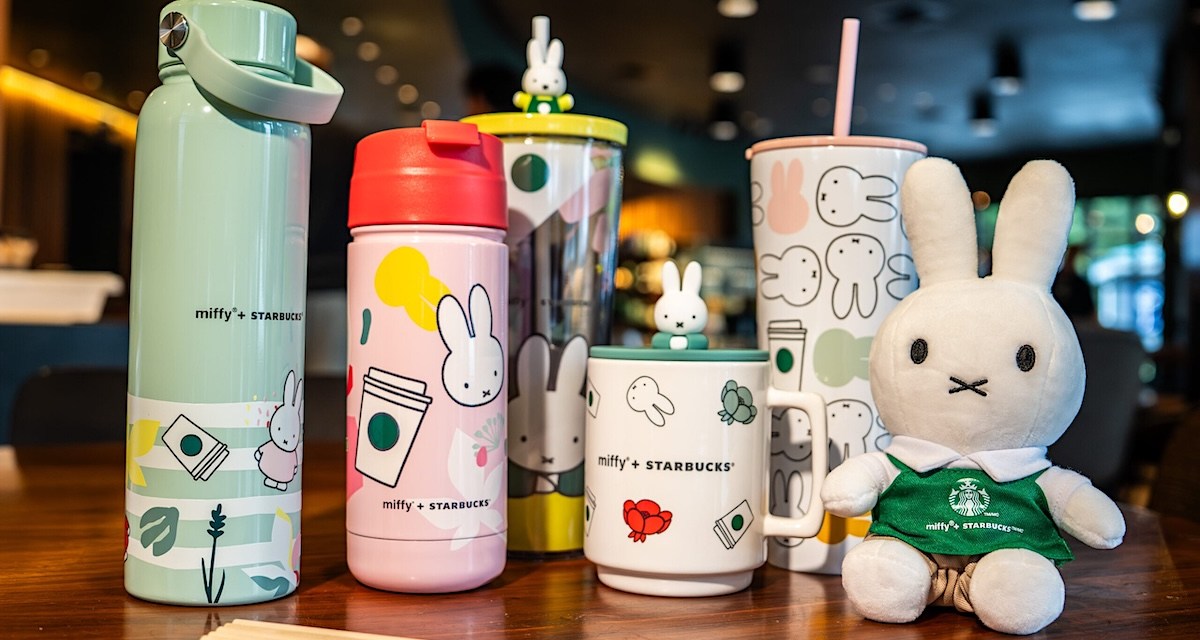
This Miffy mania is proving big business for brands. Starbucks’ 2026 collection with Miffy — which included cups, a plushie and a tote bag — launched in May in the U.S. and Canada and sold out within 24 hours at many store locations. The Miffy merch helped put Starbucks “back in front of culture,” CEO Brian Niccol said on a July earnings call. In 2025, MoMA debuted a “Starry Night” Miffy doll, figuring it had enough inventory on hand for six months. The product sold out in less than one month, and it continues to be a top seller at MoMA’s Design Store, the museum told Modern Retail.
Miffy celebrated her 70th birthday in 2025, so she was front and center in collaborations last year, including with phone case company Casetify. But Miffy seems to be nearly everywhere these days, from $370 Baccarat sculptures to $13 Urban Outfitters gel pens. She’s a testament to the power of character IP, and she packs a one-two punch: sentimentality for adults and excitement for kids. At a time in which what’s old is new again — take, for instance, the return of cereal-box toys — Miffy collaborations allow brands to play up a sense of nostalgia, while also capturing interest from Gen Alpha. The merch is a frequent talking point on forums like r/Miffy, too, which boasts 10,000 weekly visitors.
Krystn Fuerst, who led this year’s Starbucks x Miffy collaboration, pointed out that Miffy is a multigenerational icon. “People enjoy her retro charm, whether they grew up with her or are finding her now,” she said in a press release announcing the collaboration. Marja Kerkhof, who oversees the Miffy brand worldwide for Mercis B.V, added that Bruna’s illustrations “capture an enduring childlike sense of joy.” “[Miffy’s] face and silhouette are instantly recognizable,” she said.
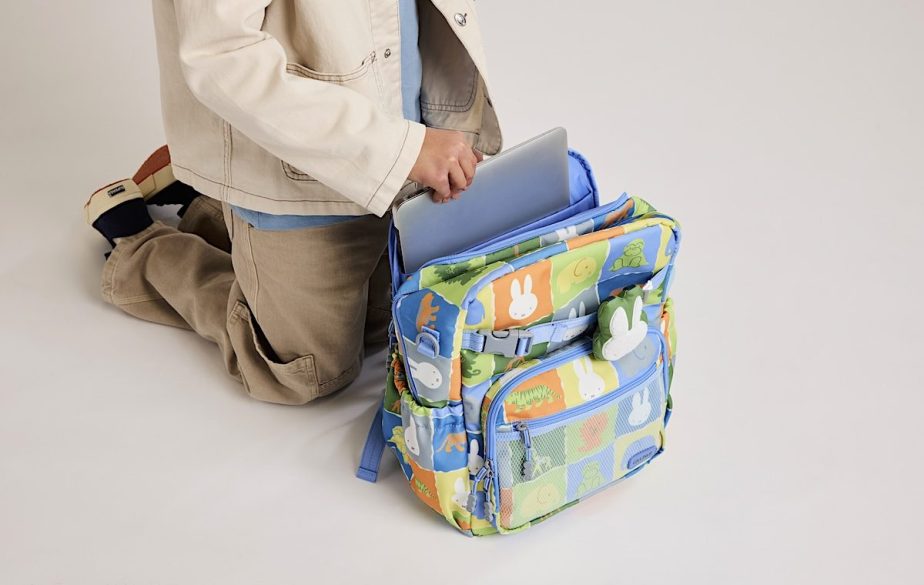
It’s a sentiment that Calpak, the luggage brand, also shares. The company launched its back-to-school kids’ collection with Miffy earlier this summer and is finding it to be “super successful,” said the brand’s VP of marketing, Jeannie Shin. The No. 1 seller is a “Pluffy” bag charm, but backpacks and packing cubes are selling well, too. The Miffy collection helped Calpak’s kids’ sales jump 125% year over year, and Calpak’s Miffy ads drove a quarter of a million website sessions in four weeks.
Calpak is getting more into character licensing as it builds its kids’ segment, so working with Miffy was a no-brainer, Shin told Modern Retail. “We wanted a character that is recognizable and that’s going to help drive the right customer through the door,” Shin said. “Miffy has completely checked all those boxes, in terms of driving traffic, building awareness, and driving conversions and orders.”
While Calpak’s main audience is millennials, the brand is trying to appeal to all ages, and Miffy fits the bill. In fact, Shin grew up reading the Miffy books, and her daughter now sleeps every night with a Miffy doll. Today, at Calpak, both kids and parents are buying Miffy “Pluffies.” Calpak is now planning a full launch of Miffy products geared to adults — like duffels, luggage and accessories — for the spring.
Hanna Andersson, a kids’ clothing brand, has worked with the Miffy team since 2022 and recently rolled out its seventh Miffy collection. Launched in time for the back-to-school season, it includes PJs and a terrycloth sweatshirt. All of Hanna Andersson’s past collections with Miffy have sold out, said Kara Carter, the brand’s chief product officer, and the brand expects the same with this new collection.
The back-to-school collection is already seeing “strong” sales, Carter told Modern Retail. “It brings joy, nostalgia, comfort,” she added. “There’s lots of big emotions at this time of the year, for both mom and kids, and Miffy brings that whimsy and joy, which is really fun, too.”
Miffy has been one of Hanna Andersson’s longest licensing partnerships, and one that represents a great “synergy” between the brands, Carter said. Hanna Andersson is a kids’ brand that emphasizes bold colors and funky patterns, so, in “the spirit of Miffy and her joy, it just made natural sense to bring this to life,” Carter said.
MoMA Design Store, for its part, has carried Miffy children’s books for years. But it wasn’t until 2015 that it rolled out its first Miffy design object: a floor lamp made in the Netherlands. Again, the product resonated not just with kids, but also with adults.
Today, the term “kidulting” has entered the mainstream. But back then, “It was the first time I’d experienced this idea of things designed originally for children having that broader application and appeal across generations,” said Chay Costello, associate director of merchandising at MoMA.
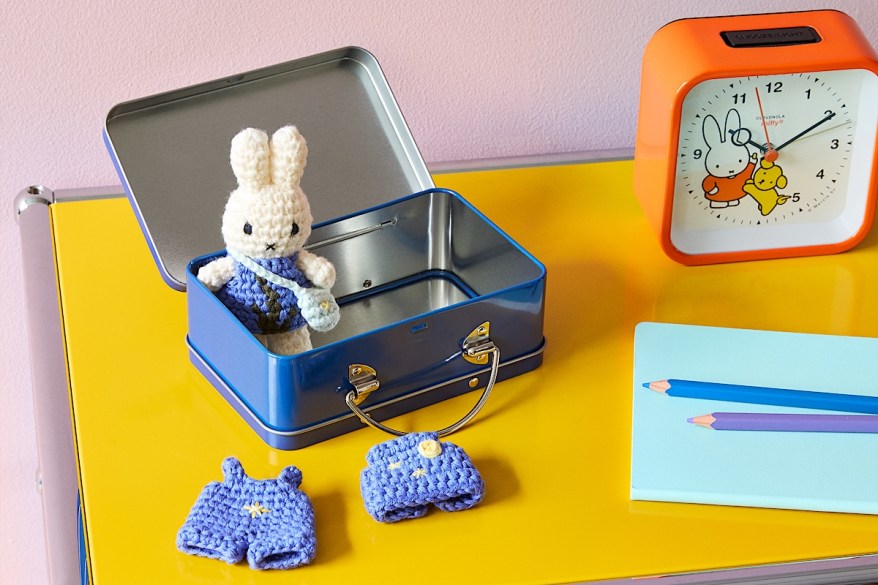
Costello’s team realized there was a “real interest” in Miffy designs among MoMA’s base, she shared. In 2025, MoMA rolled out a hand-crocheted Miffy doll who wore a “Starry Night” outfit inspired by Vincent Van Gogh’s famous painting. Today, the doll is one of MoMA’s best-selling products. Also in 2025, Baggu sold an exclusive Miffy bag just at MoMA’s store, and Miffy herself visited for a members’ picnic.
“I had the pleasure of reading a book to kids while Miffy was standing there, and then the kids had a photo op [with Miffy], and then afterward, Miffy went across the street to MoMA Design Store, and we had a line of adults,” Costello said.
Today, many brands’ Miffy items — like the MoMA Baggu bags — are limited-time collections or drops. Brands tend to use these tactics to build awareness, hype and “fear of missing out” — especially around a character as buzzy and nostalgic as Miffy. Drops have long been associated with streetwear, but now, they’re common across categories, because they “tap into something fundamentally human: scarcity and anticipation,” said Mary Ann O’Brien, CEO of advertising agency OBI Creative.
Still, while customers are receptive to drops, brands can overdo them, especially if they’re marketed to the “same audience every time,” O’Brien told Modern Retail. This can be tough for brands that tend to do repeat collaborations with properties. “If every release is asking the same group of loyal customers to get excited again, eventually, the novelty wears off, and ‘limited edition’ starts to feel routine,” O’Brien explained.
Brands told Modern Retail they want to be careful not to oversaturate the market, when it comes to Miffy. Hanna Andersson, for instance, doesn’t have a set cadence for Miffy collections and wants each to be unique. “It really is about the curation and making sure it feels special for our customers,” Carter said. Similarly, MoMA’s Costello said, “I think we’re in a really good place right now, where we’re hitting upon a number of different product categories [with Miffy], but it’s not overwhelming.”
For now, customers continue to clamor for all things Miffy. In other words, the Miffy phenomenon is not a case of “hare today, gone tomorrow,” and brands aren’t hopping off the bandwagon any time soon.
“Miffy will, for the foreseeable future, always be in our mix,” Carter said. “She is what the world needs right now.”