


Why Instacart is focused on reducing item markups to grow its delivery platform
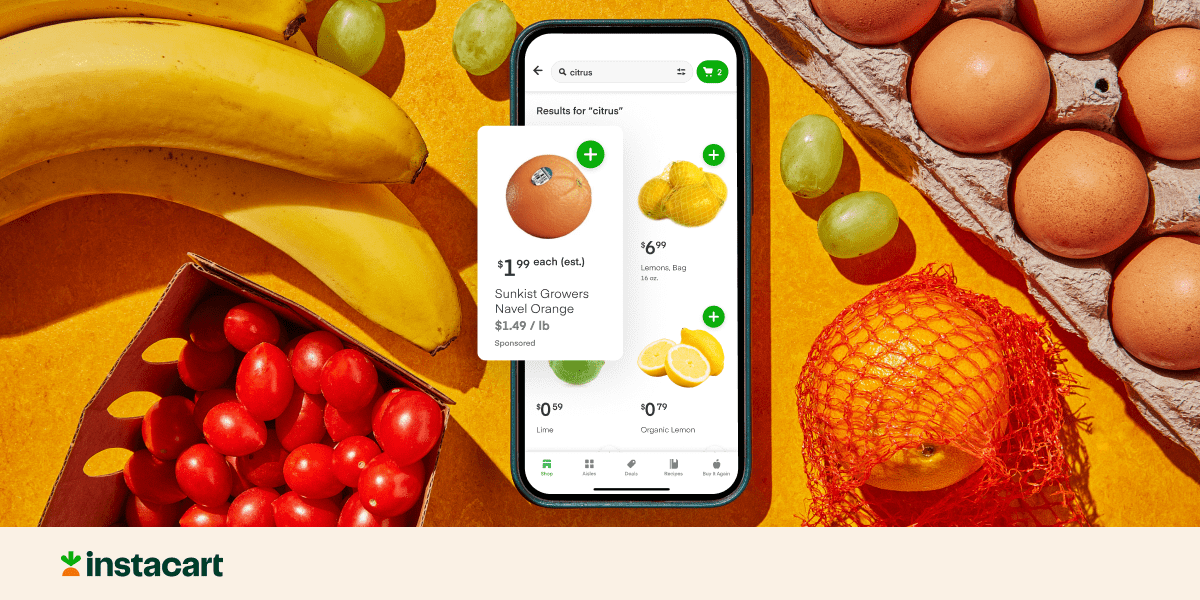
Instacart is focused on value and affordability to unlock its next phase of growth.
Speaking at the Groceryshop conference in Las Vegas this week, CEO Chris Rogers laid out Instacart’s strategy to break down the cost barriers holding consumers back from purchasing weekly grocery hauls online. In working more closely with retailers on strategy, Instacart wants to shed its reputation as just a delivery app and position itself more as a full-stack operating system for grocery.
Essentially, Instacart’s pitch is that retailers can take the money they save by using Instacart and “invest it in things like [on-shelf] affordability, their loyalty programs or consumer marketing,” Rogers said.
Since stepping into the chief executive role in August 2025, Rogers says he has made price accessibility his top priority. To help convert and retain price-sensitive shoppers, the company is collaborating closely with retail partners to reduce markups on Instacart items that cost much less in store. As user expectations for a personalized and cost-conscious grocery shopping experience rise, Instacart is trying to balance its position of time-saving convenience with everyday value.
Rogers took the stage at the Groceryshop conference in Las Vegas this week, where he said the company is pursuing a strategy of offering more affordable grocery delivery services to encourage user adoption. “We’ve added net new customers at our fastest growth rate since 2022,” Rogers said.
Instacart’s storefront technology is also now powering 380 grocery e-commerce sites, Rogers said, as the company transitions from being a grocery delivery platform to a grocery technology platform. “And we’ve expanded internationally for the first time beyond Canada and the U.S.,” he said.
Rogers said his main takeaway from the past year is that retailers are currently plagued by a bunch of disconnected point solutions. “They need technology that’s going to work together across e-commerce fulfillment, ads, in-store technology and, increasingly, AI,” he said. Instacart wants to become that one-stop solution provider.
Rogers said Instacart is actually seeing “quite a bit of strength with the consumer,” with deepening engagement. Instacart is also seeing customer expectations for a quality experience rise dramatically, which is a big driver of repeat behavior.
“When you’re shopping for a very large basket with all this fresh food, and it’s deeply personal, getting a customer exactly what they wanted matters a lot,” Rogers said, adding that the company is seeing an increased need for personalization. “Customers are increasingly expecting that we understand them, their household, their dietary needs and their favorite stores,” Rogers said.
But with that, customers are cost-conscious, and they value convenience, which is why the category is growing. Rogers said the biggest challenge Instacart and its retail partners face is providing convenient groceries at an accessible price point. “Customers are looking for an affordable, high-quality, personalized experience,” he said. “Within that, there is a need for an operating system for grocery, and that’s what we’re building.”
Rogers said customers “are looking for savings” and value. He went on to say that, while the cost of living, including gas, is high right now, customers are also looking for time-saving solutions.
“So, they might be counting every dollar, but time also factors deeply into that equation,” Rogers said. That’s why grocery delivery can act as the solution for dinner time and other crunch-time decisions for families.
Moreover, affordability is the top barrier to people adopting online grocery delivery in the first place.
Rogers explained that retailers marking up their item prices online is one of the biggest challenges for Instacart’s customer adoption.
“It’s a very difficult conversation, and a lot of retailers have partnered with us to find solutions here,” he said. “But the data is very clear. “Customers are gravitating toward value, and online, that often means retailers that don’t mark up.”
In contrast, non-marked-up retailers on Instacart are growing about 10 percentage points faster on average and retain those customers long term.
Rogers said that, in working with retailers, the cost of losing those sales over time to some of the largest digital players “might be greater than the cost of removing markups today.”
Aside from convincing retailers not to mark up items on Instacart, Rogers said the company is also helping integrate retail loyalty programs for customers. “So we’ve been going retailer by retailer to make sure loyalty programs and promotions are enabled,” he said.
Rogers said that, aside from those partnerships, Instacart is also investing directly to offer customers lower prices.
“With Instacart Plus, you can [now] get $0 delivery starting at $10,” he said. The delivery platform also introduced lower-cost alternatives like in-store pickup and no-rush delivery.
“Affordability is crucial,” he said. “And so it’s why it’s been one of my biggest priorities since becoming CEO a year ago.”