


How Once Upon a Farm is shaking up the baby aisle with coolers
Subscribe: Apple Podcasts • Spotify
Once Upon a Farm is on a growth trajectory that is powered in large part by a new look in the baby aisle.
The brand, founded in 2015, offers organic, cold-pressed baby food and children’s snacks. It went public in February after spending the past several years building up a unique wholesale strategy that places branded coolers in baby food aisles. The company ended 2025 with more than 3,400 coolers in grocery stores across the U.S. and is looking to surpass more than 5,000 by the end of 2026.
Overall, the company saw net sales hit $85.4 million in the second quarter of 2026, an increase of 42.3% from the prior year, according to its second-quarter earnings released Friday.
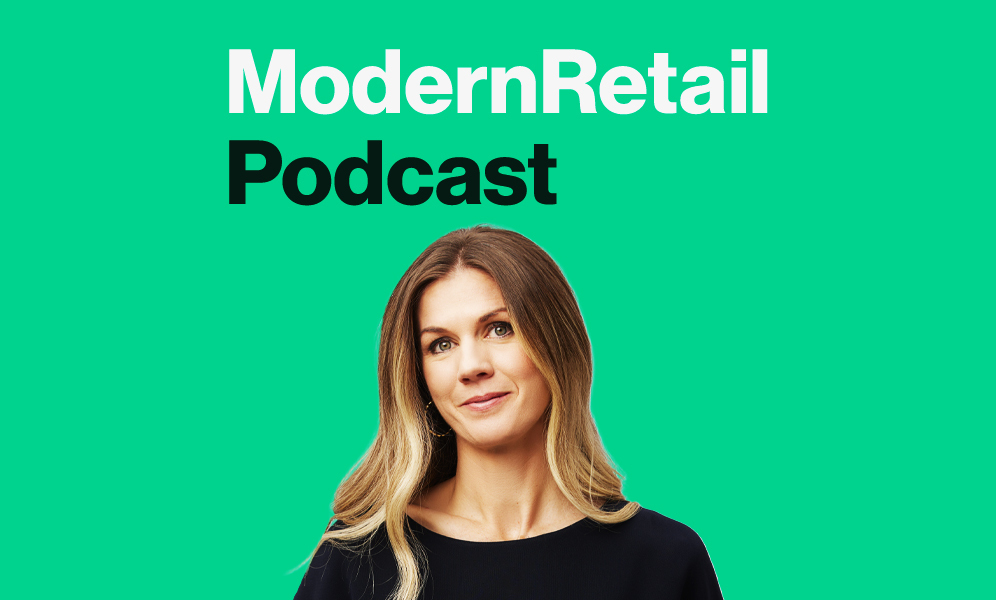
But the cooler strategy is a major part of the growth story, per chief marketing officer Katie Marston. She joined special projects editor Melissa Daniels on the Modern Retail Podcast this week to discuss the strategy and how the brand convinced retailers like Target, Walmart and Kroger to place branded coolers in their baby aisles. The result is a way for Once Upon a Farm to shake up a category long dominated by shelf-stable products.
“If we are going to create systemic change in children’s nutrition, if we are going to shape the future of food, you have to place big bets, and you have to stick with them,” Marston said.
Initial failures and lessons
The cooler strategy started in the late 2010s with pilots in a few dozen doors at places like Target and Kroger. Marston said some of those initial coolers failed because the merchandising strategy was off or the placement of the cooler didn’t make sense. There was also a learning curve with store associates needing to restock an area that was previously shelf-stable.
Future pilots and deployments focused on smaller coolers, Marston said, which weren’t as much of a financial or logistical lift for stores to install. Extra space was covered up with signage until the SKU count would be increased.
“We learned, every single time, that there wasn’t one way to do it with every retailer. There wasn’t one portfolio that worked perfectly,” she said.
Expansion plans in U.S. grocers
The company’s strategy began to take off more in 2020 and 2021, bolstered by evidence from when the pilots started working. One of the biggest hurdles was convincing retailers that the investment in re-doing their aisles to fit a cooler would pay off. “We’ve got a killer sales and research data team that has these wonderful decks that they’re able to put in front of them and say, ‘We promise you the risk and the investment will pan out,'” Marston said.
One of the biggest proof points is the incremental growth that fresh baby food can bring to grocers, she said. “We were getting people to enter the aisle and buy products that were not entering the aisle before,” she said. First-quarter earnings from Once Upon a Farm showed that coolers delivered an 11% increase in dollars per store, per week compared to the prior quarter.
Looking ahead, Marston said growing the cooler strategy involves not only a bigger footprint but more SKUs. In the spring, the company introduced protein-focused launches like meat, bone broth and legume mixes. Future evolutions may include bigger coolers or freezers, as well, she said. And the company is increasingly looking to connect in-person shoppers to its online direct-to-consumer site with QR codes and subscription offers.
Freshness as part of customer communication
The coolers themselves may act as in-store billboards for the brand, but Marston said the Once Upon a Farm team also takes into account how to drive new parents into the aisle to begin with. Its marketing department is split between a team that focuses on the baby and toddler category and another team for older kids, in order to make sure messaging focuses on stage-specific development and needs.
Some messaging focuses on convenience, with an emphasis on single servings. But Marston said the biggest focus is ensuring that parents trust the ingredients. She often uses the phrase “more produce, less processed” to help reach parents looking for healthy and nutritious products.
“The biggest compliment that I get from parents is, ‘Once I’ve looked at your products a couple of times, I don’t even look at the back anymore. I know that it’s all ingredients that I can understand,’” she said.