


How The Cycle convinced Sprouts to find a place for its menstrual cycle-synced drinks in stores
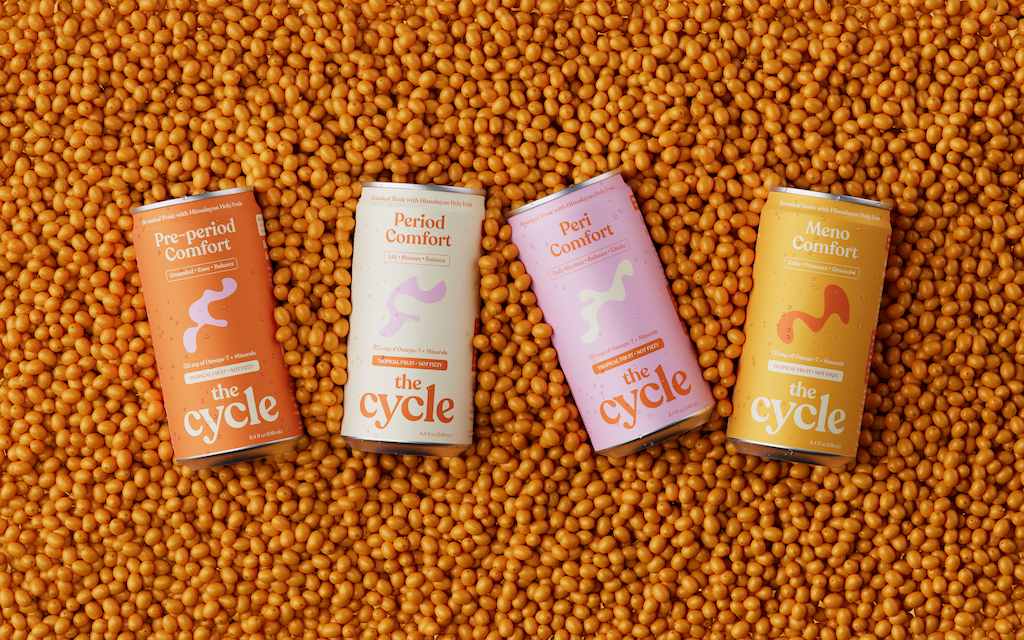
This spring, hormone-focused beverage line The Cycle landed its first major U.S. grocery chain, debuting as part of Sprouts’ Forager Finds program in late April.
The Cycle’s ready-to-drink blends are designed to relieve symptoms of women’s hormonal cycles throughout the month. The Period Comfort drink, for example, uses a proprietary base of Himalayan Holy Fruit (known as sea buckthorn), a natural source of Omega-7 and Vitamin C, which help reduce inflammation and can support healthy vaginal tissue. The other SKUs support the pre-period cycle and perimenopause, with the newest product targeting menopause. All four drink recipes are non-sparkling, caffeine-free and contain zero added sugar and no artificial colors, sweeteners or preservatives.
The challenge for the brand is convincing buyers not only to stock its products but also to merchandise them alongside more mainstream beverage brands that cater to function and wellness. The Cycle’s products can potentially fit in many different parts of a store’s departments. For instance, its single-serve cans can be sold in beverage coolers that a chain has built out to house the categories of enhanced waters and functional beverages. The brand also sells four-packs that can be sold in the supplement or wellness aisle, depending on each retailer’s merchandising preference.
As The Cycle founder Anastasia Sartan put it: “We say we make women’s health drinks, and that’s usually the easiest for most people to understand,” she said. “But where that fits in different stores is still an evolving question.”
The Cycle, founded in 2025, is also now carried at Lazy Acres, Rainbow Acres, Happier Grocery and other independent natural grocers.
Sartan told Modern Retail that with major retailers like Sprouts dedicating shelf space to drinks targeting periods and menopause, it is a turning point for the emerging category.
While The Cycle’s product line has been called “provocative” when Sartan was first demoing it at trade shows last year, that reaction is quickly changing as The Cycle expands into grocery chains. “Our male buyer at Lazy Acres called me [back] immediately, explaining that their customers need it,” she said.
One of the selling points Sartan is emphasizing to grocery buyers is that The Cycle is not technically a supplement nor a functional drink like the countless prebiotic sodas on the market. However, the target customer overlaps with those types of beverages, which warrants the brand’s single cans being merchandised alongside other refrigerated better-for-you beverages.
The biggest question from male buyers, Sartan said, is assessing whether they have the female shopper demand to support carrying The Cycle. “The female buyers tend to get it right away,” she said. “For men, it’s hard pitching them on it at first because they’re not emotionally connected to the issue.”
Sartan considers The Cycle to be a subcategory of the overall functional drink category, a growing portion of the single-serve grab-and-go coolers.
“I have had conversations with other functional beverages that target calmness, and they have a very similar issue to us,” Sartan said. Depending on the retailer, sometimes these products are placed among single cans of enhanced water or sparkling drinks.
“We’re just for women, but what we’ve noticed is that when we are placed next to other beverages, our velocity skyrockets,” Sartan said. About 10% of The Cycle’s current customers are male, she said, often buying it for their partners or daughters.
At the same time, Sartan said, she understands that some retailers will want to stock The Cycle in the supplement department or even the period-care aisle. “It makes sense for our four-packs to be next to pads,” Sartan said, as they are likely to be purchased by those already familiar with the brand looking to stock up. The product is technically shelf-stable, but it is also sold as single grab-and-go cans in many retailers’ fridge sections.
The Cycle is currently merchandised by Sprouts’ vitamin department. “We love working with their vitamin buyers because they are so well educated and really understand our products,” Sartan said. “So we will trust their judgment on where it will be placed after the launch phase.”
Meanwhile, at Happier Grocer, The Cycle’s cans sit in a cooler next to other functional drink startups. “And we perform on par with functional beverages, which is fascinating because they are catering to all while we’re catering to women only,” Sartan said.
Meanwhile, Lazy Acres has stocked The Cycle in what the retailer considers its wellness coolers, which also include products like immunity and probiotic shots by brands like BioK. “This is also a great placement for us,” Sartan said. While sales are slower than at retailers where The Cycle is sold in beverage coolers, Sartan said they are strong enough to leverage a move to the bigger beverage coolers later.
There are some long-term implications for drinks in the wellness aisle, she added. “Usually only about one out of 10 customers is coming into this section of the store,” Sartan said. This customer is usually looking for a specific product rather than a fun or mood-boosting drink, she said.
Elly Truesdell, a partner at New Fare Partners and a former Whole Foods Market buyer, said there are pros and cons to being a brand trying to create a new product subcategory in grocery.
“Any time a brand is struggling to know where it is best placed, that is often both its best and most challenging attribute,” Truesdell said. These companies are often charting new territory and trying to carve out a new space for themselves in stale sections of the store.
Truesdell pointed to some of the most successful cases of the past decade that pushed retailers to create new sections for them. That renaissance of refrigerated products, as Truesdell calls it, meant brands and retailers having to invest heavily in merchandising. “Look at Once Upon a Farm [in the baby aisle] or even Freshpet in the pet space, which had to install refrigerators in every single store,” she said.
The good news, Truesdell said, is that retailers are thinking beyond their physical shelves these days. “They’re [retailers] also thinking about where products fit into their digital offerings,” she said. “That was not the case about 10 or 15 years ago.”
For The Cycle, which is trying to carve out a new category of drinks targeting female hormonal needs, Sartan said the department merchandising strategy will likely evolve over time. Ideally, Sartan would have The Cycle stocked in the better-for-you or functional beverage coolers, as that is where many grocers are experiencing growing traffic.
However, she said, “Where we are placed in the store will very much depend on who the buyer is.”
“If merchants don’t exactly know where to place you, it means you’re doing something different,” Truesdell said. “And that is probably a good thing.”