


Williams-Sonoma relaunches Dormify a year after acquiring IP
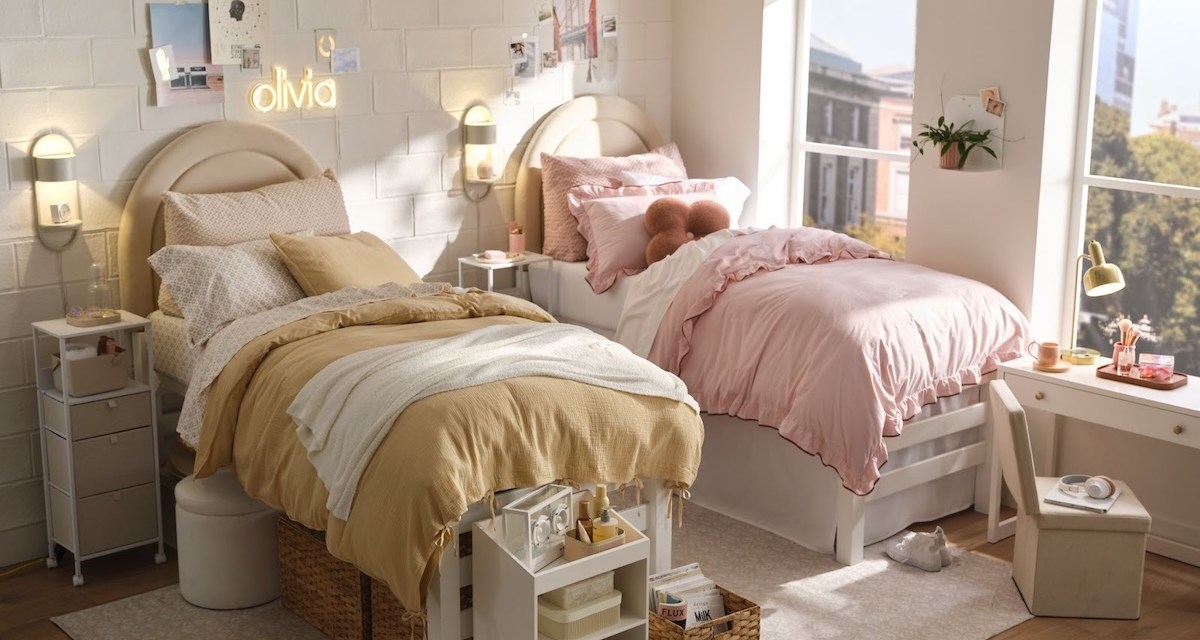
Williams-Sonoma, Inc. is officially relaunching dorm-room furnishings company Dormify after acquiring its intellectual property in May.
A new Dormify website is now up and running, complete with functions like a dorm wishlist and a 3D bed visualizer. Students can also buy items like rugs, headboards and fridges online, then pick them up from one of Williams-Sonoma, Inc.’s other stores, like Pottery Barn and West Elm. The relaunch also introduces new items, like the GellyRoll Mattress Topper ($149-$199).
This isn’t Williams-Sonoma, Inc.’s first go-around with the dorm space. The company already sells items like pillows, bath towels and floor lamps through Pottery Barn Dorm, while Pottery Barn Teen offers college bedding collections with Roller Rabbit and LoveShackFancy. But Williams-Sonoma, Inc. is hoping to become a bigger player in the dorm furnishings space, finding that “there’s a lot of runway for growth,” said Jennifer Kellor, president of Dormify, Pottery Barn Kids and Pottery Barn Teen. Now, with Dormify 2.0, Williams-Sonoma, Inc. is looking to better resonate with Gen Z and bring “the next generation” into its business, Kellor said.
“Dorm furnishings are a very big category in the market, and we have a small share today,” Kellor told Modern Retail. “With Dormify, we’re really hoping to leverage our expertise in this segment and extend our reach. … We’ve specifically targeted a more casual and modern aesthetic, and it’s very function-forward, which I think is critical.”
Kellor added that Williams-Sonoma’s brands have focused on how to “attract more customers, leverage our life-stage expertise and bring these customers into our brands.” When it comes to Dormify, she said, “This could be the next generation of West Elm or Pottery Barn customers.”
Dormify, which launched in 2011 as an e-commerce platform, was the brainchild of mother and daughter pair Karen and Amanda Zuckerman. It earned a following among Gen Z, thanks to its wide array of colorful, space-saving products at various price points. The company also inked deals with retailers like The Container Store and Office Depot. In 2018, Dormify secured $3.45 million in Series A funding led by American Eagle Outfitters.
However, Dormify filed for Chapter 11 bankruptcy in November 2024, owing millions of dollars to unsecured creditors like FedEx and Google. Its filing listed between $10 million and $50 million in liabilities.
Williams-Sonoma, Inc. acquired Dormify’s IP in May 2025 for a reported $1 million. At the time, Williams-Sonoma, Inc. said the acquisition would allow it to “capture market share and unlock white space across key demographic and lifestyle segments.” In a statement, Williams-Sonoma, Inc. CEO Laura Alber said, “We look forward to integrating our operational excellence, in-house design capabilities, digital expertise, and world-class customer service into Dormify to accelerate the brand’s growth and scale its reach.”
Dormify 2.0 is largely sticking to the same categories it sold before: items like washable rugs, storage solutions and twin XL bedding. Its selection online is still a “curated assortment,” Kellor said, adding, “We’re going to learn a lot this year about what the customer responds to and build from there.” While many of Dormify’s items can work for post-graduate life, the company is staying focused on its core customer of college shoppers.
As Leslie Zane, founder of the marketing agency Triggers, sees it, Williams-Sonoma, Inc. is reaching consumers at a “critical moment,” through Dormify. “The transition from home to college is when consumers begin making their own aesthetic and purchasing decisions for the first time,” she told Modern Retail. But it’s not enough for the new Dormify to sell splashy bedding and decor, she said. The company “has to guide consumers forward, not just present options,” Zane explained.
“At the same time, [Williams-Sonoma, Inc.] must carefully protect what makes Dormify valuable in the first place: its perceived independence and cultural relevance,” Zane continued. “If Dormify starts to feel like just another Pottery Barn sub-brand, it will lose its edge, and with it, its ability to attract Gen Z.”
Indeed, as Dormify largely caters to Gen Z, Williams-Sonoma, Inc. is leaning into social media to market the company’s comeback. At launch, it’s working with college-age influencers to push out content on channels like Instagram and TikTok. Dormify is working with dozens of influencers at launch, with more to come, and Kellor said that Dormify is already seeding products to creators across the country. The timing works out, too, since May 1 is when high school seniors have to commit to colleges and universities for the fall.
“Everyone’s looking for advice on, ‘How do I furnish this room? What actually fits [in a dorm space]? What are the things I need to buy?'” Kellor said. “Hearing from people in that life stage [via creator content] really makes it authentic and approachable.”
Dormify is also doing more grassroots outreach to promote its new era. On April 19, a group of corporate employees traveled to the University of California, Berkeley to give out Dormify hats and totes. Dormify also put up wheatpasted ads near New York University to catch students on their way to and from class. The posters will be up for about a month.
Dormify is dealing with some challenges as it expands. It’s been a tough time for the home furnishings industry, thanks to tariffs, rising costs and recent bankruptcies. Rising oil prices have also complicated matters, as many furniture companies rely on oil-based materials like plastic and resins. Consumers are also dealing with higher gas prices and reevaluating where they spend money.
Kellor, who recently met with suppliers in Asia, acknowledged that Williams-Sonoma is grappling with macroeconomic headwinds. “We’ve been through a lot over the last few years, from Covid to this, and I feel like it has just tested our agility,” she said. In terms of Dormify, “There are a lot of things that are impacting vendor production: the availability of materials, cost of materials, [cost of] labor,” Kellor added. But, she said, “Our products are here. They’re in stock. They’re ready to ship … ahead of Decision Day.”
Dormify already ships to all 50 U.S. states, but as Kellor sees it, there’s still plenty of room to grow. “We have aggressive plans to scale Dormify in the years to come,” she said. “We’ll continue to look at enhanced distribution opportunities, but we’re really focused on this being a great digital-based brand that leverages our network.”
This story has been updated to note that Dormify is working with dozens of influencers at launch.