


Why Parker Thatch transformed its strip-mall storefront into a livestreaming studio
Livestreaming is more than just a social media strategy for the husband-and-wife team behind the eight-figure luxury handbag and accessories brand Parker Thatch.
It’s also a weekly Friday ritual, where they set up a camera and tripod in their Orinda, California strip-mall storefront and log online. The QVC-style streams reach an audience of 179,000 Instagram followers and 101,000 YouTube subscribers, who tune in to hear about specific features of new products, such as the materials they’re made of and the kinds of pockets and straps they have. Co-founder Irene Chen explains her design process or the products’ functions, like what works best for carrying containers or fits over a luggage handle. Chen’s husband and co-founder, Matt Grenby, who is behind the camera, gives shoutouts to commenters and reads questions as they come in.
“It’s like hanging out with your friends every Friday night and having a little chat,” Chen said.
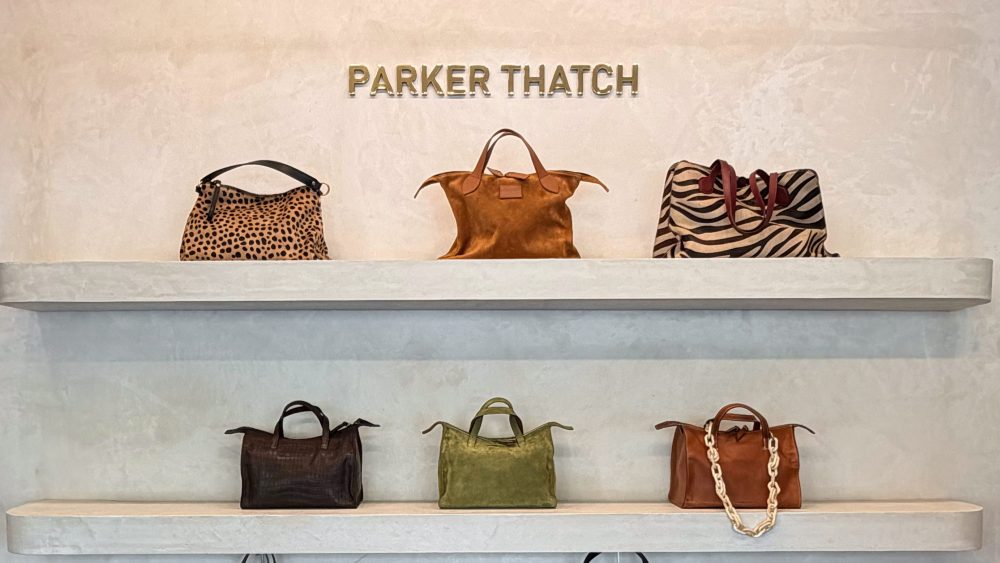
But there are strong business benefits for the direct-to-consumer brand, too, with sales peaking as much as 50% during streams. In light of the success streaming has brought to its business, Parker Thatch recently remodeled its store to serve as a hybrid customer-facing retail experience and broadcast studio.
Changes include making the brand name more visible so it appears in shoots and putting store fixtures on wheels so the staff can easily move around the furniture to make space for production. The founders also went minimal with colors and textures to avoid distractions from the products themselves and ensured the store lighting would look good on camera. Co-founder Matt Grenby said he made sure to have counter space to hide his recording equipment quickly if a walk-in shopper comes in before or after shooting.
“When we opened, the space was just purely a store, but it’s evolved into this place where we do these live transmissions,” Grenby said. “We renovated for that purpose, and it really allows us to elevate the video and audio so it matches the physical space and the branding.”
Parker Thatch’s focus on studio-style elements points to how some brands are blurring the lines between their physical and online spaces as they pursue more authentic marketing and connections with their customers. Kitchen appliance brand Ninja shoots much of its content in an in-house test kitchen, while the viral hair-care line Beachwaver is known for its TikToks shot from the warehouse floor.
Grenby said video can be “a black hole” where perfection is never quite achieved — from color balances to framing to sound quality to lighting. But having an optimal space, he said, will help level up the streams and show the products in the most true-to-life way.
“There’s a lot of tactical knowledge, where we really need to understand the lighting and the way it reflects off the surfaces,” Grenby said. “When we’re showing a product, it’s a non-trivial thing to make sure the colors and fabrications and materials are represented well on video.”
Chen told Modern Retail she was excited about getting the space redesigned to make the livestreams feel more inviting and easier to manage. The movable tables mean display cases showing other products won’t be in the way when she’s holding up a particular bag. Renovations finished up this month, capped off with Chen giving a store tour uploaded to the brand’s YouTube channel.
Overall, Chen has found that strong storytelling is the biggest driver of sales during livestreams. Parker Thatch bags focus on functional design with practical features, such as a sleeve for a jacket or convertible straps. “When we design a bag, there’s so much thought put into it,” she said. “So it’s great when it’s finally there and I get to tell the story and really connect with the audience. That’s not something we can do on a product page.”
Courtney Hawkins, a former omnichannel executive for brands like Mejuri and The Real Real who recently launched a consultancy called CH Retail Group, said livestreaming has yet to take off in the U.S. the way it has in Asian markets. But the brands that do crack it tend to succeed because they’re giving an authentic, unique experience.
“You’re seeing people who actually built that product or designed it,” she said. “They can talk about the intricacies of it, and it gives the consumer confidence when they get the product. It really supports the brand promise.”
Hawkins said in-store streaming is a unique use of physical space that can add credibility to the experience, even if it’s only being viewed through a screen. “Customers want connection. They want community. They want to feel valued,” she said. “And every touchpoint in the store is important now more than ever.”