


In memoriam: Brands we lost in 2025
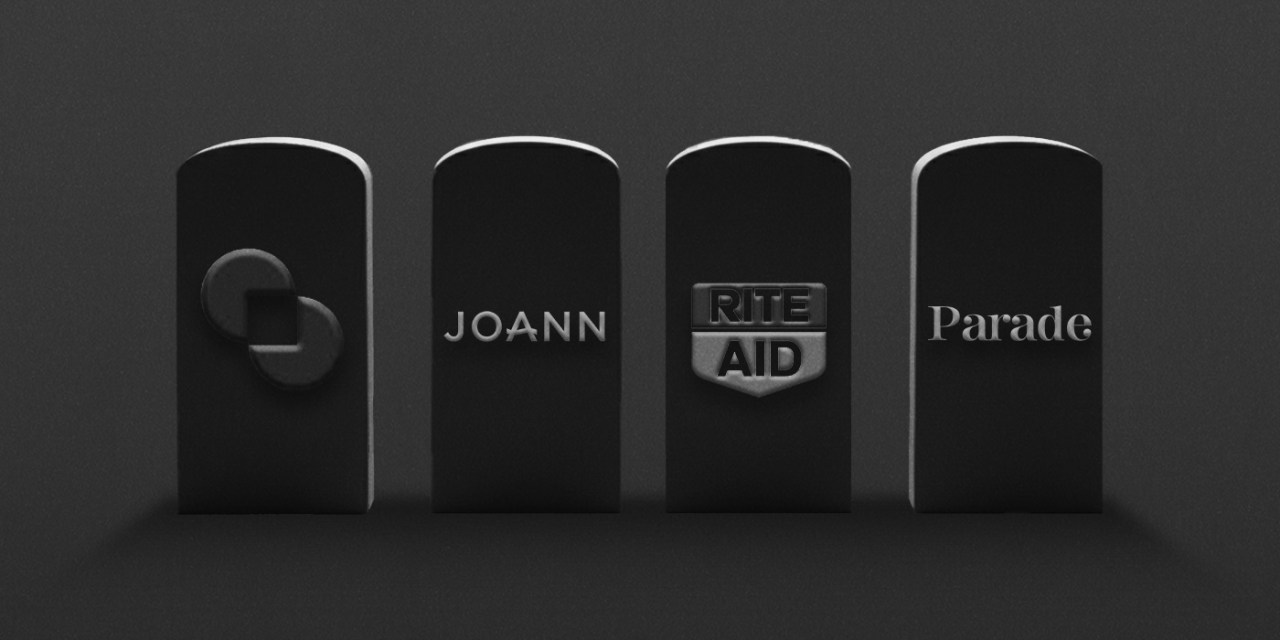
2025 was another challenging year for the retail industry, as tariffs added another crushing blow to an industry that had already been dealing with sky-high inflation and waning VC dollars in recent years.
The numbers lay bare how challenging it was for the retail industry: As of October, job cuts across U.S. firms hit a 22-year high, with retail being one of the hardest-hit industries. And of course, there were bankruptcies. U.S. business bankruptcies as a whole reached 6,574 in the third quarter of 2025, the highest since mid-2014.
In turn, Modern Retail staff rounded up some of the most notable brand names we lost in 2025 — whether they were due to reorganizations, bankruptcies or quiet closures. For many, the past few years had been death by a thousand cuts. This especially proved true for legacy players like Joann and Rite Aid, which had survived prior bankruptcies but ultimately filed for Chapter 11 and wound down their businesses entirely in 2025.
We’re only including brands that went out of business entirely in 2025. But given how often IP is sold and resold — just look at how many times Toys ‘R’ Us has been relaunched over the past few years — we can’t say for certain whether these brand names will be gone for good, as they may find life under new ownership one day.
OpenStore
OpenStore’s collapse in 2025 marked a clear endpoint for the once-booming e-commerce aggregator model. Founded in 2021 with ambitions to roll up dozens of Shopify brands, the company quickly amassed more than 40 storefronts, but many of those labels proved costly to run, requiring heavy digital marketing spend and new product development just to keep sales afloat. As e-commerce growth cooled and funding tightened, OpenStore halted acquisitions, laid off staff and began liquidating underperforming brands, according to CNBC. The company shuttered nearly all of its stores, raised a down round at a steeply discounted $50 million valuation — down from $1 billion — and pivoted entirely to Jack Archer, the menswear brand that was one of the few bright spots in its portfolio. —Allison Smith
Joann
Joann began to unravel in the second quarter of 2021; the company reported net sales declines every quarter for the next two years before filing for bankruptcy in March 2024. The company emerged from bankruptcy in April 2024 but filed for bankruptcy again less than a year later this past January. In February, the company started to wind down operations. After the first bankruptcy, the company faced many of the same macroeconomic challenges as other retailers in the crafts space, but was also burdened with unanticipated inventory challenges and a mountain of debt. This was in stark contrast to just after the pandemic, when Joann went public and raised around $131 million in its IPO to put toward nearly $1 billion in debt. The Joann brand still exists today under Michaels, with Knit & Sew Shops within Michaels stores. —Mitchell Parton
Rite Aid
One of the most headline-grabbing bankruptcies this year was the Chapter 11 filing from Rite Aid in May 2025. It was the second time in under two years. The chain had slashed its debt by approximately $2 billion and kept a smaller footprint of around 1,250 stores when it first emerged from bankruptcy in the fall of 2024. But it still carried significant debts and filed again in May. Some stores and assets were sold off, with a final 89 stores shutting down in October 2025. Beyond the closure of a familiar legacy chain, it meant the shift of millions of prescriptions that brought new business to former rivals like CVS Pharmacy, Walgreens, Albertsons and Kroger — CVS, for instance, acquired prescription files from 625 Rite Aid locations in 15 states. And the closure also signaled how even a large footprint and familiar name can’t save a business from shifting consumer behaviors and tastes if it can’t keep up. —Melissa Daniels
Parade
Many likened the intimates startup Parade to “Gen Z’s Victoria’s Secret” when it launched in 2019. The brand, dreamt up by founder Cami Téllez as a Columbia University senior, was a direct-to-consumer darling that sold colorful, genderless underwear and featured models with various body types. But the brand, for all its hype, lost its way in subsequent years. It spent too much on advertising (even as costs soared), failed to secure funding at a time of high interest rates and struggled to grow in brick-and-mortar retail. Perhaps most importantly, it grappled with conflicting priorities from its founder and investors, who disagreed on whether to grow at all costs.
Parade burned through $21 million in 2022, per documents reviewed by BoF. Then, in August 2023, Parade was acquired by Fruit of the Loom’s parent company, Ariela & Associates International, for an undisclosed sum. By October 2025, Parade announced it was folding, much to the devastation of its loyal customers. It’s a cautionary tale of how buzzy DTC brands marketed as the next big thing can still struggle to find a path to profitability. —Julia Waldow
Haven’s Kitchen
In January, condiments brand Haven’s Kitchen shut its doors after years of growing in the refrigerated grocery section. At the time, the company was planning to expand to additional Whole Foods Market regions alongside launching at some new retailers. But those plans came to a halt when founder Alison Cayne had to ultimately make the difficult decision of cutting her losses, which came after pivoting the business from a cooking school to a grocery line in 2018. Of the shutdown, Cayne told Modern Retail that even with consistent revenue growth and solid margins, she couldn’t get the company to profitability quickly enough without additional funding, which is difficult to come by these days. Throughout its years in operation, Haven’s Kitchen raised about $7.73 million in total venture capital. The decision was emblematic of the difficulties that food and beverage startups are facing, which make surviving without cash injection nearly impossible. —Gabriela Barkho