


‘Charting a new course’: How Brooks Running’s first chief product officer aims to accelerate the brand’s growth
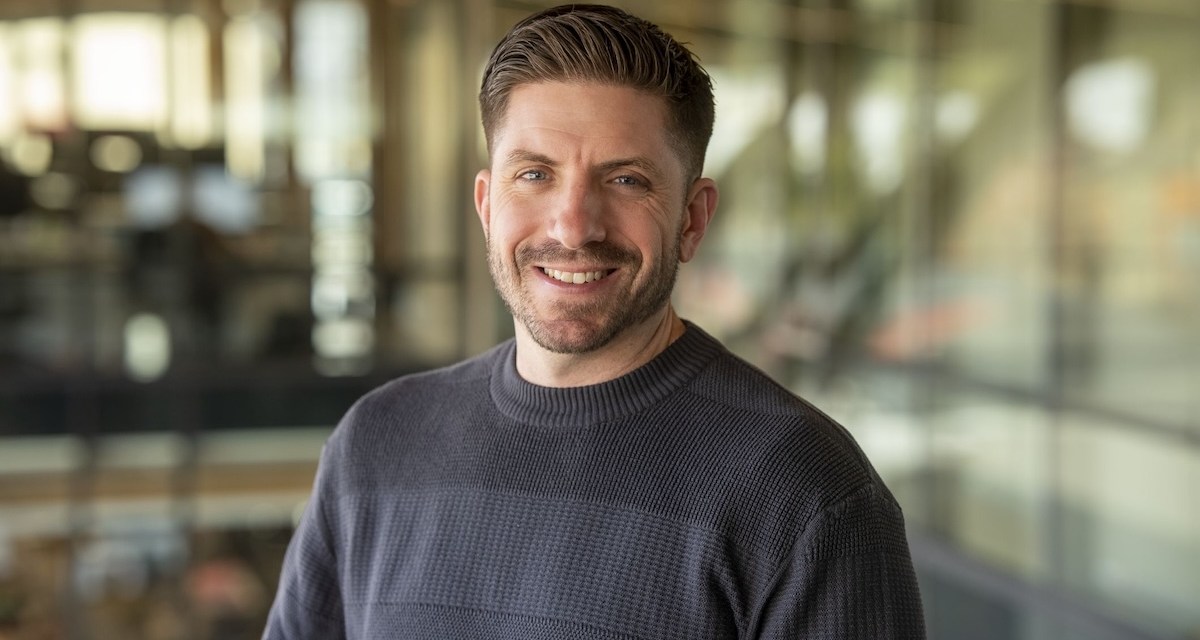
Carson Caprara is used to thinking on a season-by-season basis, as a long-time executive at Brooks Running. Now, in his new role as the brand’s first-ever chief product officer, he’s thinking a decade ahead. It’s a notable shift, Caprara told Modern Retail, but one he’s ready to tackle as the brand focuses on the long term in its 112th year. “We want to start looking at our product [as] led by a brand and a consumer vision,” he said.
Caprara, who started with Brooks Running in 2005 as a field marketing representative, assumed his new position in March. He most recently served as the brand’s svp of footwear and apparel. In a statement, Dan Sheridan, the CEO of Brooks Running, said that Caprara brings “exceptional clarity” to product development. His role “reflects both the scale of our ambition and the strength of Carson’s leadership, as we expand our product lines and accelerate our global growth,” Sheridan continued.
Caprara’s appointment is part of a larger executive switch-up at the Seattle-based company, which is looking to grow market share amid competition from players like Hoka, On and Nike. Also in March, Brooks promoted Mike Billish to the newly-created role of svp and gm of the Americas, and it updated CMO Melanie Allen’s responsibilities to have more of a global focus. A month ago, Brooks named former New Balance executive Claire Wood its vp of footwear product strategy.
Even as it fends off competition, Brooks has stayed on an upward trajectory. 2025 marked its ninth consecutive year of growth, with sales up 16% year over year, per a press release. (Brooks did not disclose exact revenue statistics.) Last year, 10 Brooks footwear styles posted year‑over‑year revenue growth of 20% or more, the brand said. In the fourth quarter, Brooks became the No. 1 performance-running footwear brand at U.S. specialty retail, according to insights firm Upper Quadrant.
While Brooks also sells apparel, the majority of its business traces back to footwear. Brooks launched in 1914 as a ballet shoe and bathing shoe company; it then went into baseball cleats, roller skates and football cleats before pivoting to running in the 1970s. One of its latest running shoe products, the Glycerin Flex, launched in February 2026. The company is particularly eager to grow its business in China, where sales jumped 245% year over year in 2025.
As chief product officer, Caprara is focused on developing innovative footwear and apparel that speak to runners’ needs and pain points. Caprara spoke with Modern Retail about his plans for the business as Brooks Running aims to hit 10 consecutive years of growth and expand its global footprint. The excerpts below have been edited for length and clarity.
What exactly does a chief product officer do, at Brooks?
“We’re charting a bit of a new course, which is great. I brought apparel under me about halfway through the year [under my previous position]. [But that had] been pretty siloed for a long time. The apparel industry [has] a different supply chain and different lead times [than footwear], and I think that created some of the divide, in general.
Brooks had been such a heavily footwear-focused brand that it was really hard to think about, with different leadership, having the experience to do both. … We want to start looking at our product [as] led by a brand and a consumer vision. I think, [over] the last five years, product was more driving the vision, and marketing and brand were [getting] plugged in downstream. And our vision is bigger than that. What do we want to innovate in the sport? Where do we want to take the sport? How do we want to grow the sport? Those are the types of opportunities that we want to solve at a five- to 10-year vision. This role is going to allow me to get up there.”
You’ve been at Brooks for more than 20 years. What stands out to you about the brand’s evolution over that period?
“What hasn’t changed is that the consumer and running have been at the center of everything we do. That’s what inspired me to come here in the first place, and why I’ve stayed. We’ve had many opportunities to expand out from that. But we just continue to see opportunity in run [and] creating through product and storytelling. There are still so many people who don’t run that we’re inspired to bring into the sport. And then [for] people that are running, [we want] to keep them running and keep them healthy.
The biggest risk in the industry is injuries, so that’s been an obsession. What’s been amazing, for me, is our journey through this obsession and how we’re able to get from a very technical, prescriptive approach to product and build on that. … [Before,] we were relying heavily on a gait analysis or a doctor referral for people to get introduced to Brooks. [But] the journey, starting in 2009, [changed] with barefoot running — [there was] this movement of the consumer taking charge of the experience, and not wanting to be told what they have to get, but wanting to have agency in the process.
We started to open up, ‘How do we get above just the technical [and] make things a bit more emotional and accessible to people?’ We created [the line] Pure Project [a minimalist running collection], which was driven by consumer choice and backed with great science, and we’ve just kept building on that. More and more, our line and our product have been about bringing cutting-edge technology, groundbreaking science and running biomechanics [to products]. … [We’re also thinking,] ‘How can we make this really exciting and engaging, to get people motivated to want to put the shoe on?’ … We have gotten there with product, and now, our brand and our marketing is getting there.”
You talked about thinking five or 10 years down the line, in terms of product innovation. What do you want to see from Brooks?
“Well, I’d like to point to the Glycerin Flex, coming on the heels of the Glycerin Max. Glycerin Max [from 2024] was really [about] bringing that maximal [cushioning] trend in a way that opened it up to many more people. … [But] we got an insight through the lab that [for] a large percentage of people, [the principle of a maximalist shoe] — locking up the mid-foot in a maximum shoe environment — doesn’t work with their body well. We started exploring that, and we created this technology [for the Flex] that allows the shoe to completely decouple in the rear foot and the fore foot, but in a way that’s ergonomic. It works naturally with the foot and moves with the body naturally. But [the shoe] still has a huge stack on it.
For us, it was this great manifestation of taking the latest technology, taking our understanding of human motion and science, and combining those things into a more cutting-edge, innovative product that meets an unmet need in the market today. It was also marketed and designed in a way that’s really inclusive. … Our whole campaign around it was, ‘Flex the rules.’ ‘You don’t have to be in Max like everybody else — you can go try this.’ That’s an example of what we want to do more of … [and] in a way that’s fun, colorful, emotional and motivating.
I’m excited to think about, ‘What does that mean with apparel, too?’ In these moments when we have [a product like] the Glycerin Flex, what is the apparel link to that? Could we start to tell these bigger stories where a consumer can get everything they need and be fully immersed in this experience from head to toe?”
Is apparel an area where you’re hoping to do more consumer research?
“That’s always happening, but we also have ambitions of what we think apparel can be. We’re trying to explore that, and it starts with athletes. So, we’re spending a lot of time [with] our athletes. We’re obsessed with, ‘How can apparel really enhance the run? How can it give you an edge, as an athlete? And how do we bring that learning and technology to more people?’
I think [it’s also about] embracing that the role of running apparel in people’s lives is evolving. … I’ll put it this way: In footwear, our whole foundation for innovation is, ‘Fit, feel and ride.’ In apparel, it’s, ‘Fit, feel and vibe.’ … We want people to put [apparel] on, and it makes them feel better than they would be without it, and it helps them meet moments in life. That has freed us up to innovate. … We see apparel being a bigger mix [and having] bigger potential for a growth rate going forward. And a lot of that is that we have a little more direct [retail] now and a little more control over how we bring that product to the consumer.”
What challenges are you dealing with, as you try to grow market share?
“As we look globally, there’s so much opportunity. We’re in the infancy of our Asia business [and] of our China business, as an example. We see running growing over there so much, and for us to be the No. 1 running brand in North America, that needs to be expressed globally. Now, how quickly can we do it? How do we do it in a way that is right for those consumers? The challenge would be in structuring for that.
The cadence of product innovation is different in regions. Asia moves really fast, because it is at the center of the supply chain. Europe is a little bit more calculated, in terms of the performance evolution of products, and they’re still very rigorous in terms of fit and biomechanics. North America is sort of in the middle. So, an opportunity for us is, ‘How do we move fast and slow across our line? How do we move at different rates and meet different consumers where they are?’ … The big opportunity for us is to build a line architecture — and a product line, in general — that has different value propositions and moves at different speeds.”