


Brands Briefing: Fjällräven is going beyond Kånken backpacks as it builds stores in North America
This is the latest installment of the Brands Briefing, a weekly Modern Retail+ column about the growth strategies of modern brands. More from the series →
Fjällräven is bringing its curled-up fox logo to more stores across North America.
The Swedish brand is opening two new locations in Boston in September, two blocks apart. One will be a Fjällräven brand store (165 Newbury Street), while the other will be a Fjällräven + Co. store (304 Newbury Street). The latter is a new concept that brings Fjällräven and its sibling brands (German hiking boots brand Hanwag, U.S. outdoors clothing brand Royal Robbins and Norwegian wool brand Devold) together under one roof. Opening weekend is set for Sept. 11-13.
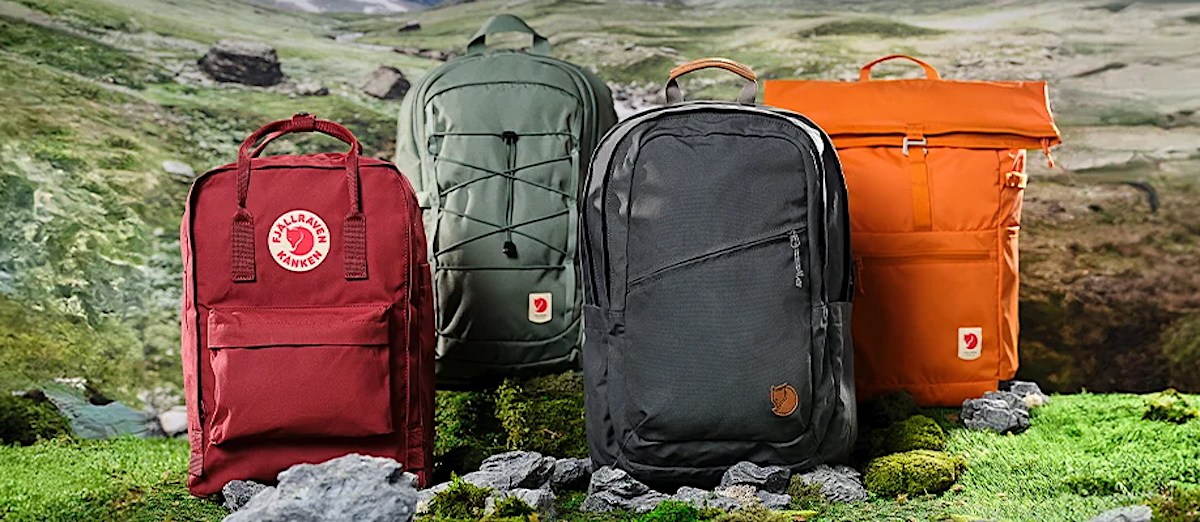
Opening locations in North America has been a bigger priority for Fjällräven over the last decade as it looks to solidify its place in the outdoors market. Fjällräven has been around since 1960. While it’s traditionally known for its colorful Kånken backpack, which first came out in the 1970s, the brand also sells outerwear like wind jackets and mountaineering trousers. Owned stores allow the brand to display its full range of merchandise and “market and express the brand in the way that we want to show it,” Nathan Dopp, Americas CEO at Fjällräven, told Modern Retail. In other words, Fjällräven is positioning itself as a heritage outdoors brand, but one that’s for all shoppers, not just “adrenaline junkies,” Dopp said.
Globally, Fjällräven makes approximately $700 million in revenue a year. In North America, its sales are split 50/50 between wholesale and direct-to-consumer. Fjällräven has a presence in accounts like Nordstrom and Urban Outfitters, but it also has more than 30 stores in North America. The brand opened its first U.S. store in New York City in 2009 and soon ramped up its store count to “try to get the word out” to new customers, Dopp said. Partly thanks to these efforts, the U.S. is now Fjällräven’s largest market, by revenue.
Today, about 24-30% of Fjällräven’s North American revenue traces back to its stores. Around the time that Fjällräven opened its first U.S. store, its Kånken backpack was quickly gaining steam internationally. The product came to the U.S. in 2007 and became popular with hipsters, high-school students and celebrities including Madonna and her family. The Kånken’s sales ended up growing tenfold between 2010 and 2017, per the brand. But executives were wary, knowing that trends fizzle out eventually, said Dopp, who joined the brand in 2012. They didn’t want the Kånken to be a “one-hit wonder,” he explained.
“We’re going to have this great run, and then it’s going to crash,” he explained of the company’s thinking at the time. “We wanted to really establish the brand in a meaningful way. [To do] that, we were going to have to tell our story. We weren’t going to get a partner to do that with us, so we were going to have to do it ourselves.”
Owned stores have been key to this equation, Dopp said. One of the biggest reasons? Store associates can help customers pronounce the brand’s name. (“We feel like that’s the biggest impediment to the brand,” Dopp said. “People are intimidated because they’re like, ‘Is that Farfig Nugen?'”) Notably, Fjällräven also doesn’t build its stores around the Kånken. The brand puts the backpack in the front, as a teaser, and then has a Kånken wall in the back. To see it, shoppers have to make their way past everything else on shelves.
“I want stores to feel a little bit like a nature trail or a river,” Dopp said. “I don’t like straight lines. I want that experiential walk-through feel. So, by the time you get to the Kånken, you should have [seen] pants and all these other products that we’re trying to get people exposed to.”
That ethos has paid off since the pandemic, Dopp said. At the time, Kånken sales slowed because students were doing remote learning and didn’t need backpacks. But customers had learned about Fjällräven’s other offerings, and sales of its other products went up. “We were fighting our way into this authentic outdoor space in ’17 and ’18, and then Covid arrived,” Dopp said. “It reset us in such a way that everyone really discovered us then.”
Fjällräven is one of a number of European outdoor brands investing more in the North American market. Salomon, which is from France, is working to double its number of U.S. locations by the end of 2028, Modern Retail previously reported. And Mammut, which is from Switzerland, is looking to go into more North American specialty stores this year, per a press release.
It’s a trend that Rebecca Fitts, the founder of the physical-retail platform Double03 Retail, has noticed. Today, a lot of store growth in the U.S., specifically, comes from international brands, Fitts told Modern Retail. “A lot of brands in the U.S. have kind of hit their ceiling of how many stores they need,” she said, mentioning factors like high interest rates and low vacancies. Today, there aren’t a lot of American brands that “are moving and shaking” when it comes to large-scale store growth, Fitts said.
At the same time, she explained, international brands offering e-commerce in the U.S. may still be inclined to try out stores in the country. It’s this mode of thinking that recently led Wallien, a Dutch women’s swimwear brand, to open its first pop-up in the U.S. this summer. Wallien started selling online in the U.S. in 2025. “We quickly realized that it’s actually our best market, and it’s our fastest-growing market,” Olivier Wallien, the brand’s co-founder, told Modern Retail. In June, Wallien’s U.S. online sales were up 443% year over year. The brand is now funneling all of its marketing spend into the U.S. and is considering holding another pop-up.
Wallien and Fjällräven are both higher-end brands, and wealthier consumers are still spending in today’s K-shaped economy. This could encourage premium brands to see the U.S. market as “viable P&L,” Fitts said. “Even if you’re an international brand, and you’re just coming [to the U.S.] to open your first store to stores three through five, that’s [still] expansion,” she explained.
Outside of the U.S., Fjällräven is continuing to bet big on North America. The brand is preparing to open its eighth location in Mexico, and it’s also seeing growth in Canada, where customers tend to be “less price-sensitive and more excited about premium durable goods,” Dopp said. Canada makes up about 24% of the brand’s North American business, and Fjällräven will do $8 million in revenue in Mexico this year.
Fjällräven is also using North America as an expansion blueprint when it comes to Fjällräven + Co. The new store in Boston will be the first-ever Fjällräven + Co. location and will show off all four Fenix Outdoor brands, as well as other third-party brands in adjacent areas like hydration. It will tailor the merchandise based on what types of products — technical vs. lifestyle, for instance — seem to resonate the most. Fjällräven is planning two more Fjällräven + Co. locations in Europe over the next four months.
As it gears up for its 70th birthday in 2030, Fjällräven ultimately aims to use its stores to speak to outdoor enthusiasts with various skill levels and interests. “No matter how big we get, I still want [our merchandise] to feel a little bit like, ‘I know something about your aesthetic and who you are because you’re wearing it, and I’m wearing it,'” Dopp said. “We’re not trying to sell to everybody. We just want people who like what we are [doing]. And we present that.”
What we’re reading
- Anthropologie is bringing Nike sneakers to its shelves. (Glossy)
- Victoria Beckham‘s fashion and beauty brand eked out its first profit in 18 years. (BBC)
- Behr hopes its AI chatbot and influencer campaign can help shoppers fight “paint paralysis.” (Marketing Dive)
What we’ve covered
- Eos, Evian and Lavazza are among the brands hosting tennis-themed pop-ups timed to the U.S. Open.
- Water bottle brand Bubba went viral after taking its “baddie” identity to Lollapalooza.
- Move over, Labubu. Retail’s new “it” girl is a cartoon bunny named Miffy.
This story has been updated with the correct list of brands sold in the Fjällräven + Co. store.