


How ThredUp is using AI to improve its marketing operations and move further up the funnel
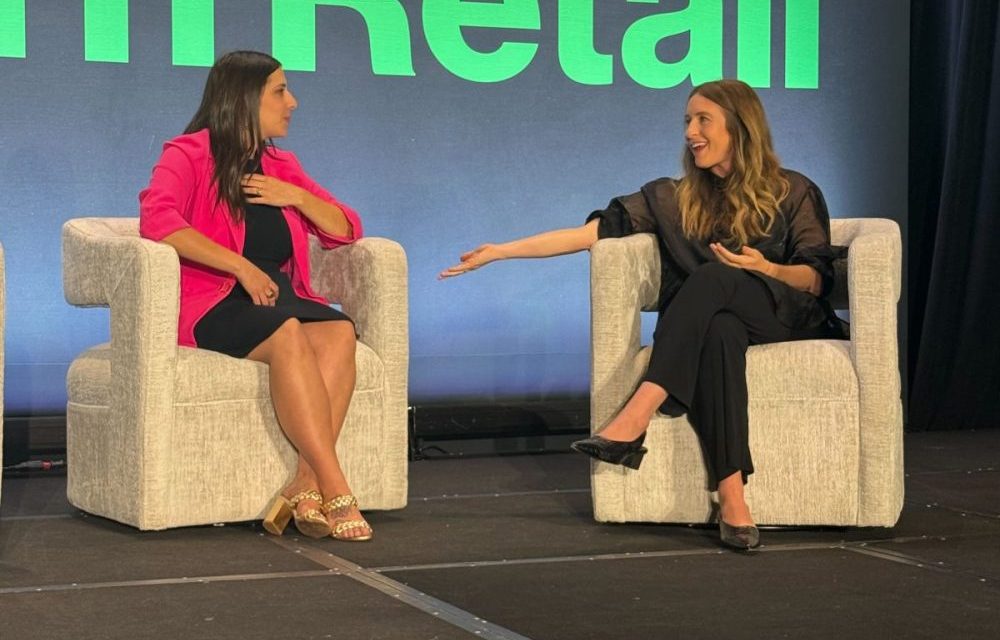
Resale company ThredUp uses AI in many ways. As its CEO, James Reinhart, has previously spoken about, ThredUP uses AI for everything from tagging products to improving product recommendations.
But when it comes to ThredUp’s marketing operations, Kristen Brophy, the company’s SVP and head of marketing, said she’s especially excited about how AI is improving forecasting.
“I like to say that a lot of the work that we’re doing has helped us go from being reactive to proactive and predictive,” Brophy said on stage at the Modern Retail Marketing Summit in Huntington Beach, California on Monday.
ThredUp, of course, works with many vendors that have started to bake AI into their operations. ThredUp works with incrementality testing tool Haus, as just one example. “We’re using incrementality vendors. We’re using media mix modeling to say, ‘Hey, we think if we spend this amount, this is what we’ll get back,'” Brophy said. “And so we can be more judicious, more intelligent about how we’re allocating spend across the funnel.”
Brophy said that ThredUp has also gotten better at predicting customer lifetime value; she specifically named Angler, an AI-powered audience targeting tool that ThredUp uses.
“We have been able to feed our LTVs back into our platforms like Meta and Google, and that’s really cool, because then we can do lifetime value targeting with our customers,” Brophy said, adding that ThredUp has an “amazing” data science and marketing team.
At the event, Brophy spoke about modern customer acquisition strategies. When she joined ThredUp back in 2024, she acknowledged that “we were really concentrated in the lower funnel, specifically on Google, PMax, product listing ads and Meta.”
Those lower-funnel marketing channels are still a very important part of the business. But as the company grew, she said that it became more important for ThredUp to create more demand by investing more in mid- to upper-funnel marketing; the company has also experimented with new channels like affiliate and Pinterest in its quest to move further up the marketing funnel.
And that’s where those investments in AI come in handy to help justify marketing spend.
“Because of these new forecasting tools we have, we’re much more effective partners to the finance team,” Brophy said.
When it comes to testing new marketing channels, Brophy said there are a few signals ThredUp looks for to determine whether a new channel is working before investing further in it.
“Are we acquiring customers? Is it a little expensive to acquire those customers, and can we get the cost down? Are we acquiring really valuable customers? [And] can we scale that?” Brophy said.
Oftentimes, it’s a matter of trial and error to find the right signals on that particular channel. ThredUp has tested TikTok, Brophy said, but she admitted, “We cannot make TikTok advertising work. … We cannot scale our spend effectively with static or video advertising on TikTok.”
But what has worked for ThredUp is TikTok Shop; the company has used affiliate partners specifically to promote its Clean Out Kit, where customers get a bag they can then use to send their items to ThredUp to sell.
“When you have an affiliate model and everybody has skin in the game, it’s a much better experience for the influencer and also the business and also the customer,” Brophy said.
Still, even with ThredUp’s investments in AI and all the work the company is doing to find the right signals on new marketing channels, Brophy said her biggest challenge remains showing the value of mid- and upper-funnel marketing investments, especially against longer-term horizons.
“How do you make long-term investments in building a brand with longer-time horizons and being beholden to quarterly goals, where you need to kind of hit your targets right away?” she said.
“I don’t think marketers have the luxury anymore of being like, … ‘We should just [invest in something] because it’s cool,'” she said.