


How QVC is building a flywheel across TikTok and TV ahead of the holidays
QVC is gearing up for what will be its 40th holiday season with a multi-pronged approach across TV, TikTok and more.
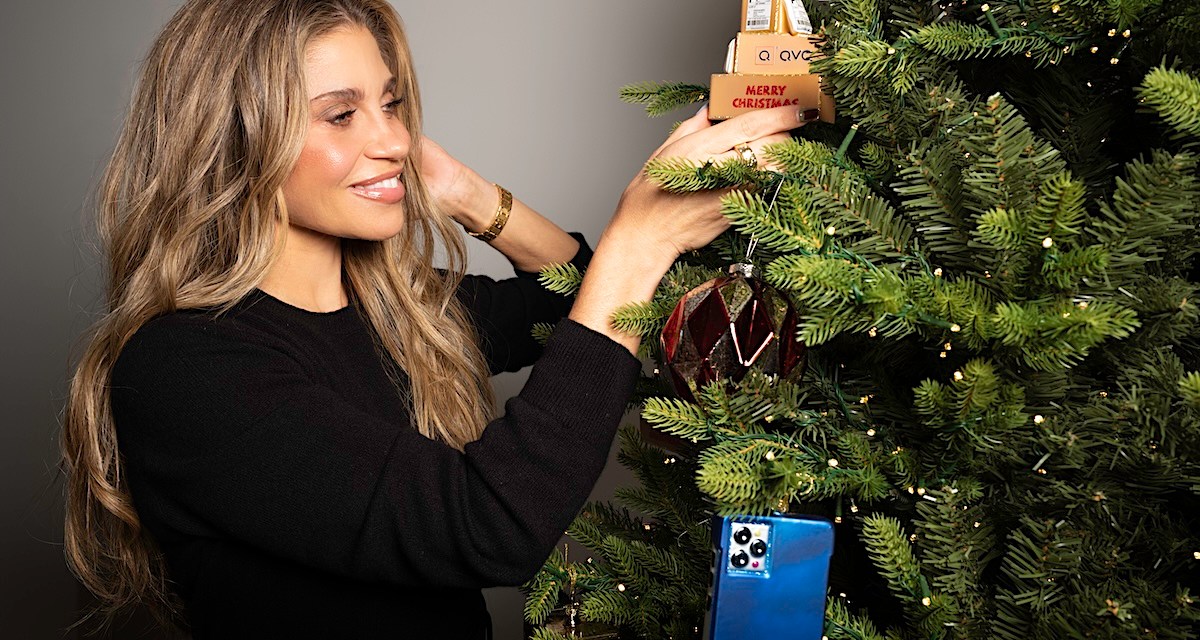
This season, the live-shopping giant will offer gifts from brands including Le Creuset, KitchenAid, Laura Mercier and Nespresso, alongside QVC-exclusive launches from Off/Duty by Coco Rocha and RM Studio by Rebecca Minkoff. QVC will also hold its “Nonstop Holiday Party” event from Nov. 6-8, which will feature early Black Friday sales and special guests Martha Stewart, John Legend and Teri Hatcher. QVC has also appointed “Boy Meets World” star Danielle Fishel as Mrs. Claus in a marketing campaign.
QVC is one of the originators of live commerce in the U.S., having launched in 1986. But the company has also had to adapt as the format takes off. In April 2025, QVC started streaming 24/7 on TikTok. In addition to running its own livestreams and offering goods via TikTok Shop, QVC also works with hundreds of thousands of creators. QVC and its sibling HSN acquired nearly 1 million new U.S. customers on TikTok Shop in 2025. Today, sellers showcase products from jewelry to pajamas via TV, QVC.com, the QVC app, social media and streaming platforms.
QVC is looking to have a banner holiday season as it tries to get back to growth. For years, QVC Group, Inc. — the parent company of QVC and HSN — weathered challenges, including declining cable viewership, tariffs and increased competition. QVC Group declared Chapter 11 bankruptcy in April but emerged from the proceedings in August and reduced its debt by more than $5 billion. QVC Group’s total net revenue for the three months ending June 30 totaled $1.765 billion, down from $1.984 billion a year prior.
Modern Retail sat down with Krystyna Taheri, QVC Group’s SVP of social commerce, to chat more about how the company is approaching live selling this fall and winter.
How are you thinking about live shopping now, compared to years past?
“QVC’s been doing this for 40 years, and I would say we’re very good at experimenting in formats and style on TV. We still do about 60,000 hours a year of live TV. And then, on TikTok, we do about 200 hours a week of just live. While we’ll share some of the same products, we have different hosts. There’ll be some crossover, but we have TikTok-specific hosts.
It’s a different style of live selling. It’s a lot faster. You’re talking 20-second, 30-second hooks and sells, versus a seven- to eight-minute segment, which is what we do on TV. So that’s been a big fundamental shift. And there’s the technical side. We have 10 live studios that are built for TikTok. We’re filming with [a phone], and so, [while] we have a full robotics team for our TV studios that do the cameras, we don’t for TikTok. The sets are different. The cuts are different.
But I would say the core principles run across: establishing that trust [with the viewer], having that relationship, product demonstration, storytelling. Those are characteristics that you could put on either platform and be successful with.”
How do you make a TikTok-optimized studio?
“We have multiple channels, so our QVC main [channel] is more of a simple set. You’re going to have your shelvings, your branding. The QVC Fashion set looks like you’re in a closet. You have QVC Beauty, and that’s very up close, and [hosts] basically just have a tray, because you want to see the product and you want to see them put it on. Then, you have QVC Home, which has a fireplace, and it’s very homey. And then, we have a set that’s very kitchen-focused. We sell a lot of kitchen gadgets. We sell food. We’re working up to being able to cook live. So, you can transport yourself into these different spaces within your home, just like you could on TV. They’re just smaller.”
For TikTok hosts and TV hosts, are there certain best practices you recommend? How do you coach people through the different formats?
“It’s hard, and I would say it’s always a learning [mentality], because the TikTok platform changes a lot. The algorithm tries to be consistent, and sometimes, it’s not. For our TikTok live hosts, some already had a following. Some were fairly new. They just had very strong personalities and good selling habits. We picked a mix. … QVC has been amazing at finding talent and creating their own following.
[The hosts] do go through training. We teach them how they’ll have a schedule where they’ll go live, they’ll do some short-form content, and every week, they’ll do a tape review. They’ll sit with a producer and rewatch a really great segment of their live and maybe a not-great segment, and then talk about it. Like, ‘Maybe we could have tried this differently.’ ‘Maybe we should have done this.’ ‘This really worked.’
TikTok’s platform, like TV, is very analytical. So, part of the training is understanding what [hosts] should be watching while they’re live. How do they think about the click-through rate? How do they think about the click-to-order rate? Obviously, the revenue is an output of those metrics. So we try to teach them not to focus just on the revenue that’s coming in, but instead focus on those engagement metrics, because that will lead to conversions.
And then, we’re very adamant about aggressively testing and learning. [The hosts] will come with ideas. One of our hosts is Paulina, and she said, … ‘Can I make a show that’s just called Girly Girl Vibes?’ … My team and I can sit here from a strategy standpoint, but they’re going live for four hours. It’s almost like an immediate focus group. So, we allow them to think through what that could mean for their fans.”
We’ve talked about how sellers can vary by channel. What about the buyers?
“It’s not as different as you would expect, demographic-wise. We skew older than the average buyer on TikTok but younger than our core demo on TV. We’re still heavily female-based across the board. That’s also a component of the products we offer. I will say, we generated over 1 million net new customers on TikTok last year, which was massive. That means they’ve never shopped on QVC, whether it be on TV or dot-com.
Now, we do have some diehards out there that will find us on any platform. They may be on TV, and then they’ll find us on TikTok, and we’ve even had some that have found us on TikTok and then explored our website and found the other offerings. We have seen somewhat of a flywheel across all of our platforms. I think the next phase is how you make that stronger.”
How are you, at QVC, thinking about the holidays?
“We are very much a holiday destination. We do this amazing thing corporate-wide, and it does very well on TikTok, called Christmas in July. I do feel like the industry is getting earlier and earlier, … but we’ve already seen a lot of Christmas decor be sold.
If you’re in retail and you don’t win Black Friday and Cyber Monday, you don’t win the year. [For Cyber Weekend], we have very aggressive product plans. We’ll do some big drops and launches. We’ll do what we call mega lives, which are eight- to 10-hour livestreams. It’s usually split between two [hosts], and sometimes, a third will pop on. There’s a lot of marketing dollars behind it. There’s usually product drops behind it. It’s a new set. You have to think about what is new, what is the reason to tune in, why now?
And even before Black Friday and Cyber Monday, we do this thing at QVC called Nonstop Holiday Party. It’s usually around the first week in November, and we’ll be running crazy stuff on TV and on dot-com. It’s a 24-hour, [three-day] weekend. We’ll do something similar on TikTok — we won’t be able to actually stream for [the whole time], but we will do another big live there.
So, we have these drip lives that’ll lead up to Black Friday and Cyber Monday. And we always tease them in the lives like, ‘Tune in for our next mega next week, where we’ll be releasing X.’ That’s always a great way to get people to tune back in and drive excitement and urgency.”