


Brands Briefing: Papier’s sales swell to $50M this year fueled by a desire for analog products
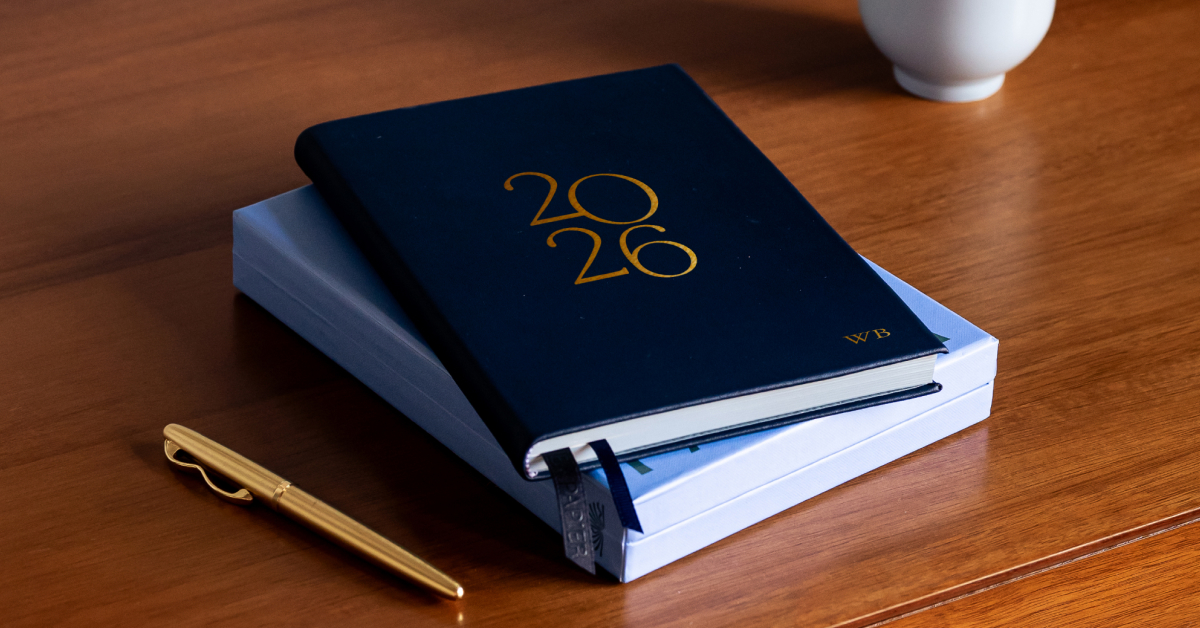
Pen and paper is having a moment, especially in peak planner-buying season as people look to the year ahead.
Personalized stationery and planner company Papier has doubled its sales over the past three years and is expected to cross $50 million in sales by the end of 2025. Papier CEO Taymoor Atighetchi credits the growth, in part, to the acceleration of artificial intelligence. The brand specializes in artful, aesthetic products, and while the fourth quarter is typically its busiest season, the company is seeing exceptional sales, up 30% year-on-year. Planner sales were already up 20% year over year as of October, then the company had its best sales day in company history on Black Friday.
“Customers are yearning even more for that kind of analog tactility, and craft is actually becoming really important now in our minds,” he said. “We’re much more about that human touch, and we think consumers are really valuing that.”
The 10-year-old London-based company says the U.S. is its fastest growing market and accounts for just over half of revenue. Beyond its direct-to-consumer site, which has about a 50% repeat rate, it has a wholesale presence in about 4,300 doors across 13 countries. Retail partners include Anthropologie, Barnes and Noble, Nordstrom and Target, where it launched in March 2024. It’s also been growing its product catalog over the last few years and now offers phonebooks, sales of which are up 72% year over year.
Papier’s growth points to a resurgence of popularity for physical products that were once eclipsed by their mobile or digital counterparts. “Stationerycore,” for instance, has 57 million TikTok posts showing off carefully curated writing products. And physical music, including vinyl records, hit $2 billion in sales last year, per the Recording Industry Association of America, marking a 5% increase from the prior year. On the business side, startups like corded phone company Tin Can and digital camera company Camp Snap are rolling out new versions of 20th-century products that were once replaced by smartphones.
While Papier used to play up the productivity and efficiency of pen-and-paper writing, it’s now leaning more on slowing down. One campaign this year is called “Find your Rhythm,” while other ads lean into giftability with the tagline “Made to Treasure.”
“There is a conscious decision by consumers to effectively not let their lives be completely digitized,” Atighetchi said. “And I think people who work in an analog way feel the benefits of that. It’s much more intentional.”
Though the company isn’t heavily focusing on influencer marketing in the fourth quarter, it is rolling out some creator-led and partner content to help communicate its seasonal messaging. One recent campaign with chef and entrepreneur Nina Parker, for instance, showed off her cooking and paper-based rituals. In late October, the brand also rolled out a product collaboration with the fashion brand Damson Madder. And this past weekend, it brought its holiday campaign to life with a takeover at the print magazine newsstand Shreeji in London. Attendees were treated to not only an array of Papier products and merch for sale, but also activities like board games, puzzles, a DIY holiday card station and a cafe station.
Mary Ann O’Brien, founder and CEO of brand and marketing agency OBI Creative, said brands with analog bents can lean into the “Video Killed the Radio Star” effect, referring The Buggles’s hit song of 1979 that was the first video ever shown on MTV. As new technologies outshine traditional practices, some people are yearning for more intentionality, she said, citing how college students are buying up Polaroid cameras or taking social media breaks.
From a marketing standpoint, companies like Papier can emphasize the routines and lifestyle benefits of something they can hold, O’Brien said.
“Brands are either competing on price or on identity. You’re either cheap and fast, or you’re premium and about personal expression,” she said.
This time of year, Papier sells a planner about once every 25 seconds. During peak season, it boosts its marketing with extra paid social ads and more user-generated content.
From a channel perspective, TikTok has been particularly strong for the brand this year, with traffic nearly doubling over the last 12 months — driven in large part by Gen Z and Gen Alpha scrollers who are following the brand’s journaling tips and behind-the-scenes content. Videos lean into the use cases for products, whether handwritten notes, weekly plans or shopping lists, which are shown on perfectly color-coordinated desks. One pre-school-year post on academic planners — or diaries, as they’re known in the United Kingdom — has surpassed 32 million views.
From a product standpoint, Atighetchi said the company aims to sell out every year. As a dated product, there’s not much need for excess inventory. To help ensure sell-through, repeat customers receive early bird promotions. The “Better than Black Friday” promotion gave repeat customers 35% off during the week from Nov. 19 to Nov. 25, while the Black Friday sale was 30% off from Nov. 26 to Dec. 3. Currently, the brand’s most popular offering is an Advent calendar of 24 full-sized products, like rollerball pens and a gratitude journal. The waitlist opened in August.
In 2026, Atighetchi said, the company will lean into products like photo books and board games to further its product catalog. It’s also planning to do more with its loyalty program, which has around 500,000 members, and will look to add more benefits, such as special discounts or early access.
“We still think that the vast majority of American consumers probably haven’t heard of us as a brand, and we’d love to make sure that we can grow further and grow into that space,” he said. –Melissa Daniels
By the numbers: Behind Brunt’s banner Black Friday
Brunt Workwear, an apparel and work-boot company, had its best-ever Cyber Week in 2025, according to data the brand shared with Modern Retail.
Brunt, which caters to workers in trades like construction and trucking, launched in September 2020. For Cyber Week 2025, it offered deals early, on items including limited-edition all-black boots and camo hoodies. It also released four additional limited-edition boot and apparel drops, a model it found success with last year.
What’s more, Brunt offered tiered discounts for the week of Black Friday through Cyber Monday. These included, “Spend $100+, get a free beanie” and “Spend $150+, save $15, plus get a free beanie.” Brunt sells to customers through its e-commerce site and its dozens of wholesale partners. Below is a quick look at its standout performance last week.
- $3 million: Brunt Workwear’s sales on Black Friday alone — up from $1 million in 2023 and $149,000 in 2021.
- Every five seconds: How often a new order came in on Black Friday.
- $15 million: Brunt Workwear’s total revenue for its BFCM period.
- No. 1 category: Apparel and accessories. This was the first year Brunt’s boots ranked second in sales during BFCM, indicating increased demand across other segments. –Julia Waldow
Fashionphile launches new consumer products
Fashionphile, a re-commerce platform for pre-owned handbags and accessories, has quietly been adding new consumer products to its site that complement its resale business.
The company is rolling out a new line of products which it’s calling its Investment Protection Collection; it builds off of a cleaning kit that Fashionphile launched in June.
Sold separately from its bags, the collection includes multiple pieces ranging from handbag wipes ($20) to a mending kit ($30). Its cleaning kit, which it debuted in June, is part of the suite and comes with a conditioner and microfiber cloth ($85).
Fashionphile already uses these products to clean its own bags, founder Sarah Davis told Modern Retail. “We’ve tested products over time. We do this every day, in volume, and we have a lot of learnings,” she said. “We thought, ‘Why don’t we let customers know what the go-to solutions are for maintaining their bags?’ Because we know better than anyone.”
Fashionphile, which launched in 1999, says its Atelier team has restored over 2 million handbags since the brand’s inception. Its cleaning products enable “a virtuous cycle,” Davis noted. “If we help you keep your products in better condition, when you go to sell them to us, they’re in better shape, and you’re going to get more money for them. It helps to grow that resale value.”
To help with education, Fashionphile is creating a landing page with videos and notes on how to use all of its new products. It’s also tapping Martha Stewart, a brand ambassador, for creative on social media. –Julia Waldow
Oura is hiring for 70 roles as it closes in on its first $1 billion year
Smart ring brand Oura is looking to fill a number of new roles, including a director of retail marketing for the Americas. According to the company, this person will shape its retail channel marketing strategy, develop plans to grow with existing partners and drive continued expansion into new markets. The job listing reflects the Finnish brand’s ambitions to become a global wearables brand, having opened a concept store inside London’s Harrods department store.
That is one of over 70 open jobs at Oura across the country, according to LinkedIn — they include many tech-focused roles, such as iOS and Android engineers. The company is also seeking candidates to oversee logistics and business development, with some positions focused on health and fitness community outreach, as Oura seeks further growth in the wellness category. The hiring spree comes on the heels of Oura raising $900 million in October, bringing its valuation to a whopping $11 billion, as it projects $1 billion in annual revenue. –Gabi Barkho
What we’re reading
- Quince is adding all sorts of new categories to its product assortment as it seeks to prove out its $4.5 billion valuation. The latest addition? Wine.
- On‘s co-founders spoke with Footwear News about the major new product releases it’s cooking up for 2026.
- Why there are so many influencer collaborations right now, according to Business of Fashion.
What we’ve covered
- How Oura CMO Doug Sweeny helped steer the health tech company to a $1 billion year.
- As big brands flood the podcast advertising space, startups are having to shift strategies and find under-the-radar shows that the Coca-Colas and Colgates of the world aren’t yet shelling out money on. Here’s what brands like Asset and Little Spoon have learned from their forays into podcast advertising.
- ‘Tis the season for “12 days of deals” and other limited-time promos to drum up excitement between Cyber Monday and Christmas.