


Marketplace Briefing: How a cartoon frog wizard is helping Clorox sell Pine-Sol on TikTok Shop
This is the latest installment of the Marketplace Briefing, a weekly Modern Retail+ column about the ever-changing e-commerce marketplace landscape. More from the series →
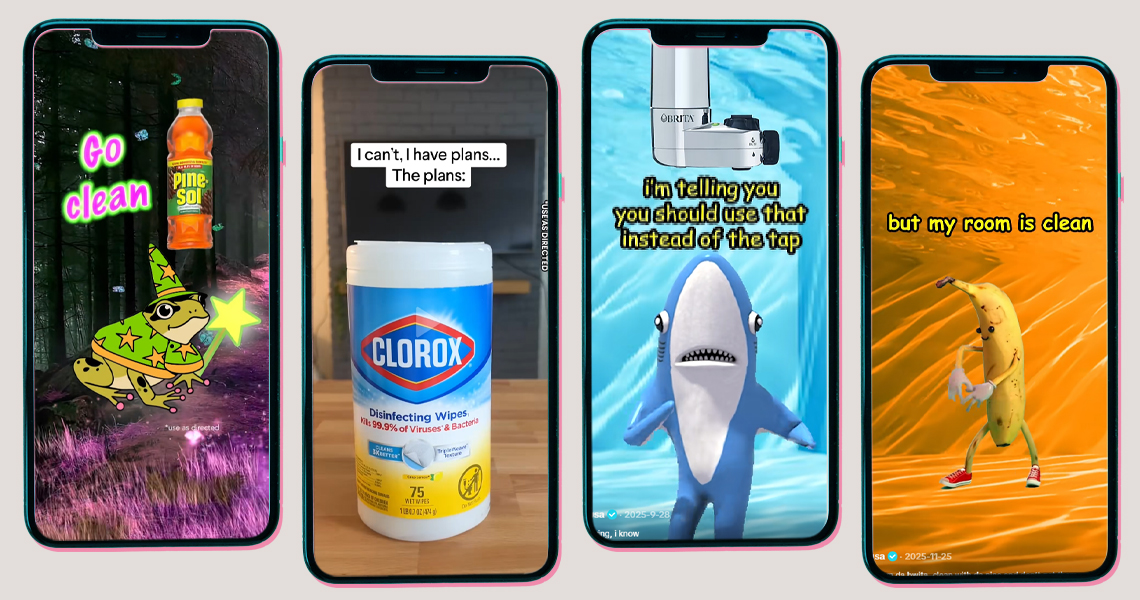
TikTok users scrolling through Pine-Sol’s page are greeted by a frog wearing a wizard hat, an anime girl, a dancing banana and brightly colored bottles labeled “OMG da Pine.” The account looks more like a Gen Z meme page than the home of a cleaner that has been around for nearly a century. Now, these oddball cartoon characters want to sell you cleaning products.
In May, Pine-Sol began selling four limited edition scents exclusively through TikTok Shop, giving shoppers the chance to buy bottles tied to the fictional characters that had already become part of the brand’s online universe. The scents, including Magic Matcha, Strawberry Shine, Banana Boogie and Midnight Espresso, sold out within hours, according to Clorox.
The launch marks the latest step in The Clorox Company’s growing push into social commerce. Over the past year, the company has rolled out TikTok Shop storefronts for several of its 30 total brands, including Burt’s Bees, Brita, Hidden Valley Ranch, Pine-Sol and, most recently, Clorox. The effort reflects a broader trend as more established consumer brands embrace TikTok Shop, which was once dominated by smaller merchants and beauty startups. Sales from brands generating at least $30 million in annual revenue nearly doubled on TikTok Shop in 2025, while companies including Ulta Beauty, Sally Beauty and PepsiCo have recently joined the platform.
“We’ve been really intentional about starting with brands and products that naturally lend themselves to the social environment,” Rita Gorenberg, Clorox’s senior director of brand experience, said in an interview.
Burt’s Bees became the company’s first TikTok Shop brand because beauty is already highly creator-driven on the platform, where content and reviews are critical to product adoption. Rather than listing its standard assortment, Burt’s Bees focused on “highly visual, giftable products,” limited-edition offerings and products that creators could easily feature in videos, she said.
That strategy appears to have resonated. Since launching on TikTok Shop, Burt’s Bees has generated more than 60,000 orders, according to figures Clorox shared with Modern Retail. The company has since launched more brands on TikTok Shop. Brita has generated nearly 1,000 orders, Hidden Valley Ranch nearly 450 orders, Pine-Sol more than 300 orders and Clorox, which launched most recently, more than 250 orders.
“I think immediately we are really leveraging this channel not only to create engagement, but also to be an always-on learning lab for us,” Gorenberg said. “TikTok Shop is a critical piece of our learning lab model, and it really allows us to not only learn from the consumer directly, but really understand the evolutions in the creator ecosystems.”
Pine-Sol offers perhaps the best example of Clorox’s approach to TikTok Shop. Before launching a storefront, the brand spent months building an online following around its “OMG da Pine” universe, complete with animated characters, inside jokes and irreverent humor.
For instance, one of Pine-Sol’s most popular TikTok videos, with more than 13 million views, features a cartoon frog in a wizard hat casting a spell that encourages viewers to clean. Gorenberg said Clorox built them after studying the types of communities and trends already thriving on social media platforms.
“We saw certain signals that anime was really popular, so we created some anime characters,” she said. “These were all characters and personalities that sparked out of social insights and ongoing ideation through our behind-social team.”
The effort also reflects broader changes in who is buying cleaning products. According to an annual survey by Clorox of more than 3,500 Americans, 49% of Gen Z consumers say they look forward to cleaning, compared with just 9% of older consumers. The company also found younger consumers are more likely to treat cleaning as small moments throughout the day rather than a scheduled chore, creating new opportunities for brands to build communities around cleaning content.
Once the “OMG da Pine” characters began attracting an audience, Clorox turned them into products. “We were seeing through our regular TikTok content all of this great engagement and fandom around our brand, our OMG da Pine universe and our characters. And so the next natural step of that is: How do you then take what’s working and add on this seamless path to purchase?” Gorenberg said.
The experiment also became a way to test products before deciding whether to bring them to a wider audience. Gorenberg said the Pine-Sol scents sold out within hours. The launch also gave the company immediate feedback about which fragrances shoppers responded to most, helping inform future product development.
“This shop really plays into our much broader strategy, which is: How do we really start to bring together discovery, engagement and purchase into one place?” Gorenberg said. “TikTok Shop isn’t just about creating a new storefront; it’s really about building a new way to connect with consumers.”
Since January, Clorox said its brands have generated millions of organic impressions on TikTok. Pine-Sol alone has generated more than 8.4 million organic impressions, averaging roughly 72,400 views per post. Burt’s Bees has generated about 71,000 organic impressions overall, while a collaboration with Grillo’s Pickles in April, which featured a limited-edition lip balm, went viral and generated more than 2.3 million organic impressions. Clorox’s social team churns out around 100 TikTok posts across its brands per month.
Clorox’s foray into social commerce comes at a critical time for the company. The consumer packaged goods maker lowered its full-year earnings guidance. Earlier this year, Clorox completed a five-year plan to invest $580 million in new digital capabilities.
During an earnings call in February, Clorox CEO Linda Rendle said the company wants to sell through every major shopping channel and tailor products for each one. “We want to be wherever a consumer is,” she said. “If they’re in Club, we want to be there. If they’re in dot-com, we want to be there. If they’re buying at a small grocery store, we want to ensure that we’re there with the right price and pack.”
The company says it is still in the early stages of building its TikTok Shop business, but the results so far have encouraged it to keep expanding. Clorox Pure, a new allergen-neutralizing product, sold out roughly 10 days after launching on the platform earlier this year, according to Gorenberg, who said the company deliberately introduced the product early on TikTok Shop to help educate consumers about a new category through creator content.
Gorenberg said Clorox does not expect TikTok Shop to become a place where every product it makes is available. Instead, she expects each brand to continue curating products that make sense for TikTok’s audience. This can include exclusive launches, limited-edition drops or new product introductions. As she put it, “I personally feel it’s less about porting over the full catalog, and more about curating what’s most relevant for the audience, and specifically the audience on that platform.”
What I’m reading
- Walmart will purchase ad tech platform Vibe.co for $1.4 billion. (The Wall Street Journal)
- Amazon will pay $2.25 million to end U.S. case over ID theft. (Bloomberg)
- Amazon Web Services is hiking the price of a popular AI cloud service by 20%. (Business Insider)