


From Boll & Branch to Bogg, brands are battling a surge of AI-driven return fraud
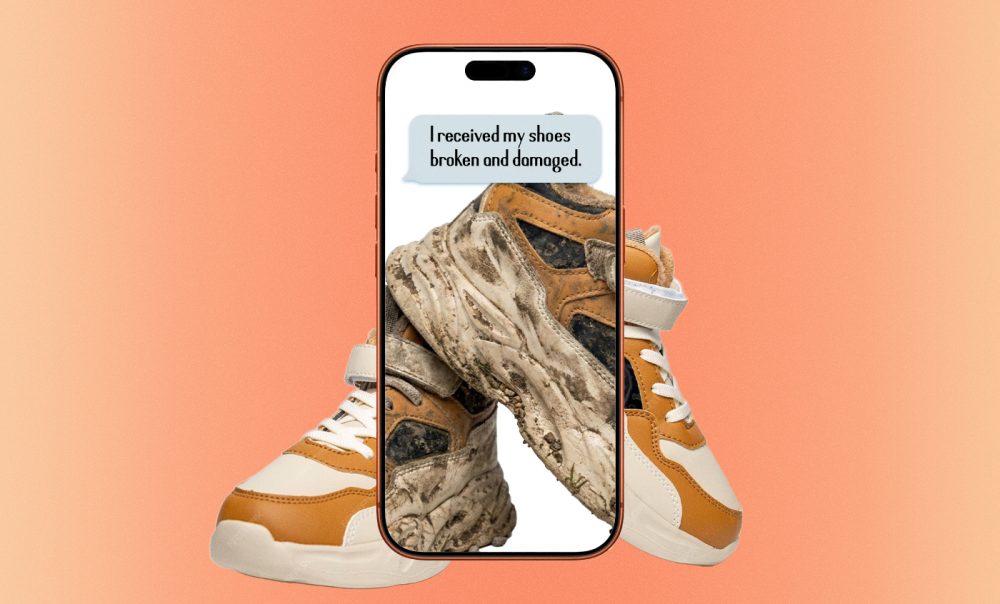
A couple of weeks ago, Scott Tannen, the CEO of home goods brand Boll & Branch, noticed something strange about a recent customer service ticket. A shopper claimed a set of sheets had arrived torn and submitted photos as proof.
But almost immediately, Tannen sensed something was off. The rip didn’t resemble the way cotton actually frays, and one image even carried an artificial intelligence watermark. The “damage” appeared to have been generated by AI.
“They were just so blatantly AI that I couldn’t believe it,” Tannen said.
A review of recent tickets turned up a handful of other images that appeared to be AI-generated. Tannen later wrote about the experience in a LinkedIn post that drew 2,000 likes.
Fraudulent returns are nothing new. Online merchants have long dealt with shoppers who falsely claim items arrived damaged or went missing in transit, or who attempt to return clearly worn merchandise. Now, easily accessible AI tools like ChatGPT, Gemini and Claude are making it easier than ever for bad actors to dupe brands, forcing retailers to reconsider how quickly they issue refunds and how much verification they require upfront without deterring legitimate customers.
Boll & Branch, which sells $489 duvet sets and other high-end linens, shut down the attempt after its customer service team asked the fraudster to verify the damage over a FaceTime call. The customer never responded.
Although Tannen caught this attempt, AI tools are still relatively new — and they are expected to improve with time. For retailers, there’s a lot of money at stake. Online merchants have tried to rein in online returns, but e-commerce returns are expected to cost brands $379 billion in 2026, up from last year’s 5.7% rise, according to estimates from eMarketer.
Phony returns, in general, have been on the rise as more people shop online. About 14% of all retail returns are considered fraudulent, totaling over $100 billion in annual losses, according to the National Retail Federation and Happy Returns.
Today, many returns start online, but years ago, shoppers had to physically bring their products to stores before getting a refund. The internet sped up this process, but bad actors are now taking advantage of having less manual oversight, according to Sucharita Kodali, vp and principal analyst at Forrester.
“There was a period [where] we thought we could have our cake and eat it, too — where things would happen really fast, and we’d be able to adjudicate a claim quickly and deliver high customer satisfaction at the same time,” she said. “Now, you have another situation where fraudsters have ruined it.”
Evolving technology
Tannen’s experience is far from an isolated incident.
Multiple online fraud experts who spoke with Modern Retail said they’ve seen a spike over the past year in fraudsters using AI tools to file phony return claims. Jordan Shamir, CEO and co-founder of the fraud and abuse prevention platform Yofi, which works with thousands of brands, said the issue has “exploded overnight.”
“We went from seeing it onesie-twosie to seeing it daily across our merchants,” he said. “It’s growing very, very quickly.”
Shamir shared screenshots of several cases with Modern Retail. In one, a shopper claimed that a liquid makeup product from a prominent beauty brand had spilled in transit. In another, the customer said they had received the wrong item.
In the first example, Shamir’s team determined the image was AI-generated because the boxes in the photo appeared dry despite the supposed leak. In the second case, the photo showed the same nick in the corner of multiple boxes, suggesting AI had duplicated the product image.
Tanner Chatterley, CEO of the shipping insurance company Order Protection, said firms like his are vulnerable because they assume risk on behalf of merchants while promising fast, easy resolutions for damaged or lost packages. In a recent case, a customer of a resale company claimed a pricey pair of Nike Travis Scott sneakers costing more than $600 had arrived heavily scuffed and stained, with visible dirt marks throughout, according to screenshots reviewed by Modern Retail. When Chatterley’s team asked for a video to assess the damage, the customer said there was glass in the box, so they had thrown it away.
Historically, customers and professional fraudsters have relied on fake images to secure refunds. A bad actor may lift a legitimate photo showing product damage from a review site or use Photoshop to alter an image. AI tools are now making that process faster and easier.
“AI is making it more accessible for people to create unique, different versions of these scams,” Shamir said. “AI is accelerating that type of fraud, because now it’s easier than ever to say, ‘Yeah, it’s damaged. Here’s a photo.’”
Bogg Bag, which makes brightly colored, perforated EVA totes, has begun encountering fake AI‑generated photos in its customer service queue. Bogg’s products are designed for maximum durability — its EVA bags are tip‑proof and highly resistant to damage — so the brand has a low return rate, and it’s uncommon for customers to receive truly defective products, according to Maggie Kwasnica, manager of customer experience at Bogg.
Recently, the company received a complaint from a shopper who said the straps on a bag were twisted. The product wasn’t defective — the straps can occasionally twist — so Bogg’s customer service team sent instructions on how to fix them. The customer then alleged additional defects, claiming there was a rip in the material and sending a second photo as “proof.”
But the image appeared to be AI-generated, Kwasnica said. It was the exact same photo the customer had sent before, only with damage added. The way the material was “ripped” also didn’t align with how EVA typically tears, she added.
While these cases are still relatively rare, showing up only a couple of times a month, Bogg is staying vigilant as it monitors for any increase.
“It’s not all that frequent, thankfully,” Kwasnica said, “but it’s definitely something we’ll be keeping an eye on to make sure it’s not ramping up.”
It’s not just damaged products. Fraudsters are also using AI to generate fake shipping receipts that make it appear as though they dropped off returns at UPS or USPS to secure a refund, according to Kyle Bertin, co-founder and CEO of return management startup Two Boxes. Yofi’s Shamir said some customers are also using AI to fabricate police reports after claiming an item was lost in transit and being asked by a retailer to provide documentation.
Beyond doctoring images, bad actors are also using AI to dupe retailers in other ways, according to J. Bennett, chief customer officer at Signifyd, a fraud-prevention software startup. Fraudsters are increasingly turning to large language models to churn out waves of highly optimized, irate emails and chat messages that exploit customer-service agents; they’re figuring out exactly what to say to customer service so the system caves and hands out refunds or freebies.
While fake, AI-generated images are on the rise, they’re still not the most popular fraud technique, experts told Modern Retail. In another established scheme, known as fake ID tracking, scammers alter return labels so empty boxes appear delivered near a retailer’s warehouse, then pressure customer service to issue refunds once tracking shows the package arrived. Participants typically pay organized groups to facilitate the scam.
Using AI to manipulate images is still less sophisticated compared to other methods, but sources told Modern Retail they expect this type of returns abuse to become more common as the technology improves.
“Keep in mind that, a year ago, we were all making fun of all the AI image generation stuff, and now it’s actually pretty decent,” Bennett said. “In another six months, this is going to be a bigger problem.”
Trust, but verify
Boll & Branch’s Tannen said brands with high-priced products and easy return policies may be more vulnerable to this kind of attempt. Like many online retailers, Boll & Branch — which does roughly 80% of its business online — prioritizes fast, easy returns and exchanges, typically shipping a new item as soon as a customer provides a photo of any product defects.
“When it comes to retail, speed to a positive resolution is the most important thing. … We can’t assume everybody’s guilty,” Tannen said. “We have to start with the assumption that our customers are just trying to get what they paid for.”
At the same time, brands are cutting back on human customer service agents and turning to AI to cut costs, especially as inflation and tariffs squeeze retailers’ margins. A reduction in human oversight means AI-manipulated images are more likely to slip through undetected, costing retailers crucial revenue. Many retailers and resale platforms today use machine learning and AI tools to better target counterfeits — but fraudsters are now using AI to try to beat them at their own game.
There are steps brands can take to stay ahead of the problem, Forrester’s Kodali said. She recommends that retailers build databases tracking bad actors who repeatedly file fraudulent return claims and share that information with other companies. It’s not typical for competitors to work together, Kodali said, but sharing resources could help everyone. “A small percentage of fraudsters are propagating a huge majority of these cases,” Kodali said.
Passing legislation around deepfake photos could also be a game-changer, she said. “The same way we protect against mail fraud, we should have a law that allows criminal penalties for anybody that creates … images with the intent to defraud,” Kodali said.
Tannen said Boll & Branch is rethinking its returns process in response to AI-enabled fraud. The company plans to closely monitor a customer’s purchase and return history — for example, whether they are a first-time buyer, can’t provide proof of purchase or have a pattern of repeated returns. Tannen said the company may require customers to send products back for warehouse inspection before issuing a refund or replacement.
Bogg has introduced new internal processes for handling suspicious claims. The team has developed standardized language for cases where images appear manipulated or requests fall outside warranty guidelines. Because the bags are large and shipping is expensive, Bogg doesn’t always require returns for genuinely defective products. But for suspicious defects, Kwasnica said they’ll require the product back before issuing a refund or exchange.
Bogg’s Kwasnica said AI‑assisted fraud risked creating more friction for honest customers.
“The worst part of all this AI stuff is that it ruins it for everybody else because you have people abusing the policies,” she said. “Then when they try to make an honest return, they have to jump through all these additional hoops that companies end up implementing because they want to protect themselves from the fraudsters.”
Boll & Branch initiated a broader review of recent tickets and identified a handful of other images that also appeared to be AI-generated. In most cases, the claims stalled when customer service asked for additional verification. Still, Tannen acknowledged that “there’s probably some that got through that we didn’t realize.” While the instances were “very few,” he added, that “just reflects that we’re in the earliest stages of this.”