


How Scentbird is building its IP licensing program, from John Wick to Strawberry Shortcake
More brands are betting on IP licensing as a growth lever, as the craze behind “Wicked” and “Barbie” branded products has shown.
For Scentbird Inc., a fragrance subscription platform, these entertainment collaborations are becoming a key part of its strategy to introduce its brands to various new audiences as the company grows. Scentbird was founded in 2013, and in 2022 it acquired the car air freshener company Drift. As of 2024, the company was generating over $100 million in annual revenue.
Over the past year, Scentbird has tested the waters by releasing several curated collections in partnership with entertainment IP holders, including two with Marvel in 2024. One was a fragrance collection inspired by Marvel’s “Agatha All Along,” and the other bundle marked the premiere of Marvel Television’s “Ironheart.” This year, the company released a curated fragrance set and activation for the “I Know What You Did Last Summer” release in July. Then, Scentbird began creating exclusive fragrances, beginning with a Strawberry Shortcake collection in late 2024.
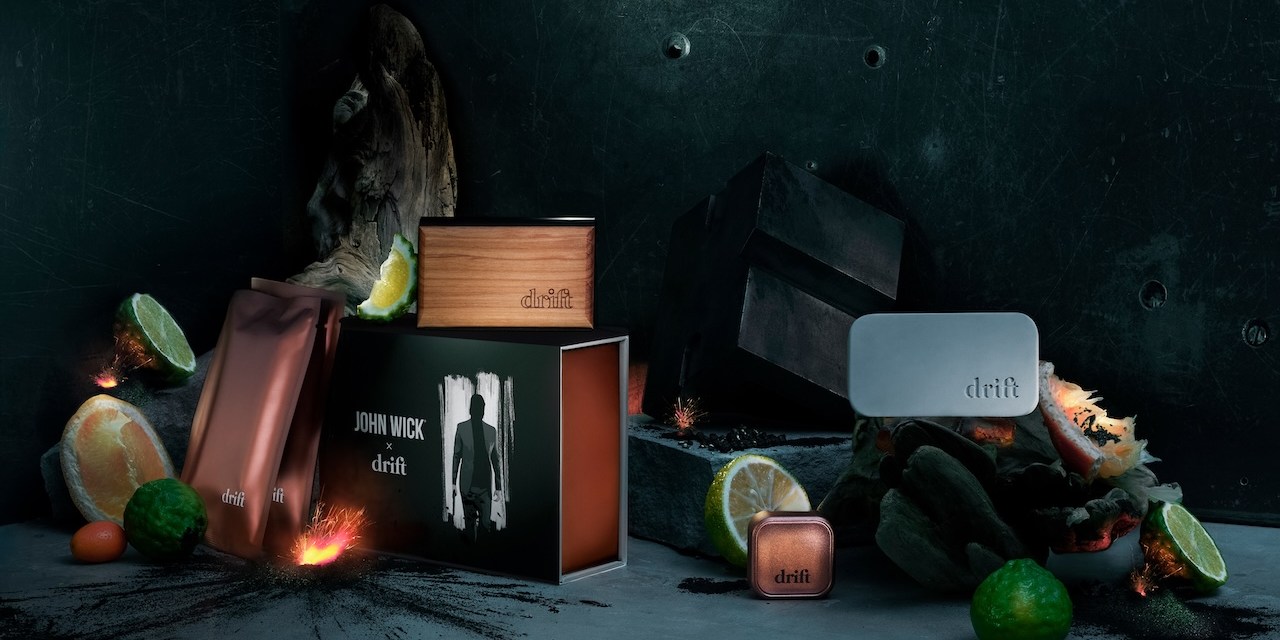
This week, the company is launching a John Wick x Drift car freshener collaboration inspired by the character’s affinity for classic cars. According to the company, the scent “goes full throttle with a blend of midnight citrus, black pepper, dark amber and aged cedarwood — a sharp, powerful, enduring scent, much like Wick himself.”
Elena Lecue, CMO of Scentbird Inc., the company that owns both Scentbird and Drift, told Modern Retail that IP-based collaborations will become a major part of the company’s brand awareness and customer acquisition strategy. The hope is that once, say, John Wick fans discover the car freshener collection, they’ll want to dig more into the 900 designer and indie fragrances Scentbird offers.
Lecue said that, since the Drift acquisition, the parent company has been on a mission to raise awareness of both the Scentbird platform’s fragrance offerings and Drift’s. She noted that the fragrance licensing concept is decades old. However, it has mainly focused on partnerships like celebrities creating a perfume or cologne with a fragrance house.
For its first decade, Lecue said, Scentbird was known as a performance marketing-focused subscription platform that promotes fragrance discovery. That playbook worked for nearly 12 years. But as the company matures, she said, the marketing tactic is evolving into a hybrid approach that layers awareness with paid social to drive sales. “That is where the idea originated of marrying our brands with IPs that have a built-in notoriety,” Lecue said.
Testing the waters with beloved IP
The concept began last year with Strawberry Shortcake, a cartoon character that has been around in various iterations for over 50 years.
“We really wanted to tap into the nostalgia,” Lecue said, which, she noted, has become a popular marketing strategy. The strawberry notes profile also fits within the gourmand fragrances that are also trending right now.
“Since then, [Strawberry Shortcake] has helped us improve our awareness,” said Lecue. Exclusivity is also a factor that helps drive traffic. “There is no other place where you can go and buy a Strawberry Shortcake fragrance,” Lecue said. That collaboration has helped Scentbird create incremental acquisition at a favorable CAC. “Since the fragrance launch of Strawberry Shortcake, we have had hundreds of thousands of new subscriptions,” she said.
Building a long-term R&D program
The success led the company to seek out more collaborations featuring popular characters and entities.
“Over the past year-and-a-half, I have been working on contracting new licenses for us that we will deploy both on Scentbird and Drift,” Lecue said. Many of these upcoming collaborations are from the world of entertainment, ranging from nostalgic plays to current titles. “There is even a reality show licensing deal coming in 2026,” Lecue said.
There are so many ideas to be had, including movies, TV shows and individual partnerships with artists. To narrow it down, Scentbird is choosing to concept-test and do consumer research with a panel of people who like to purchase from this particular category. “We’re only going into negotiation with the franchises that were validated for consumer research,” Lecue said.
For example, the John Wick character showed positive results in Scentbird’s consumer surveys among both male and female profiles. “John Wick is just universally loved,” Lecue said. “I did not anticipate how strong that love was, so I’m excited to see the results in the next few months.”
Maura Regan, president of global trade association Licensing International, said consumers continue to show strong loyalty to entertainment properties, making them particularly effective for beauty collaborations.
According to Licensing International’s recent global licensing industry study, entertainment-licensed products generated nearly $150 billion in revenue in 2024, representing more than 40% of the global licensing market.
Regan pointed to the commercial success of “Barbie”- and “Wicked”-licensed products, which she said accelerated interest from other studios and rights-holders to use licensing as a marketing engine around major releases. “These collaborations not only help to build excitement ahead of a release,” Regan said. They also allow consumers to continue engaging with a property long after a film has left theaters. “These collaborations are not a trend; they are a long-term growth play,” she said.
Now that Scentbird has quite a few IP collaborations under its belt, future outreach will be easier. “What I’ve learned from this process is that, once you start doing these collabs, people notice and you get on their radar,” Lecue said. “It’s a case of partnerships beget partnerships, licenses beget licenses.”