


Trashie looks to tackle toy waste with new $35 service
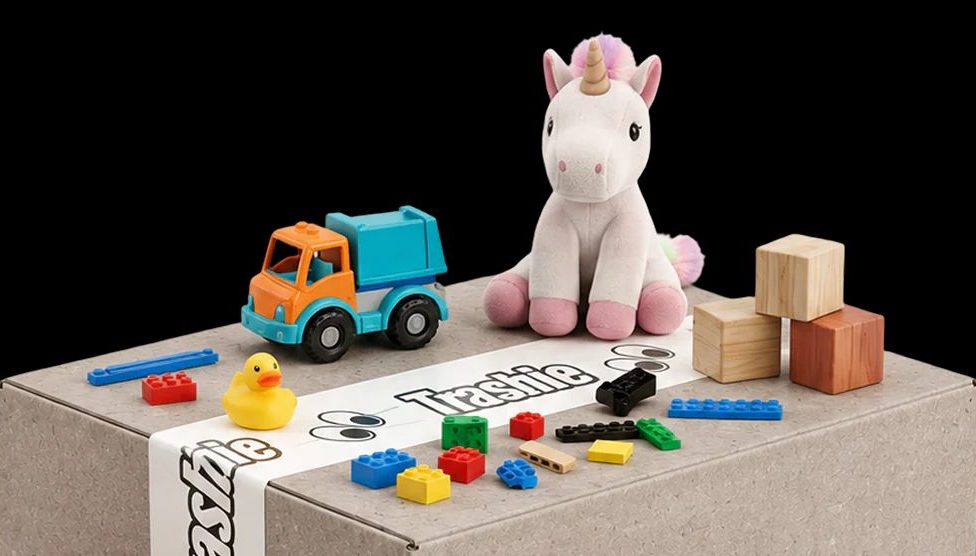
Trashie, a service that gives customers rewards in exchange for paying for proper recycling and reuse, is looking to tackle a new waste stream.
The new Toy Take Back Box service launched this summer as a way to let users properly dispose of unwanted, good-condition toys. Kristy Caylor, CEO and founder of Trashie, said the new vertical was a natural fit after launching a tech take-back box in December 2024.
Currently, about 80% of toys wind up in landfills or the ocean, according to resale platform Toycycle. But since about half of Trashie’s current user base are parents, Caylor said the company was fielding requests to help them clean out toy chests as well as their own closets.
“There was just a real opportunity to apply the same philosophy to a category that’s been relatively untouched,” she said.
The new toy service costs $35 and includes shipping a box of up to 20 pounds back to Trashie for responsible reuse and recycling.
Trashie, launched in 2024, has sold more than 1 million apparel take-back bags and diverted 3.5 million pounds of clothing from landfills. Users can pay $20 to get a single bag to fill with unwanted textiles, about 95% of which is reused, recycled or repurposed. The more bags someone sends in, the more rewards they earn to redeem on Trashie’s marketplace.
While take-back models face some adoption and education challenges, Caylor said Trashie’s customer base is one that is willing to pay for a new method of getting rid of unwanted items. “We’re trying to rebuild a system that actually is not built to maximize reuse. It’s currently built to take in exactly what I need and discard the rest,” Caylor said.
Take-back and trade-in recycling programs are becoming increasingly popular options to stimulate the circular economy. Suri, a U.K.-based oral hygiene brand that recently launched at Target, has customers send back their used brush heads for proper recycling and has recently begun repurposing them into soap dishes. Target has a biannual car seat recycling program that offers 20% off coupons in exchange for used or even expired car seats. H&M’s drop-off has been around since 2013, while Madewell offers customers a $20 coupon for dropping off a pair of unwanted jeans.
But these programs are slivers of progress in a country that still has a 32% recycling rate. Part of the problem is a lack of infrastructure to properly break down textiles, non-recyclable plastic and multi-layered packaging. The result is that most waste doesn’t end up getting recycled; the most recent Environmental Protection Agency data, for example, shows that about 38.5% of selected consumer electronics are recycled. This has led to the introduction of more extended producer responsibility laws to address how to keep items out of the waste stream.
Take-back programs can also face an uphill battle around adoption. Many consumers are used to dropping unwanted items off at donation shops, but Trashie’s Caylor said such shops can’t always resell items for hygiene or safety reasons and aren’t set up to be waste management companies. That means some donations aren’t always resold or given away, but sent to the trash.
“Donations tend to be the word that people almost synonymously use for getting rid of stuff,” she said. “When I ask customers, ‘How do you get rid of things?’ ‘Oh, I donate.’ So it’s a very intentional word choice, because it’s a process and a system that really hasn’t been updated in our lifetime.”
One of the most common questions Trashie gets is why it charges people to get rid of things. But Caylor said the costs are there to cover the shipping and processing of items. She said the company has looked into partnering with brands to help offset some of the costs, without much luck.
While there was interest, brands didn’t align with charging the customers, Caylor said.
“They were like, ‘We’ll do it with you, but can it be free?’ And we said ‘Well, waste management isn’t actually free. We pay in some way, shape or form for the world to process our trash,” she said. “So what ended up happening is when we started with the Take Back Bag and we really started having this dialogue with the consumer, we found that there were consumers who were like, ‘You know what? I’m willing to pay.'”
Beyond broader education, building scale is one of the ways it is able to keep costs down, she said.
To incentivize repeat usage, users earn multipliers on their marketplace rewards the more times they use Trashie. In addition, in late 2025, the company launched a membership program for $68 a year that gives users unlimited bags and pays for itself in rewards after 10 bags. It garnered at least 10,000 members within two months and continues to grow, Caylor said. Members can add the toy service for $15 a shipment.
“We’re not here to make it out of reach, but we just have to be realistic about what it costs,’ she said. “Our goal in the long run is, as we scale, to see how affordable we can make this and still make it work.”
To get the new toy vertical off the ground, Trashie has partnered with a sorting facility in the United States that specializes in toys. It has also developed customer-facing materials that give explicit guidelines on what can and can’t be processed. For example, it takes stuffed animals and action figures in good condition, with any batteries removed. Unaccepted items include Happy Meal toys, puzzles or anything broken.
Once received, the sorting facility reviews items to determine which can be donated to programs, domestically and abroad, that provide toys to kids in need. Trashie estimates that about 90% will be given new life, with the rest sent for responsible breakdown.
“It all starts with the consumer user experience,” Caylor said, “and how we can make sure we get the right products back so we know we can do something with them.”