


How Unilever sees the line between beauty and wellness blurring
For large companies like Unilever, the line between looking good and feeling good is blurring for their customers.
Jostein Solheim, CEO of Unilever Wellbeing, took the stage at the Groceryshop conference in Las Vegas this week to discuss the convergence of beauty and wellness. Solheim highlighted how consumer focus is shifting away from routines built around superficial appearance toward a more holistic, science-backed blend of beauty, health and overall daily wellness.
“When you go back 10 years, beauty was very much defined as appearance,” Solheim said.
He went on to say that, over the last few decades, major changes have occurred in how people view health and diet. It used to be that people dieted for appearance, followed by dieting for health reasons. “Now we’re on a diet for wellness and beauty,” he said.
The first major shift, he said, was in people developing health goals that addressed weight and health management as a means to prevent future diseases and ailments. The second big shift was a convergence of beauty and well-being, and people increasingly thinking that “you can’t feel beautiful if you’re not feeling good inside,” Solheim said.
Since then, people have increasingly “taken agency over their own health” and integrated wellness into their everyday life. “That gave an opportunity for branding and building deeper relationships,” Solheim said.
These trends also coincided with what Solheim described as a third shift that brought on the digitalization of all these trends. “When consumers have all this information and data in their hands, they can access science at a whole new level,” Solheim said.
What’s more, the rise of GLP-1 drugs and AI-assisted health data are giant accelerators. Put together, it means that people are taking a more proactive approach to their health.
Historically, Unilever was considered one of the biggest food companies in the world. Now, its portfolio is a healthy mix of food, beverage and better-for-you wellness brands as it adapts to the blurring of beauty and wellness.
Unilever first decided to bolster its vitamin and supplement assortment with the acquisition of Olly in 2019. “[It was] the original disruptor of the vitamin shelf,” Solheim said.
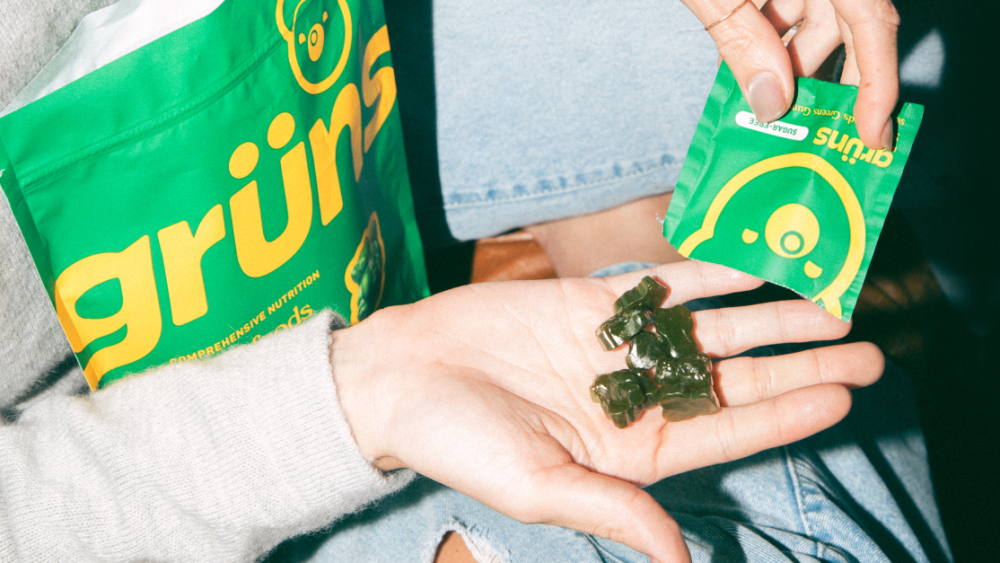
Cut to today, and Unilever Wellbeing now owns seven wellness-oriented brands. “Four [are] what we at Unilever call power brands,” Solheim said, referring to Olly, Liquid I.V., Nutrafol and Grüns, acquired earlier this year. These brands directly address people’s needs for health and nutrition solutions in the era of weight-loss drugs and longevity goals, he explained.
“A product like Grüns is probably your GLP’s best friend,” said Solheim, citing the fact that the gummy contains six grams of fiber and 21 vitamins and minerals in one serving.
Solheim said that, for so long, the supplements category had been marred by “overclaims.” But now that every consumer has different needs, they are looking for a more personalized approach. “The human body is complicated, so what works for somebody might not work for somebody else,” he said.
Solheim said that as more consumers prioritize preventative health and longevity, these shifts will continue to change the way CPG giants message their products.
For companies like Unilever, he said there is an opportunity to start engaging with younger people — starting with millennials and Gen Z — who are thinking about longevity from an earlier life stage.
“The whole well-being industry is [now] being driven by Gen Zs,” he said, with the trend having first started with millennials.
“You will see people in their 30s and their 40s talking about longevity, talking about healthy aging and setting the groundwork for healthy aging,” said Solheim. Whereas if somebody comes to the brand at age 65 to start that journey, he says, “That’s a tough business opportunity.”
“The reason we are so bullish on well-being at the core of beauty and personal care is [because of] this fundamental trend driven by young people who are engaged in learning,” Solheim said.