


Havenly has been on an acquisition streak in the home space. Now, it’s launching a brand of its own
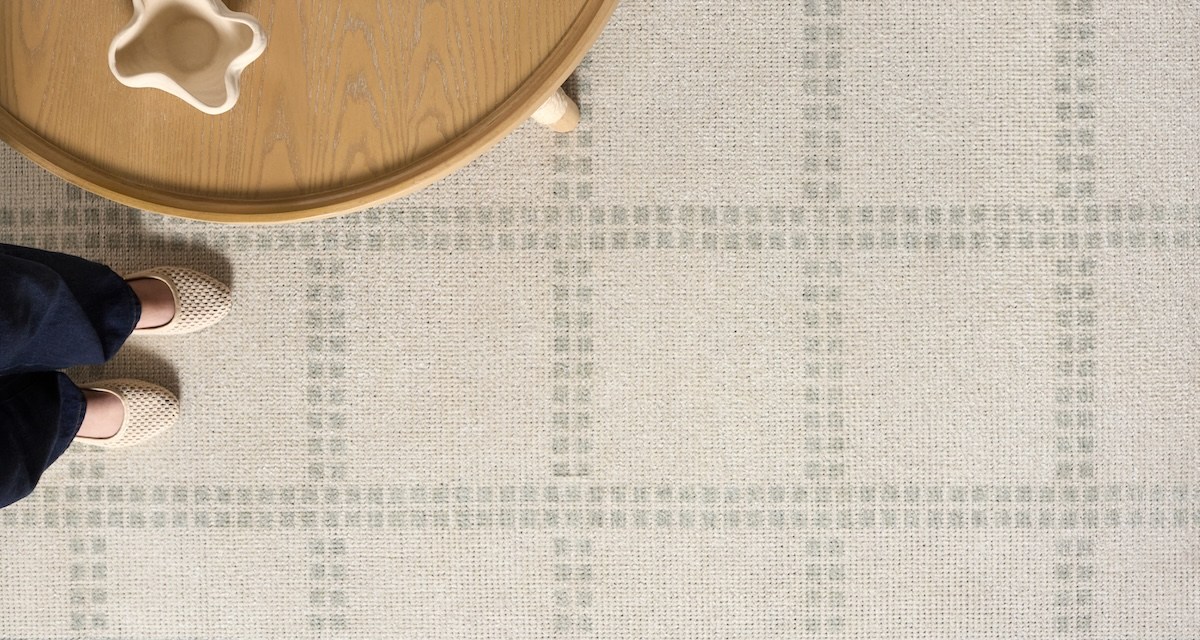
Havenly Brands has built a name for itself by acquiring companies in the furniture and home-goods space. Now, it is rolling out a brand of its own: a performance rug brand called Weft.
Weft, which is available online, offers a broad assortment of durable, plush rugs for high-traffic areas, like bedrooms and dining rooms. At launch, about a third of Weft’s rug styles are machine washable, while others can be hosed down or spot-cleaned. All are priced between $149 and $649.
Weft is the first internally incubated concept from Havenly, a home-furnishings and interior-design company. While Havenly began in 2014 as an online-only design service, it has since built up its own product portfolio. In the last four years, it acquired housewares company The Citizenry, custom builder The Inside, and furniture brands Interior Define and Burrow. Weft marks Havenly’s attempt to fill what it sees as a gap in the interior-design space by tapping its existing supply chain and e-commerce infrastructure.
“We saw a need in the market for a more approachable, real-life rug brand,” Mary Schiller, gm of incubator brands at Havenly, told Modern Retail. In combing through other products and speaking with interior designers, Havenly found that many rugs tend to be either delicate and expensive, or durable and rough. Weft’s rugs aim to tackle this disparity by being designer-friendly, comfortable underfoot, relatively affordable and easy to clean.
“There are a lot of [rug] competitors out there, but we want to really focus on being built for everyday living, [to] keep up with busy households and evolving environments,” Schiller said. “We could create something that’s a ‘copy and paste’ of something that already exists. [But we took] a really holistic look at the market and what’s driving conversion and what our clients are asking for.”
Havenly found that rugs can be a “risky category,” Schiller said, because customers are often “nervous to convert.” Many end up asking, “What if I don’t like this long term?” or “What if this gets dirty?” To that end, Havenly aimed to make rugs that are both easy to style and can withstand spills and daily wear. “[We wanted] rugs that are really sharp and going to convert and be accessible and exciting,” Schiller said.
Caris Fawcett, Havenly’s senior designer of textiles, added that Weft wanted its rugs to resonate with both interior designers and everyday consumers. “Our goal was to create a tight, curated assortment that feels like it could really live in any home,” she said. Fawcett explained that the rugs’ styles range from vintage-inspired to geometric, but all have “the depth and colorations that we see with some of our other brands.” The rugs are manufactured in Turkey, in coordination with a current rug partner of The Citizenry.
Weft will compete with other rug brands, like Ruggable, Safavieh, Loloi and Ernesta. As the rug space has become crowded with startups, many of them have turned to collaborations to reach new audiences. For example, Ruggable partnered with Anthropologie on patterned rugs and doormats, while Loloi debuted a collection with Rifle Paper Company.
Still, it’s been a challenging time for the home-furnishings industry, thanks to tariffs, rising costs and recent bankruptcies. Last year, many customers put off home improvement projects due to higher prices. And, earlier in May, mortgage rates hit their highest level in a month.
Michael Gunther, svp of research and market intelligence at Consumer Edge, told Modern Retail that data shows that the home-furnishings sector “remains under pressure,” with year-over-year spend lagging behind that of other discretionary categories. Trends are looking “a little better” in Q2 compared to Q1, on a year-over-year basis, Gunther said, but “a two-year view reveals [a] largely consistent weakness.”
Havenly Brands, as a whole, estimates it paid $8 million in tariffs in 2025, CEO Lee Mayer previously told Modern Retail. However, Weft’s rugs are manufactured in Turkey, which has dealt with lower U.S. import tariffs than other countries prevalent in the home sector. Last year, for instance, U.S. President Donald Trump slapped a tariff of 50% on most imports from India. Paying import tariffs for rugs from Turkey is “not any more challenging than everything else we do,” Schiller said.
One way Havenly has been able to streamline operations has been by consolidating its tech stack and supply chain. Now, with Weft, it’s putting this to the test by tapping into its existing network — including input from its employees from divisions like The Citizenry. “[The launch] happened very naturally,” Fawcett said. “I was surprised how easy it was to work with this team to bring something to market pretty quickly.”
Havenly is also providing in-depth training for its designers so they can better understand Weft’s products and where they sit in the market. Weft is developing another batch of rugs for later in the year, and it’s planning a Memorial Day sale to get the word out. Havenly will promote the Weft brand on its social media channels, like Instagram and TikTok, too.