


Brands Briefing: Anthropologie’s weddings business has become a powerful customer acquisition engine
This is the latest installment of the Brands Briefing, a weekly Modern Retail+ column about the growth strategies of modern brands. More from the series →
Anthropologie wants a bigger piece of the wedding pie (or cake).
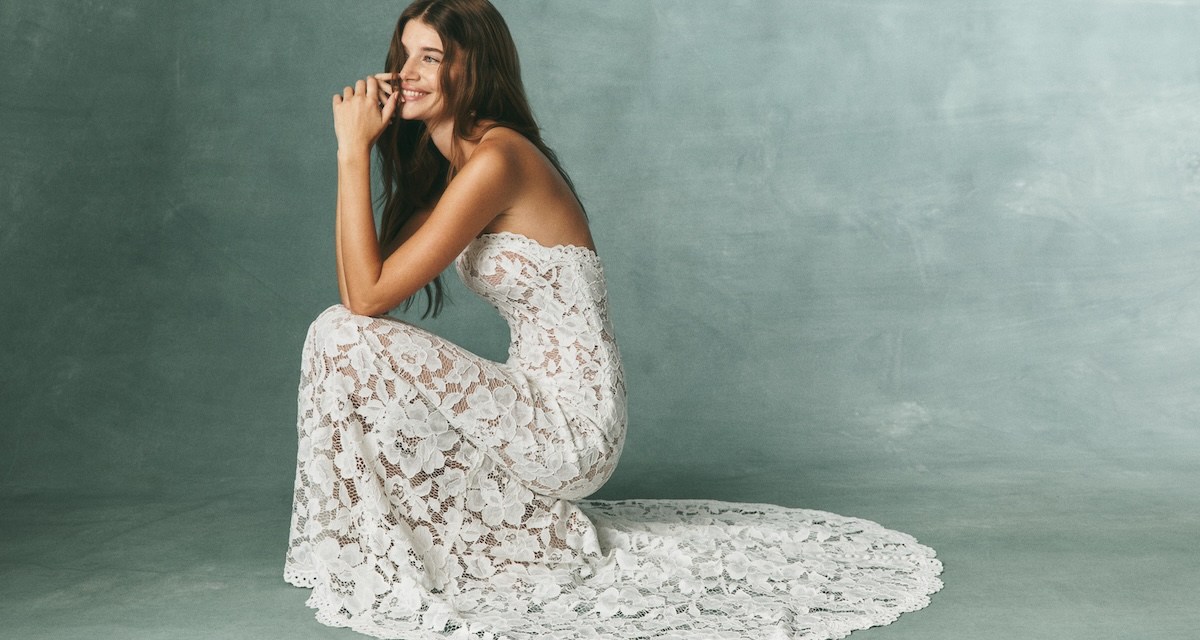
The company officially entered the wedding space in 2011, but business has grown “exponentially” in the last couple of years as brides look for different outfits for all parts of their big day, Holly Thrasher, chief merchandising officer of women’s and weddings at Anthropologie, told Modern Retail.
Not only are brides shopping for a gown for their ceremony, but they’re also shopping for outfits for their reception, their bachelorette party, their rehearsal dinner, their welcome drinks and/or their engagement party. So are their guests, their families and their bridal parties. In turn, Anthropologie is building out its wedding assortment to meet everyone’s needs and style preferences. For instance, it’s added more separates, and it’s expanded its assortment of white looks for brides and bridesmaids alike.
The strategy is proving lucrative for Anthropologie. Already, search volume for Anthropologie’s wedding assortment is up 32% over the last three months. “We acquire new customers through our weddings business, and then they turn into lifelong Anthropologie customers,” Thrasher said in an interview. “We also love our weddings business from the standpoint that it allows us to serve our existing customers in more ways. It’s a double whammy for us.”
About 72% of Anthropologie’s overall wedding assortment is exclusive to Anthropologie. The company carries pieces from the likes of Jenny Yoo and Retrofête, as well as from its private label, BHLDN. Anthropologie does several bridal gown “drops” a year; on May 4, it debuted 36 new gowns. Two more collections will drop in June.
Dozens of Anthropologie’s stores also have their own wedding shop-in-shops, which power sales. In March, Anthropologie opened its 30th wedding salon, in Carmel, California. These wedding shops are able to carry most styles in stock, Thrasher said, although people can also get made-to-order outfits. Each location is different; some are on the same level as general merchandise, and others have a separate floor.
Anthropologie aims for its shop-in-shops to carry a wide variety of styles and silhouettes — everything from “boho chic” to “bombshell.” Brides are documenting every phase of their wedding on social media and don’t want to repeat outfits, Thrasher said. Even Anthropologie’s regular stores have started carrying more wedding capsules of white looks to cater to growing demand.
“Before, when we were serving brides for gowns, predominantly, you had one opportunity to capture whatever aesthetic she was going for,” Thrasher said. “Now, it’s fun, because we have all these other aesthetics.” Anthropologie’s bridal-separates business, for example, is proving popular for mixing and matching. “You might buy a corset, and then a wide-leg pant, and then a blazer, and then mix it up,” Thrasher explained.
For bridesmaids, too, there’s more opportunity to wear different outfits, from a shorter dress to a satin A-line gown. “It’s not about matchy-matchy pink dresses anymore,” Thrasher said. “It’s about everybody having their personality come through.” Still, the wedding’s overall vibe is important to consider, she said. “We’ve really rethought how we merchandise our wedding shops to be more, almost, Pinterest-inspired.”
In fact, a large portion of shoppers find Anthropologie’s wedding assortment through word-of-mouth and social media like Pinterest, TikTok and Instagram. The brand also works with influencers on wedding content, including shopping recommendations and in-store try-on experiences. Over the past three months, this content has generated more than 6.2 million views for @anthropologieweddings, a spokesperson shared.
When it comes to designing its own gowns, Anthropologie makes sure to monitor trending search terms, like “countryside romance” and drop-waist dresses. Its team sometimes plugs these qualities into an AI engine to draft initial ideas to send to design partners. “It really takes lots of massaging of the inputs to get the right output, but you can get some exciting new creations,” Thrasher said.
In fact, artificial intelligence is playing a bigger role in the wedding industry. David’s Bridal has its own AI-powered planning platform for customers, while Friar Tux has an AI try-on tool. Data indicates that many women are looking to use AI in their shopping journey, including for attending weddings, said Circana’s Kristen Classi-Zummo. “They want help maximizing their budget with outfits that coordinate, pack well and work together across multiple occasions,” she told Modern Retail.
In the future, Anthropologie plans to open more wedding shops, while continually soliciting feedback from shoppers. For instance, last year, at a joint Anthropologie-Pinterest event, Thrasher asked fiancées how many white dresses they planned to buy. “The average was five to seven,” Thrasher said. “I had one girl tell me 10, which is awesome — celebrate away!”
“Getting that mix for the customer has been so much fun to build out, and I think that’s what’s really helping continue to grow our business,” she added.
An unorthodox marketing strategy is fueling one pet-care startup’s meteoric rise
On May 3, dozens of dogs (along with their owners) gathered in Washington Square Park for a canine-only contest. They were there to see which dog had the worst breath — a pitch concocted by PupGum, which makes daily dental chews and is an offshoot of the subscription dog food company Spot & Tango.
Amid some barking and tail-wagging, the 50-some-odd dogs had their breath judged on four criteria: complexity and depth, persistence and lingering, eye-watering index, and recoil radius. The winner, a Chihuahua named Willie, received a one-year supply of PupGum chews, which contain ingredients like flaxseed, turkey and prebiotic fiber.
Willie’s owner was “actually really happy and quite thrilled,” said Serena Advani, general manager of PupGum. “It’s a fun one where you can poke fun at your dog without it feeling hurtful or rude. [The owner] said, ‘Yeah, he’s a 12-year-old Chihuahua who has horrible breath. This is valid.'”
Spot & Tango launched PupGum last June to complement its dry food product. Spot & Tango is available on a subscription basis. Meanwhile, PupGum is available via its own website, Amazon, and Spot & Tango’s website, on both a subscription and à la carte basis. PupGum is an easy way for Spot & Tango to cross-sell to existing customers and introduce itself to new ones.
“We are in such a fun, emotional category, working with pet parents and dogs,” said Advani, who joined the brand in November as part of a larger executive push. “Being able to do fun marketing that brings us closer to that community is really energizing.”
PupGum’s contest wasn’t just a one-off marketing moment. In the lead-up to the contest, executives posted job openings for who would end up being the contest’s judges: a “dog-breath sniffer” and a “dog kisser.” Two thousand people put in an application. (It helped that each position paid $1,000 an hour.) PupGum also declared May 3 “National Kiss Your Dog Day” — it now owns the web domain — and gave out 500 product samples to attendees. It ran a two-week promotion on its own website, too.
All in all, PupGum saw a 34% week-over-week increase in visitors to its website on the day of the contest. Unorthodox stunts like these have helped PupGum quickly establish a name for itself. The brand is growing 35% month-over-month and has exceeded $10 million in annual recurring revenue in seven months.
What we’re reading
- GameStop investors are skeptical of the company’s $56 billion bid for eBay, Reuters reported.
- McDonald’s will remove self-serve soda machines at all locations nationwide by 2032, per Inc.
- Doris Fisher, the co-founder of Gap, died at age 94. Fisher “eschewed the spotlight” but “shaped the way a generation of Americans dressed,” wrote the Wall Street Journal.
What we’ve covered
- Executives at Baby’s Brew, Made In, Wild Rye and more explained why they can’t afford to give tariff refunds back to consumers.
- Spice startup Hayati found new Instagram followers through “30 days of using za’atar the wrong way.”
- Winx Health is continuing its push into more U.S. doors through a partnership with Walmart.