


Babylist’s newest arrival is a New York showroom
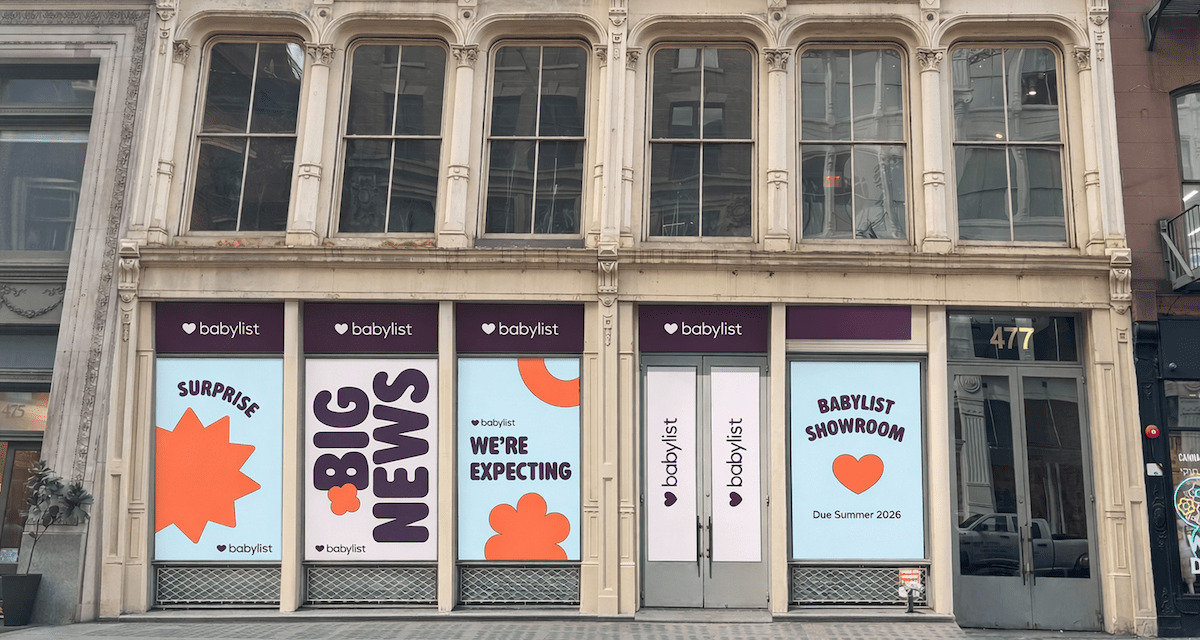
Nearly three years after opening its first showroom in Beverly Hills, Babylist is making its debut in the Big Apple.
The universal baby registry platform is opening a new location in New York City’s Soho neighborhood sometime this summer. At 20,000 square feet, the New York location will be bigger than its 18,000-square-foot California counterpart. The Soho showroom will focus on product education, content creation and community building, all while catering to New York parents’ unique needs, like living in smaller apartments and navigating the subway.
Babylist, which was founded in 2011, operates an online registry that pulls products from retailers like Target, Walmart and Amazon. It opened its Beverly Hills showroom in August 2023, at a time of flux for the baby industry. Just four months earlier, BuyBuy Baby became swept up in Bed Bath & Beyond’s bankruptcy. Meanwhile, in 2018, Babies “R” Us closed all of its stores. Yet, Babylist wanted to invest in physical retail, knowing its users are looking to browse products in person, ask for advice and meet like-minded parents, said Molly Goodson, vp of brand and media at Babylist. Now, Babylist is looking to “go big” in its showroom in New York City as it courts more East Coast parents, Goodson said.
“[In 2023] there was a real sense that in-person baby retail was dying, but we said, ‘Oh no, we’re ready to go all in,'” Goodson told Modern Retail. “What we’ve seen is that there’s a huge appetite for families to get hands-on with these products. They’re making thousands of product decisions on categories, and there’s nothing like getting your hands on something. … We had a ton of conviction that there was a real space for making [something] experiential — something joyful and celebratory, and somewhere you want to bring your parents and your best friend.”
Babylist, which is profitable and marked $500 million in annual revenue last year, is using learnings from its Beverly Hills location to power its New York City location. Its new showroom will sell products — parents can scan barcodes to add items to their registries — but it will also have an “always-on” education space for product demos and consultations on everything from choosing a high chair to picking a baby monitor with or without WiFi. The New York City showroom will also offer regular programming, like quarterly registry weekends, in which Babylist staffers walk shoppers through high-consideration categories like cribs, offer advice and host giveaways.
Babylist’s Beverly Hills showroom is also a big hub for content; influencers and brands come in every day to shoot videos, and Babylist staffers regularly create content for TikTok and Instagram. So, for its New York space, Babylist is building a bigger area for creating content, including recording podcasts. The New York showroom will have two entrances, as well — one in the front and one in the back — to host more private events without interfering with customers’ shopping journeys.
“We know that a very small percentage of people are ever going to make it to the showrooms, which is why it’s important for us to bring that experience to life for everybody through content and how-to videos,” Goodson said. “[Our] registry weekends are always sold out [in Beverly Hills], and what we’ve heard from people, time and time again, is, ‘I want more of this.’ So, we’re going to record all our education sessions to make them available. … It’s all about opening [the experience] up.”
That type of content is key for new parents, said Lily Walla, founder and CEO of the online parenting community Auggie. Auggie has an on-demand parenting library for videos about topics like starting solid foods. “People really want expert support,” Walla said. “[With] the mental load and overstimulation and influencers pushing products at us constantly, you just want to hear from someone you can trust.” Babylist, for its part, has a large trove of customer data and insights to draw from, as more than half of all first-time parents choose Babylist for their registry needs.
Babylist’s New York City location will differ from its Beverly Hills location in other ways. The showroom will tailor products and consultations to the realities of New York City parenting, like not owning a car, having limited storage or bringing a stroller on public transit. Babylist will also create various nursery “vignettes” to show people where to put cribs and changing tables, in case “you only have the corner of an apartment for the time being,” Goodson said. “We’re getting highly considered with how we think about that and how we merchandise.”
“We know that a New York parent does not always have the same space that a Beverly Hills parent does, and we are designing the showroom to really speak to that,” Goodson continued. “In L.A., we talk about, ‘Here’s how to get everything into the back of your giant SUV.’ Now, it’s like, ‘You’re going to have to put a baby into the back of a cab. Here’s how we talk about a car seat. Here’s why this one works.'”
Compared to when Babylist opened its Beverly Hills location, the number of physical retail experiences dedicated to baby products has started to inch back up. In 2024, Babies “R” Us launched dedicated shops inside 200 Kohl’s stores nationwide. And earlier this month, Target announced it is launching a redesigned “Baby Boutique” experience, including a concierge, in nearly 200 stores.
Data indicates that parents, especially new parents, are interested in in-person shopping. In 2025, What To Expect and BabyCenter surveyed 1,800 U.S. moms (including women who were pregnant or had a child ages 0-8) and found that 80% wanted to touch and see products in-store when making a large purchase.
Meanwhile, a different What To Expect and BabyCenter study from 2024 found that 55% of some 4,300 U.S. moms reported going into stores to research or try a product before creating a baby registry. Three in 10 moms said not being able to easily view or test products in-store was their main registry challenge, Sarah Ryan, director of research at What To Expect, told Modern Retail.
Babylist, for its part, is considering opening more retail locations, although it wants to take expansions “one at a time,” Goodson said. Meanwhile, it plans to bring a new personal finance initiative — Babylist Money — to life in stores within the next six months. The program encourages parents to invest in their child’s future, including their education, and offers tools like a compound interest calculator. “We really want to encourage the habit of having friends and family gift into things like 529s [a college savings plan] or 530As [a Trump account],” Goodson said.
Ultimately, Babylist’s main goal with showrooms is fostering community, creating educational programming and providing support to parents, Goodson said. “We don’t feel like we need a fleet of showrooms to make that happen,” she said. “[But] the story of experiential at Babylist is just getting started.”