


Why brands can’t stop acting like reply guys and jumping into viral comment threads on social media
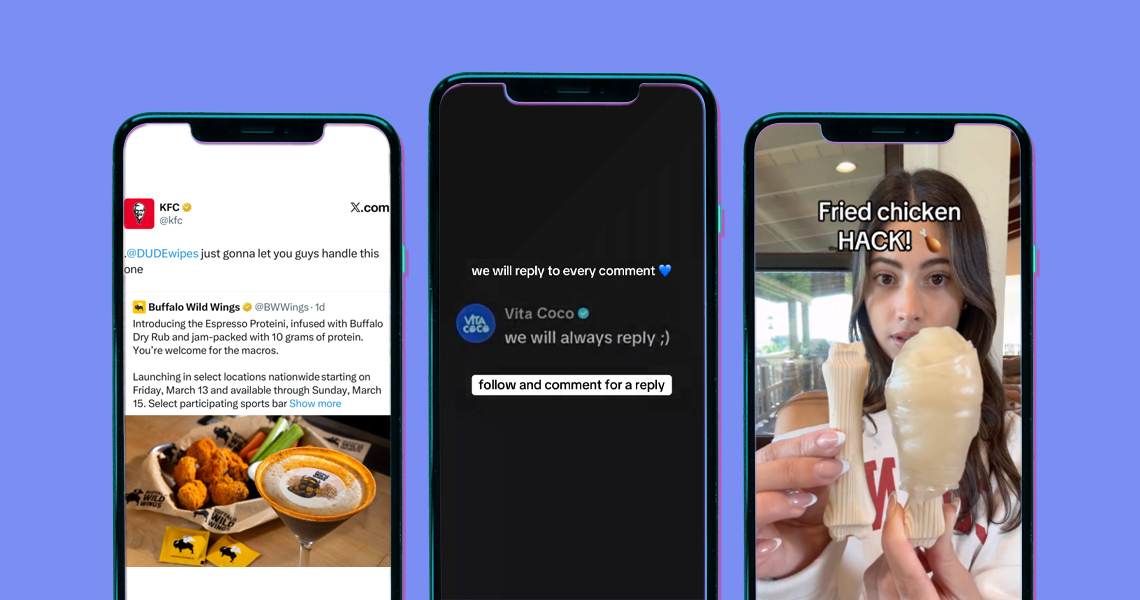
In their quest to drive up social media engagement, brands are spending more time in the replies.
A prominent example came last year, when soda brand Olipop commented on the news of Poppi gifting influencers with vending machines as a Super Bowl campaign. Olipop replied under a post on the news claiming that PR boxes should go to “real customers,” which generated hundreds of likes.
At this point, corporate social media accounts have experimented with nearly every trick in the book over the past decade to drive up engagement. In the 2010s, for example, social media managers of giant conglomerates like Wendy’s were known to reply directly to customers with sassy comments or to dunk on them. But for brands, today’s reply tactics are less about clapping back and more about finding a way to participate in the online discourse du jour, or strike new partnerships.
One reason brands are leaning into a comment-driven engagement strategy is that audiences are no longer enamored by highly polished social media posts. One of these companies is Dude Wipes, which says that jumping into the comments section is now a core part of its daily social strategy to drive real-time engagement and remain culturally relevant.
Dude Wipes, which is active on platforms like TikTok, Instagram and X, uses them to comment and interact with fellow brands and creators. In the past few months, the brand’s account has stirred up conversations with brands and influencers that include Buffalo Wild Wings, Taco Bell and KFC.
Ryan Meegan, chief marketing officer at Dude Wipes, said that while the company has been actively commenting on other accounts’ posts for years, he attributes the tactic’s impact to audiences’ shifting behavior. “On platforms like X, Instagram and TikTok, people scroll straight to replies looking for something entertaining,” he said.
At the same time, Meegan said, as the algorithms evolved, the platforms began rewarding interaction over static posting. “Back-and-forth conversations, especially ones that feel unscripted, tend to travel further,” he said.
Because Dude Wipes’ online voice was already known for off-the-wall humor, Meegan said the commenting strategy hasn’t been a major pivot. However, the brand is now more intentional about where and how it comments. “Instead of just posting on our own channels, we think about the broader conversation happening across the internet and insert ourselves where it makes sense,” Meegan said. “It’s less about volume and more about timing and tone.”
Coconut water brand Vita Coco is another brand that has recently upped its social media reply cadence, particularly on TikTok. The brand is increasingly experimenting with TikTok replies as a way to generate engagement on posts that are picking up steam. The brand’s January comment on a Billie Eilish TikTok video has since drawn nearly 400,000 likes.
But it’s not just likes that Vita Coco is after. The brand is using TikTok comments as a way to strike real-time creator deals.
One of the brand’s most successful creator partnerships came earlier this year, when Vita Coco’s account commented on creator Romeo’s viral Dr. Pepper jingle pitch. The original video drew comments from countless brands, including Dr. Pepper itself, which quickly turned it into a Super Bowl ad.
Vita Coco jumped in and wanted its own version, asking Romeo to create a special jingle for Vita Coco through a paid partnership. The brand’s new jingle, along with content the Vita Coco account posted following Romeo’s journey to the Super Bowl, generated a total of over 250 million impressions.
According to Jane Prior, chief marketing officer at Vita Coco, the audience reaction to the Romeo jingle generated a lot of engagement, with many comments celebrating a smaller creator receiving a paid partnership.
“A well-placed comment on TikTok or Instagram takes up some of the most valuable real estate brands can leverage,” Prior said. Unlike a traditional post, Prior said comments on other pages turn social media from a broadcast channel into a two-way conversation. “[This is] where brands and consumers engage in real time,” said Prior. These interactions are more likely to spark a larger conversation or moment the brand can own,” she said.
During the week the jingle launched in early February, Google searches for Vita Coco reached a four-year high, spiking 22% above the next closest week in the previous three months. According to Vita Coco, so far, the Romeo partnership has brought more than 210,000 new TikTok followers to its page.
While the subsequent likes and follows to a viral comment are great metrics to go by, Dude Wipes largely measures comments’ impact by user reactions. Basically, Meegan said, the goal is usually to get the “this social media manager deserves a raise,” or “this is how you market a product” type of response.
Since the Romeo partnership, Vita Coco has upped its commentary cadence on TikTok, chiming in on some of the most viral moments of the last few months. For example, in March, the brand left a complimentary comment on a video by creator Nate Norell spoofing McDonald’s’ CEO’s infamous Big Mac tasting. The comment garnered about 198,000 likes to date.
Nate Rosen, who runs the marketing newsletter Express Checkout, says the brand comments trend harkens back to the 2010s. That era was considered the golden age of corporate brands talking to fans on Twitter, thanks to accounts such as Wendy’s and Denny’s.
“[At the time] brands didn’t see it as a mature platform, so social media managers basically had free rein to test, be fun and, most importantly, be weird,” Rosen said, which was rewarded with consistent viral posts. Now, that energy has migrated to TikTok, where Rosen says it is reaching an arguably bigger and more engaged audience. What both eras have in common is that these posts tend to humanize the brands to the general public, he said, making them more approachable and part of the online conversation.
Cut to today, Rosen said, and many smaller brands have relatively small social media teams. “So they are more cognizant of what things cost, and having your brand comment on a platform like TikTok is free,” he said. Commenting is much more cost-effective than running paid ads, Rosen said. And on the organic side, it takes much less effort than creating and publishing posts.
But, Rosen said that brands have to toe the line when leaving comments on social media.
There is usually some form of pushback on brands inserting themselves, with many people saying “silence brand” in response to their comments on posts. So much so, Rosen said, “Someone even started a newsletter with that name.”
There is indeed value in knowing when to stay quiet. “If something starts to feel overdone or predictable, we pivot,” Dude Wipes’ Meegan said. “The goal is always to feel like a brand you’d actually want to hear from, not one that’s trying too hard to be in on the joke.”