


Topgolf hasn’t done much retail media, licensing. Its new CEO wants to change that
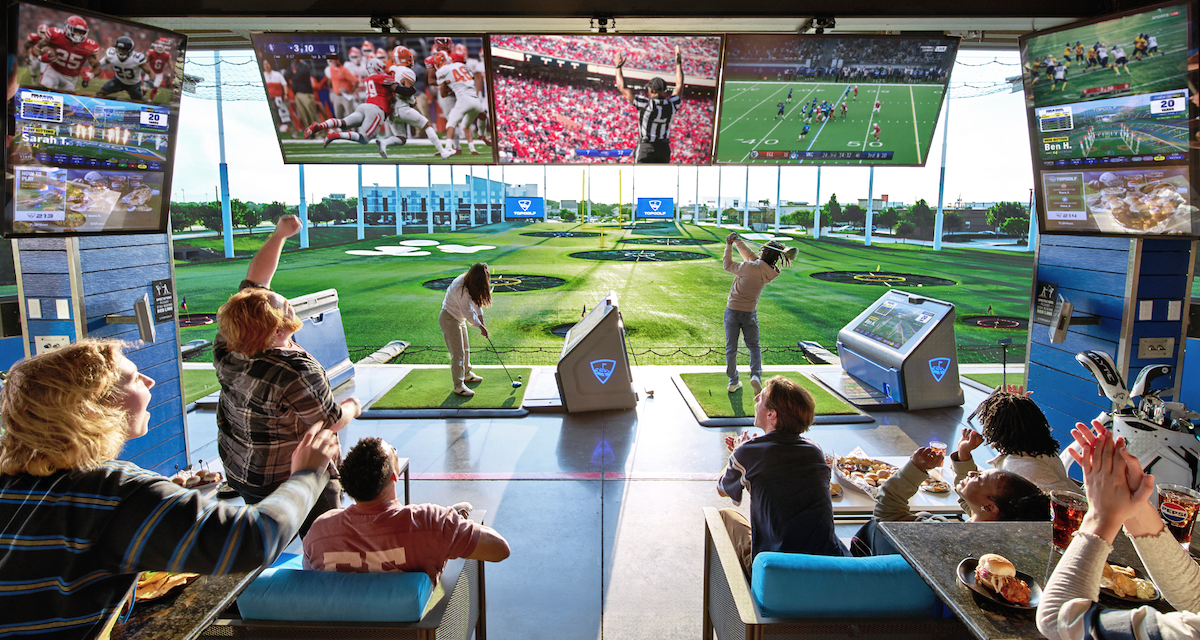
The new CEO of Topgolf believes the brand has significant opportunities to grow revenue both within its entertainment venues and at outside retailers.
One of David McKillips’ first priorities after becoming the CEO of Topgolf in February has been to grow its advertising business and begin licensing its own brand for toys, games and apparel. McKillips was previously president and CEO of CEC Entertainment, the parent company of Chuck E. Cheese and Peter Piper Pizza, and before that held marketing and operations leadership roles at Six Flags. McKillips built the media networks at both Chuck E. Cheese and Six Flags and saw similar potential when he arrived at Topgolf, he told Modern Retail.
“What I learned is the opportunity to immerse a guest in a brand experience and environment is incredibly powerful and important,” McKillips said. He added that unlike other out-of-home advertising options, Topgolf has a unique opportunity in that its guests will stay in the same golf bay to play for two hours. The company can leverage that to promote other brands, and McKillips hopes that can help Topgolf stand out from other out-of-home or retail media networks in such a saturated market. “For two hours, we have a group of individuals that are completely captive.”
Topgolf has 103 locations serving 40 million people with 28,000 screens, according to McKillips. The company previously focused solely on sponsorships similar to stadiums, he said, with branded areas of the venues or sweepstakes. In July, Topgolf launched Topgolf Media Networks, a new division that ties together the company’s existing sponsorship platform with a retail media business and licensing practice. By combining these into one division, the company said it can offer custom partnerships with each brand spanning across live experiences, digital engagement and branded storytelling.
“The motivation here is to welcome brands that want to associate with the premier golf and entertainment brand in America through the use of our digital networks, our sampling opportunities, our licensing opportunities,” McKillips said. “I threw a lasso around all of the partner opportunities and put those together.”
The company is also installing “Game Day Bays” at new locations with up to five screens in each bay. Topgolf will have a channel on those screens where it can populate ads or promotions, but visitors can also watch football or basketball games, as well as their gameplay. The company also has screens in its lobbies and bars, 11 locations with outfield jumbotrons, and advertising on its mobile app.
In licensing, McKillips said the company hopes to eventually launch Topgolf-branded products such as toys, games and apparel.
One of the first companies to partner with the new media division was Black Clover USA, a headwear and apparel brand. Under a five-year agreement, Black Clover will provide Topgolf employee uniforms nationwide and sell apparel such as co-branded hats at Topgolf venues. The partnership also extends into retail media through Topgolf email campaigns, social content and marketing on Topgolf’s digital screens. The two brands are also working together to support Make-A-Wish, Special Olympics and community organizations, and a national hat giveaway for a charity partner.
“That is a completely immersive partnership,” McKillips said. “That’s exactly what we’re looking to do: licensing, media, brand activation, all working together.”
Sean Crawford, managing director of North America for retail media consultancy SMG, said Topgolf’s launch is a sign that commerce media is expanding beyond traditional retail. He said Topgolf stands out for its immersive, high-attention environment. People may go to Topgolf for a night out or to celebrate something rather than a regular shopping trip.
“Its value proposition differs from that of a conventional retail media network built on frequent shopping behavior and recurring purchase signals,” Crawford said in an email. “For many customers, visits to Topgolf will be occasion-based, so its data is likely to be most useful at a macro level, helping brands reach broader audience segments within a distinctive, premium environment.”
“There is also a fine line to navigate,” Crawford added. “Customers are already paying to enjoy an experience, so advertising must feel relevant and add value rather than make them feel they are being sold to. The networks that successfully balance monetization with the customer experience will be best positioned to succeed.”
McKillips said he sees Topgolf as a way for brands to be associated with sports, entertainment and golf across the country. Golf’s participant base grew 41% from 2019 to 2025 to almost 50 million people, according to the National Golf Foundation. Crawford added that the strongest appeal of golf-focused media networks has been “to premium brands seeking awareness rather than direct commerce outcomes.”
“What makes Topgolf really, really unique is the fusion of entertainment and sports, and certainly our alignment with the world of golf is incredibly important, because brands want to be involved in golf,” McKillips said. “We can bring brands closer in a more affordable way, in a national footprint, than anybody else.”