


Joy Mangano calls TV shopping her ‘best-kept secret’ as she uses old-school infomercials to grow her new brand, CleanBoss
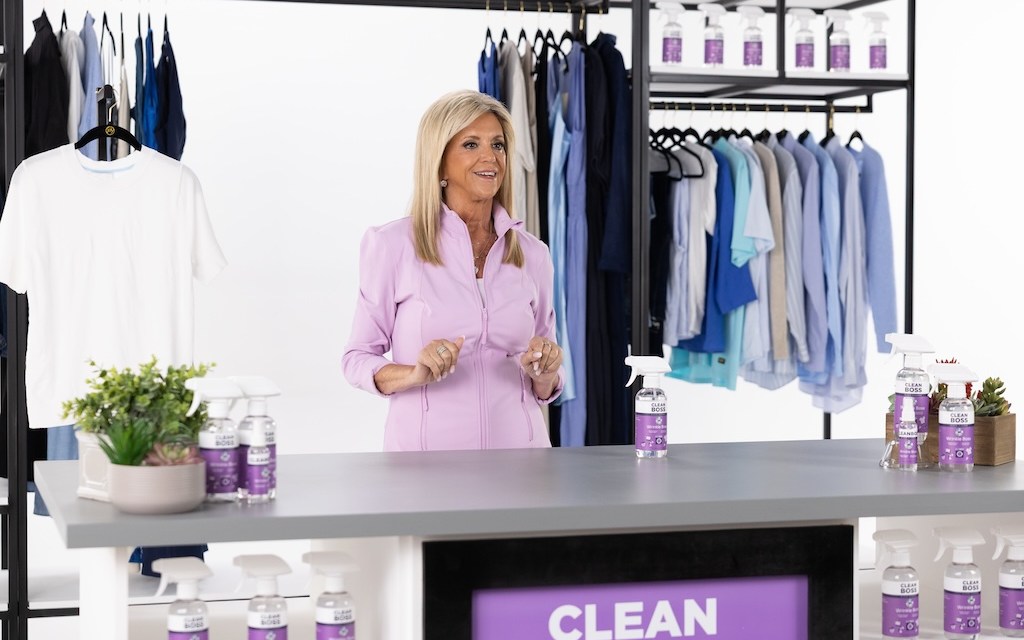
CleanBoss, founded in 2020 by Joy Mangano and artist Pitbull, has used TV as a core part of its marketing strategy since day one.
With Mangano’s decades-long history hosting live-selling sessions on QVC and HSN, the co-founder has been bullish on the channel to grow the non-toxic cleaning brand. CleanBoss views “live shopping” as a channel that encompasses three buckets. The first is going live on digital platforms like Amazon and TikTok Shop, the second is linear TV shopping networks like QVC and HSN, and the third is direct-response commercials, sometimes known as old-school “As Seen on TV” ads.
An early indicator of success on the channel was Eat Cleaner, the brand’s fruit and vegetable wash. The product became the No. 1 seller in its category on Amazon within 30 days of launching on linear television, signaling a halo effect from the television spots. As of 2026, CleanBoss sees up to 90% of daily sales within just 60 seconds of their infomercial airing. As such, TV now accounts for a “sizable portion” of CleanBoss’ overall media spending, with other digital spend including Meta, TikTok Shop and Amazon ads. CleanBoss runs 60-second, 120-second and, occasionally, 30-second spots across several cable news networks. Spots primarily run on cable news channels multiple times per week. This year, the company announced the launch of its new wrinkle-release spray on linear TV, rather than on TikTok or paid social media.
The nostalgic infomercial aesthetic has been in the zeitgeist lately, with brands like Skims and Alex Cooper’s Unwell borrowing it for their recent campaigns. The “as seen on TV” aesthetic is often reflected in retro costuming and props, with the famous 1980s staging popularized by networks like QVC. Even Taylor Swift got in on the trend, dropping an infomercial–inspired music video earlier this year for her single “Opalite.” The video even features a cleaning spray that turns “problems” into “paradise”.
On the tactical side, the infomercial format is also having a resurgence as brands try to diversify their ad spend beyond the popular digital platforms, like Meta and TikTok.
“TV shopping is not just my history, it’s my best-kept secret,” Mangano told Modern Retail.
When it comes to return on ad spend, Mangano said direct-response television remains the most reliable marketing channel for CleanBoss. “It combines the reach of linear TV with the performance marketing capabilities of digital,” she said.
According to Nevin Jethmalani, chief digital officer at CleanBoss, the nostalgic elements of direct-response commercials also seem to be a good fit for Mangano’s enthusiastic cleaning demos. In this case, Mangano’s own appearance pays homage to her early days promoting her Miracle Mop on QVC in the early 1990s.
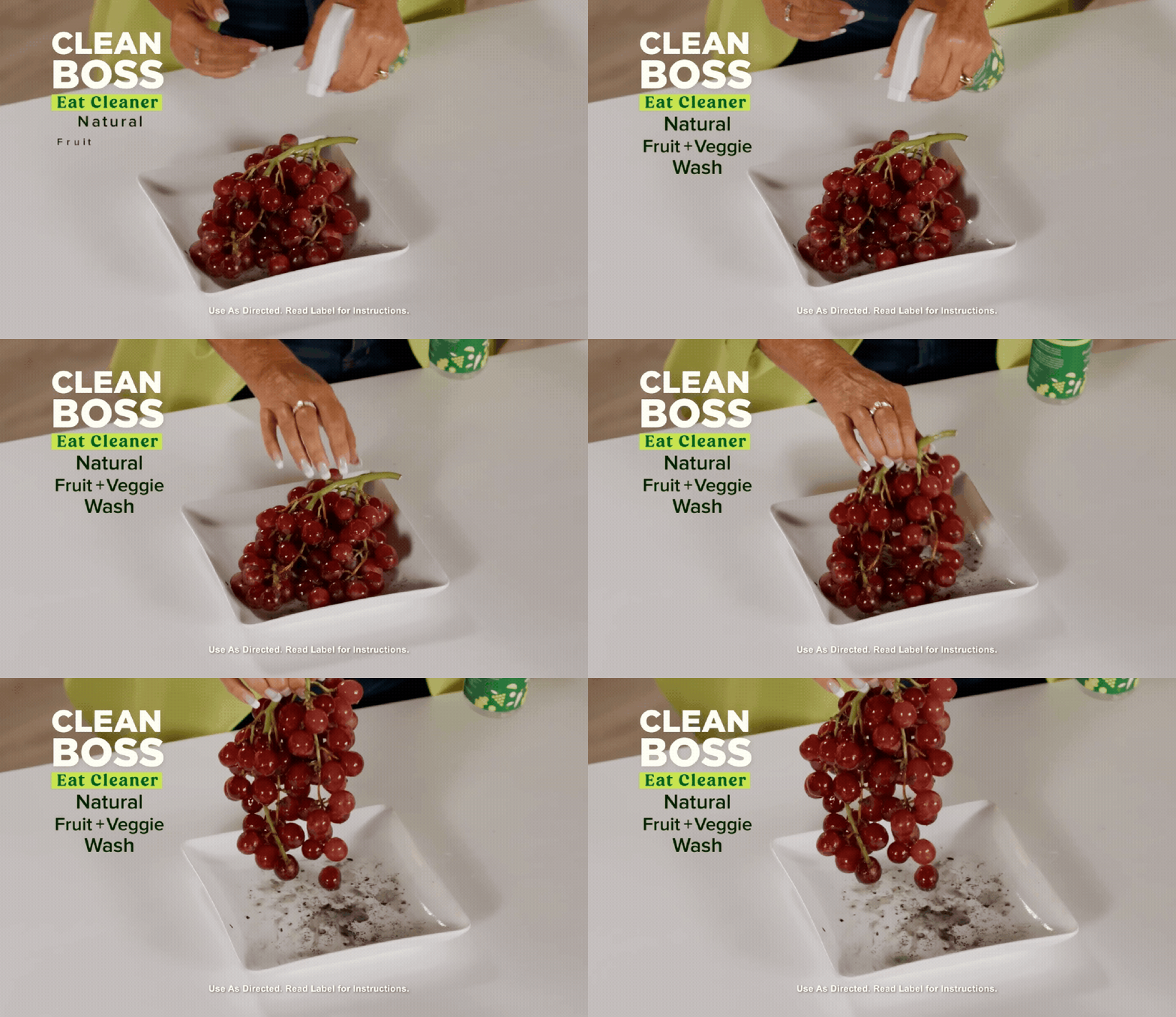
The brand began testing them soon after launching. “But these campaigns started to take off when I joined the company about two years ago,” said Jethmalani. “It was a case of a phenomenal product market fit that made sense for these TV commercials.”
Jethmalani said that while direct-response ads can be seen as cheesy, it’s often an underutilized format that helps CleanBoss reach audiences outside of the digital marketing funnel.
As for costs, Jethmalani said that while linear has a reputation of being expensive, the rates have dropped in recent years compared to the increasingly popular CTV format.
CleanBoss declined to comment on the specific price of these ad spots; It works with an agency that negotiates placements and rates. However, Jethmalani said it has found that “linear TV CPMs are often lower than digital because advertisers pay for broad reach, not fine-grained targeting.”
CleanBoss uses a lift-based attribution system it created in-house, which aggregates and measures revenue lift in defined time windows after each airing. For example, 15-minute, one-hour and 12-hour windows. The brand can partially track sales through unique URLs on its DTC landing pages, which flash across the screen.
“There is a 1-800 number that some people actually still dial into to order,” Jethmalani said. Notably, a significant portion of these sales occurs on Amazon, illustrating the format’s evolution. Jethmalani said TV is now driving viewers to search and purchase the product on their preferred channel, whether it’s online or days later at their local retailer.
Still, the direct-response campaigns are a significant investment, as they are often more polished than the creatives CleanBoss advertises on social media. CleanBoss shoots all its spots in a studio with Mangano “as the hero of the commercial,” said Jethmalani.
“She talks through the concerns that the product targets and uses the same hook you see in a lot of our digital ads,” Jethmalani said. “So it’s: Tell people about the problem the product solves, and then give them the solution.”
Jethmalani said brands may have to give direct-response ads a fair chance to grow and incrementally convert shoppers.
“We are lucky enough to be able to see sales direct response right away,” he said. “But we hear from other brands that that’s not always the case.” He added that running multiple spots per week on an ongoing basis makes the investment worthwhile for CleanBoss. “This is not like a one-off thing for us,” he added.
Mangano said that as CleanBoss continues to grow distribution, she will continue to leverage television in all formats, including direct-response. “When I started on QVC, TV was expensive and crowded. Today, it’s the opposite.”