


Canadian apparel brand Duer launches a print magazine as analog comes back in style
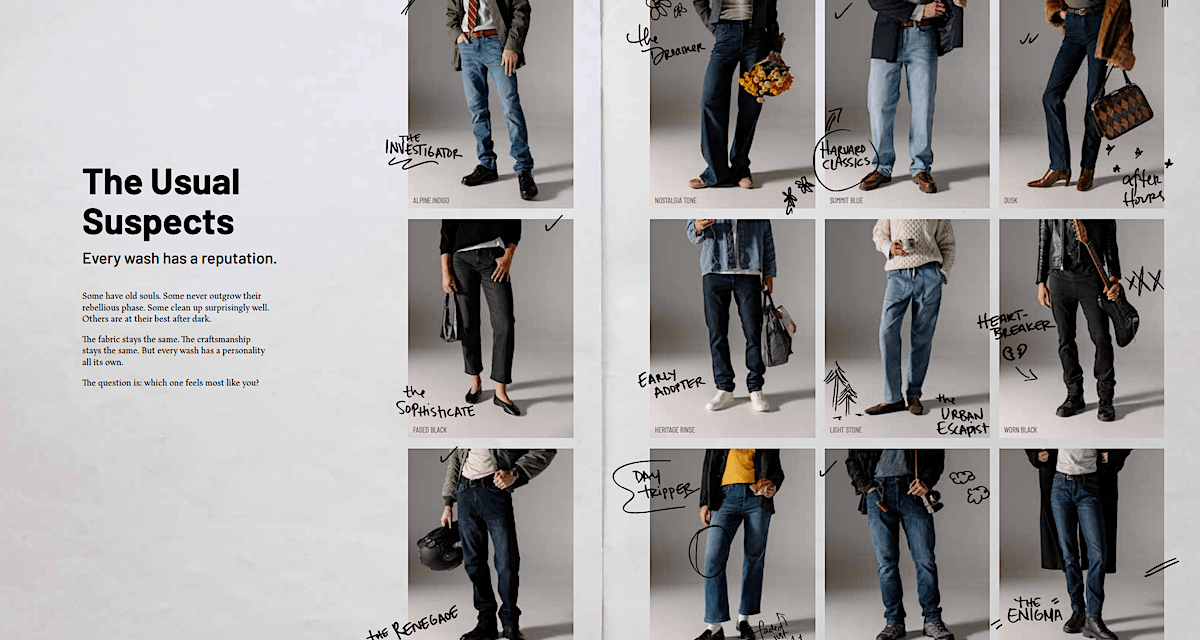
Duer, a performance jeans brand based in Canada, is leaning into print amid an analog resurgence.
The company is publishing a quarterly magazine called Interval that will tell its brand story through photo spreads, features, interviews and personal essays. The first issue drops in October and will be available in the U.S., Canada and the U.K. The magazine will be stocked at Duer’s stores, mailed to loyalty members and distributed to select wholesale partners. To start, it will have a circulation of about 5,000.
Duer, founded in 2013, aims to use the magazine to reach new and existing audiences and better explain its value proposition, said co-founder and CEO Gary Lenett. Lenett — who previously made jeans for Levi’s, Lee, Wrangler and Guess — launched Duer after biking to work meetings and finding a gap in the market for denim that performed like athletic wear and could cross over from workouts to the office. The brand’s first jeans debuted on Kickstarter, with a focus on technical design, comfort and versatility. More than a decade later, educating people about Duer and performance jeans remains key, Lenett said.
As Lenett sees it, a magazine allows the brand to share more about its history and its fabrications, especially as it continues to expand beyond its home base of Vancouver. “It does seem, from a bunch of perspectives, maybe counterintuitive to do print,” Lenett told Modern Retail. “But, for me, I always come back to two questions: How do we get through the clutter, especially in the U.S.? … And, even if you express why you’re special, how do you get across that it’s actually authentic?”
“I think there is something really grounding to a print piece,” he added. “Someone could put up this facade online. They might have one person using AI in the background, and there’s really no ‘there’ there. … What we really want to show with this [magazine] is the depth of our brand.”
While Duer started with jeans, it now makes men’s and women’s products across categories, from shorts and joggers to jackets and overalls. The company operates internationally, and it sells products via its website, its 14 standalone stores and its hundreds of retail accounts. The business is split 55/45 between direct-to-consumer and wholesale. Duer’s financial year ends in February, and it’s on track to be up 40% year over year in revenue. “We’re pretty much on a trend line to around $100 million within 18 months,” Lenett said.
The first issue of Interval will showcase Duer’s products, including its No Sweat high-rise slim straight jeans and its Thermasoft merino jacket. But Interval is “not a hard sales tool,” Lenett said. There are no prices included in the magazine, and some articles don’t mention Duer by name. The content is produced by Duer employees, as well as freelancers.
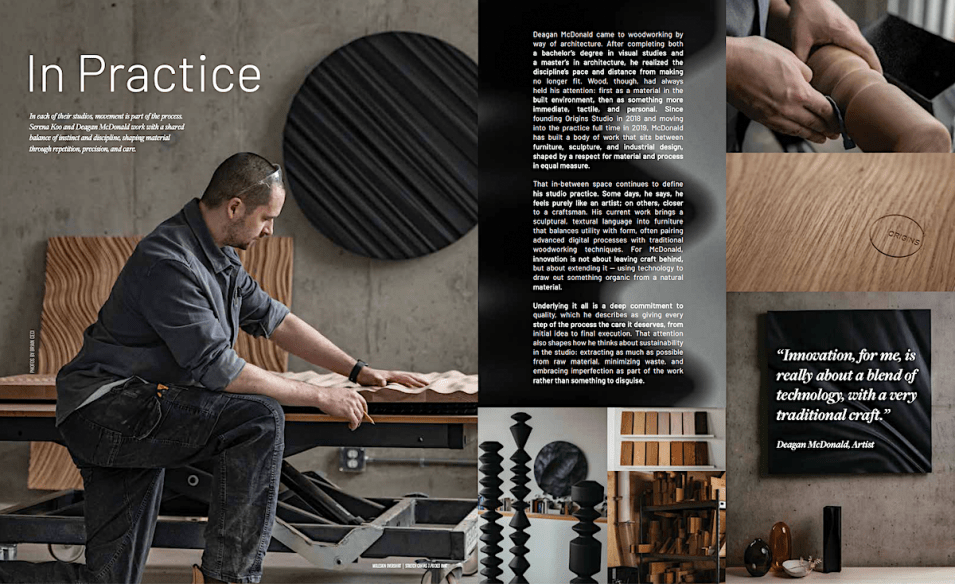
There’s a wide range of stories in the first edition of the magazine, including pieces on return-to-office style and the history of workwear. Duer is also publishing conversations with the stylist Leila Bani and the stunt performer Jennifer Clarke (a former Canadian national team gymnast and Duer’s first COO). Readers can enjoy profiles of woodworker Deagan McDonald and potter Serena Koo, as well. The diverse content reflects the brand’s ethos, Lenett said. “We give people this clothing that can allow them to experience more,” he explained.
The message is perhaps fitting, as Duer’s pivot to physical media coincides with a larger sense of digital burnout. Many consumers, especially young ones, are tired of being “always on” or using screens; a Morning Consult poll from 2024 found that 42% of Gen Z is somewhat or very interested in using “dumb” technology. At this time, vinyl records and CDs are enjoying a resurgence, while landline phone companies like Tin Can are seeing sales soar. Earlier this month, Pinterest revealed that searches for analog activities and “dumb phones” have more than doubled.
Duer isn’t alone in launching a print publication, especially at a time in which digital marketing costs continue to rise on platforms like Google and Instagram. Uniqlo, for instance, launched its biannual lifestyle print magazine LifeWear in 2019 to touch upon “the philosophy that Uniqlo creates,” then-head of communications Michael Zakrzewski told Modern Retail in 2023. “Some customers have come back to say that they’ve collected every issue thus far,” he said. In 2025, clothing brand Faherty launched The Faherty Chronicles, a quarterly print publication that’s akin to a coffee-table book.
However, not all companies’ publications have survived the turbulent marketing landscape. Casper launched a quarterly print magazine called Woolly in 2017 that is no longer in circulation. In 2018, Airbnb rolled out Airbnb Magazine, but that has since been “paused indefinitely,” per the company. Net-a-Porter’s print magazine, Porter, launched in 2014 but went digital-only by 2021.
Polly Wong, president of direct marketing agency Belardi Wong, told Modern Retail via email that many brands have experimented over the years with what’s called a “magalog,” or a hybrid of a magazine and a catalog. “Magalogs can be an effective way to deepen engagement with a brand’s best customers, particularly when the content adds value and strengthens an existing relationship,” she said.
Still, there are numerous brands — including Anthropologie — that use typical catalogs, which can be helpful for introducing the brand to new customers, Wong shared. That audience may be “more likely to respond to a clear, product-focused introduction than to editorial content requiring a greater commitment of their time,” she added. Compared to “magalogs,” catalogs also “tend to generate stronger revenue while requiring fewer resources to produce,” Wong added. “The key is to match the format to the audience.”
Going forward, Duer is open to experimenting when it comes to future issues of Interval, Lenett said, although he acknowledged that he wants the content to have a consistent feel. Issues will remain free. “I’m sure we’ll test and iterate a bit,” he said. “[We’re] just trying to get reach on who we are and why we’re special.”