


Pinterest unveils new suite of ad tools, including Visual Search Ads, in its pitch to brands
Pinterest is introducing a range of ad tools and experiences as it looks to get ahead in the AI age.
The features, revealed at “Pinterest Presents” on Tuesday, will roll out in the coming weeks. One offering, called Visual Search Ads, allows brands to prominently advertise their products in search results and in Pin close-ups, or Pins that people click on. Meanwhile, Pinterest’s automated advertising suite — called Pinterest Performance+ — is expanding to include manual A/B testing tools. What’s more, brands that advertise on Pinterest can now pick which products to prioritize during key moments, like a seasonal launch.
CEO Bill Ready touted these developments as proof that Pinterest is becoming a full-funnel marketing machine. Speaking to advertisers, he explained that users arrive at Pinterest with “clear intent,” but before they make up their mind about what to buy. “That is the magic moment for a marketer to meet a potential customer,” he said. “For much of our history, Pinterest was a great place to build awareness, but not to drive results. I’m proud to say that Pinterest is now a performance platform, … and AI is powering all of it.”
For brands, Pinterest executives said, the opportunity is huge. Pinterest’s user base is growing and, importantly for many companies, young. More than half of Pinterest’s users are Gen Z, and 640 million people now come to Pinterest every month. Pinterest says its users conduct more than 80 billion searches per month, more than half of which relate to buying a product or finding a specific item. Nearly all searches — 96% — are unbranded, providing ample white space for brands.
“Pinterest is where people come to decide what to try, buy or do next,” Lee Brown, Pinterest’s chief business officer, said. “People come here before their decision is made. They don’t even know how to describe what they want, but they know it when they see it. … We can anticipate that next idea and help your brands become the answer people are looking for.”
Pinterest has rolled out more ad tools in recent years as it looks to drive engagement and revenue. “Pinterest is having a bit of a rebirth,” Tinuiti’s Jack Johnston told Modern Retail in 2024. “What we’re seeing in the first quarter of this year is everyone came out of the gate incredibly strong, so Pinterest investment was up 45% agency-wide.”
In turn, brands that once stopped advertising on Pinterest have started making room for it in their marketing budgets. Over the last three years, paid clicks to advertisers on Pinterest have grown 5X, Brown said. He mentioned that Pinterest users are more receptive to ads because they want inspiration when looking for a new couch or retro sneakers. “When your ad shows up, it isn’t standing between them and what they came for,” he said. “It is what they came for.”
Take Visual Search ads, for instance, which is one of the new offerings being rolled out in beta in markets around the world. If someone searches on Pinterest for, say, “statement handbags,” they can soon get a sponsored result for related products. Users can then click on the result and buy the product from the merchant’s site. The tool is “a major step forward in helping brands drive measurable lower-funnel outcomes with the campaign assets that they already have,” Chloe Wix, vice president of go-to-market at Pinterest, said. “No net new creative required.”

Pinterest Performance+, Pinterest’s AI-powered performance advertising suite, is also getting an upgrade. It debuted in beta in 2024 but is now offering more functions to steer brands “toward the outcomes that matter most,” Wix said. For instance, a brand can say how much it wants its ads to reach new customers, or it can prioritize certain products for the holidays. Brands can also create integrations with their own apps to promote installs.
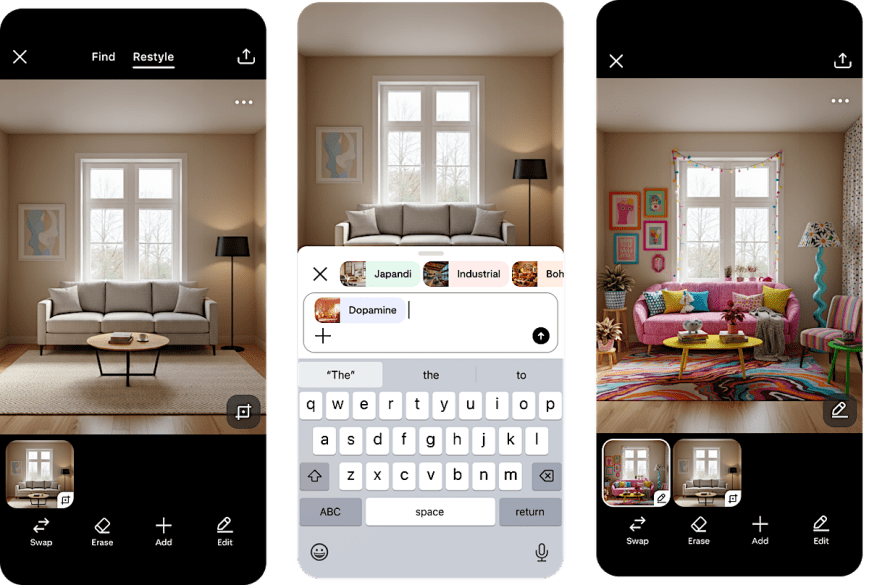
On the public-facing front, there are other new features that allow users to interact with brands. One is Restyle, a camera function that helps people reimagine their space using Pinterest Intelligence. For instance, a user can take a picture of their living room and then use Restyle to see what a different aesthetic — like “bohemian” or “industrial” — may look like. Users can then buy the products associated with those aesthetics, like lamps or tiles. Restyle will launch soon in beta in the U.S. and Canada.
As it rolls out new functions, Pinterest is also encouraging brands to work with creators, like interior designers and chefs. In June, Pinterest began allowing creators to connect their Amazon storefronts to Pinterest, keeping their affiliate links intact. “More than 80% of Pinners feel the content on Pinterest is informed by expert opinions,” said David Brinker, Pinterest’s global head of content. “Brands that partner with creators on Pinterest have seen higher return on ad spend in sales and stronger brand awareness.”
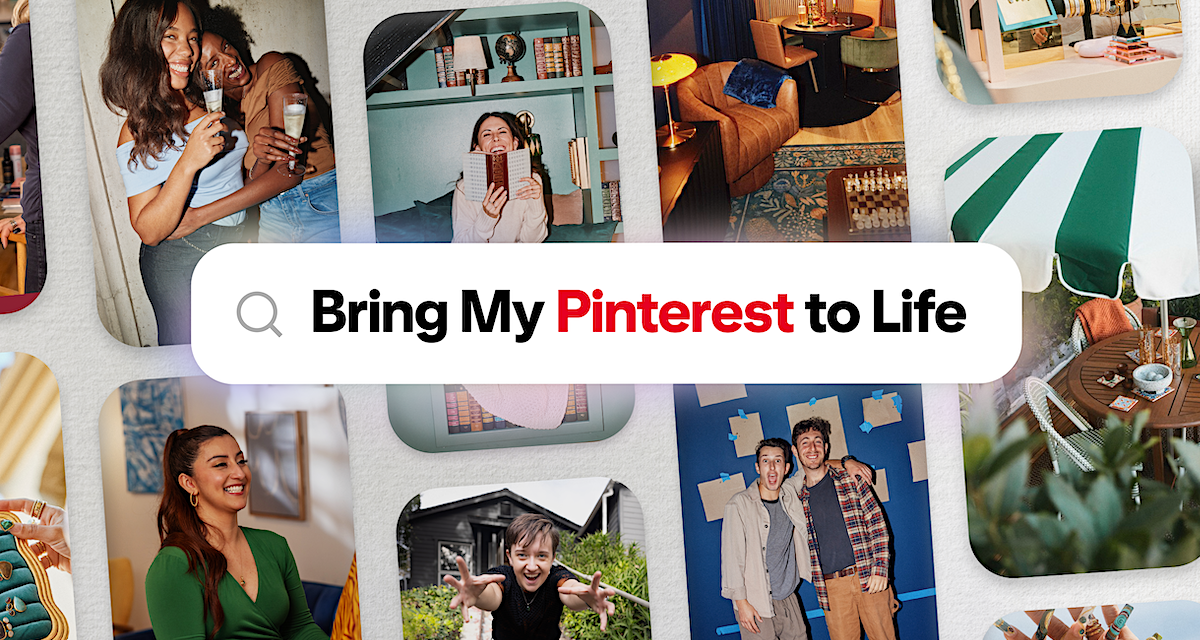
Then, there’s the connected TV of it all. Pinterest acquired tvScientific, a CTV advertising platform, in February, and advertisers can now run standalone CTV campaigns via Pinterest. In March, Pinterest launched “Bring My Pinterest to Life,” a CTV show on Roku that showed Pinterest users working with creator-hosts to redecorate their rooms or change their wardrobes. Each episode also came with QR codes leading to Pinterest boards filled with shoppable products from the likes of Wayfair and Michaels. The show is now filming its second season, which will release in 2027.
While many of Pinterest’s new tools rely on AI, executives on Tuesday also tried to push back against so-called “AI slop.” In recent years, users have complained about the amount of AI content on the platform, including pictures and recipes. Last year, Pinterest added the ability to reduce AI-generated images on the platform in categories like “architecture,” “beauty,” and “food and drink.” Pinterest also says that, if users are under 18, it will automatically disable data sharing for generative AI training.
In his presentation to advertisers, Ready, the CEO, said the platform is committed to using AI safely as parents and young people push back against the onslaught of the technology. “You didn’t build this, and nobody in this room wants to advertise in a place that harms kids,” he explained. “You just haven’t had an alternative. If you wanted reach, you invested in the biggest platforms, whether or not you liked how they operated.”
Brands, executives implied, can feel good about advertising on Pinterest, because the platform has AI guardrails and also encourages people to do things in real life, like plan a dinner party or hold a game night. In May, Pinterest rolled out an ad calling out “the cost of being constantly online.” (The company showed the ad again on Tuesday.) Chief Marketing Officer Claudine Cheever, in her presentation, said that searches for analog activities and “dumb phones” are up more than double on Pinterest.
Still, Pinterest remains a digital platform, and one that relies on AI to fuel its ad targeting and visual search algorithms. Earlier this week, Nvidia said it was expanding its partnership with Pinterest to allow the platform’s conversational AI tool, Pinterest Assistant, to process “25X more visual context per request.” Ready has also spoken about the importance of so-called open-weight artificial intelligence models, or AI models whose core components are released to the public and available for download.
Last month, Pinterest reported that its second-quarter sales rose 18% from $998.2 million a year earlier. Pinterest’s global monthly active users jumped 11% year over year, while its global average revenue per user was ahead of projections. The company expects revenue for this next quarter to come in between $1.19 billion and $1.21 billion.