


Target gets K-beauty brands to think beyond Sephora, Ulta with new Beauty Studio
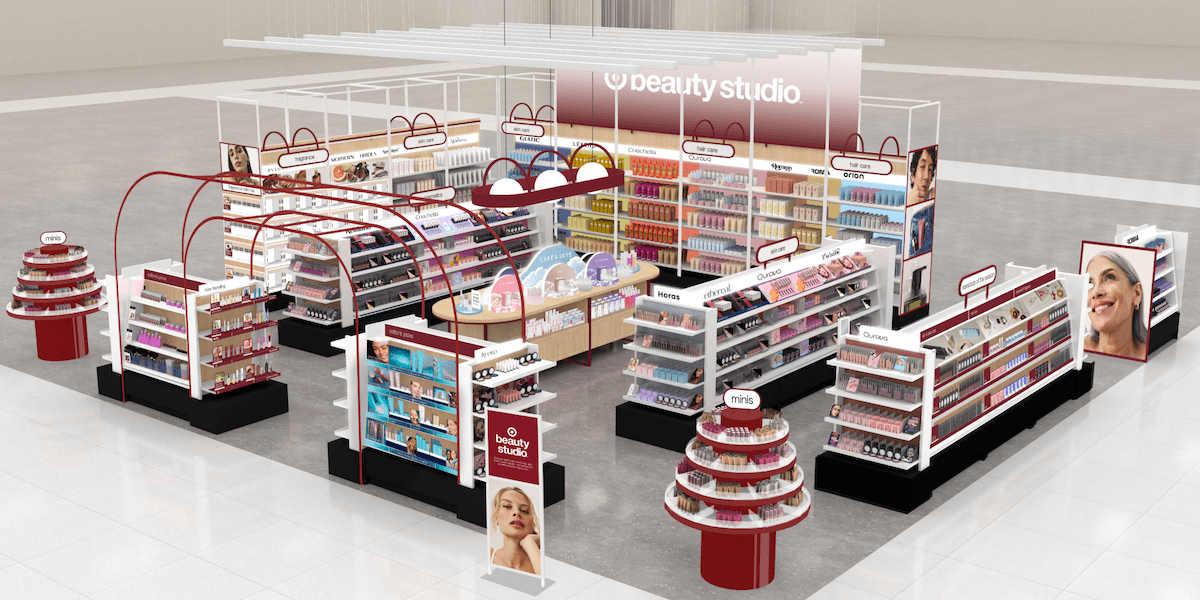
Walking around a Target store today, shoppers are going to find far more K-beauty brands than they would have a year ago as the retailer seeks the latest style trends and as Korean brands seek to expand into U.S. mass retail.
Earlier this year, Target quadrupled its K-beauty assortment with more than 150 new products and more than 10 new brands across skin care, makeup and hair care, according to the retailer. With the launch of Target Beauty Studio earlier this month, Target said in a fact sheet that it brought six “K-beauty cosmetics favorites” into the selection in addition to K-beauty products that can be found across Target’s broader beauty selection. Five of the six brands are new to Target. Target has been working to freshen up its assortment and shopping experience, hoping that will lead to a return to long-term financial growth.
The new beauty selection replaces former Ulta Beauty shops within Target stores and will feature more than 1,600 products from 90 brands, largely brands new to Target. Some of the K-beauty brands included in the Beauty Studio include Amuse, Kaja, Rom&nd, Dr. Melaxin, Purito Seoul and Sungboon Editor, according to Target. Outside of the brands explicitly mentioned as being K-beauty brands that are new to Target Beauty Studio, Modern Retail found roughly a dozen brands in the launch lineup tied to Korean owners or founders. Those include hair-care brand Aromatica and skincare brand Voesh.
The K-beauty representation in Target Beauty Studio demonstrates a shift for Korean brands and beauty practices toward big-box retail, in addition to their presence in specialty retailers such as Sephora and Ulta that have been a haven for this sector. Ulta added 13 K-beauty brands last year across makeup and skin care, according to Glossy. Sephora partnered with South Korean beauty retailer Olive Young this year to launch 19 K-beauty brands in its U.S. stores and online, New York Magazine’s The Strategist reported in August. Olive Young has also recently started opening U.S. stores of its own.
“The fact that so many K-beauty brands are entering major retail channels proves that Korean cosmetics are actively leading the global beauty market,” Jinwoo (James) Kim, a leader with the America region for Dr. Melaxin, which is Korean-owned and -founded, told Modern Retail. “Unlike in the past when it was a temporary trend, it’s now clear that everyone is genuinely interested, which has significantly raised consumer expectations and standards.”
However, there are other areas of representation that are lacking in Target’s new Beauty Studio assortment. As previously reported, Modern Retail could only identify two with Black owners or founders in the new 90-brand beauty assortment: hair-care brand Briogeo and Glamazon Beauty, a line of cosmetics.
Target said the Target Beauty Studio assortment is not static and will continue to add new brands and products on a regular basis in response to guest interests, emerging trends and beauty innovation. Interest in K-beauty has skyrocketed over the past two years, Target said, adding that customers are driven to its innovation, playful design and value.
“Target’s beauty strategy starts with understanding what its guests want — high-quality products at accessible prices, assortments that reflect their personal style and experiences that make shopping feel inspiring and effortless,” the company said in a statement. “By bringing sought-after Korean brands and products into a mass retail environment, Target gives both K-Beauty enthusiasts and guests who are newer to the category an easy way to discover and incorporate K-Beauty into their routines.”
One thing that helped two of the brands, Purito Seoul and Aromatica, get into the Beauty Studio was that they did not have any exclusivity with Sephora or Ulta in the U.S., despite those retailers’ expansion efforts, said Daniella Jung, founder and CEO of Muskat Beauty, the distributor of those brands. Muskat is new to the U.S. market. The company did a small pop-up event in Los Angeles last year to raise awareness in the states and also got in touch with a Target merchant about a year ago, Jung said.
Jung said leaders of Korean or K-beauty brands usually think about Sephora and Ulta when considering opportunities in the U.S., but that the Beauty Studio launch could help them consider the wider U.S. retail market, also including CVS, Walmart and national grocery chains. “A lot of beauty brands will enter into a new retail space in the U.S. within two years, I think.”
Still, Jung cautioned Korean brands that bringing products to U.S. retailers isn’t just about creating virality on social media, but it’s an operational challenge as well. “They have to be ready to expand within the major U.S. retailers, which requires inventory control ability and price control, and they need to have the right marketing strategy for the [U.S.] market,” she said.
Vera Oh, co-founder and CEO of Voesh, a Korean-owned and -founded brand, said she met Target buyers at the Cosmoprof conference in Las Vegas last year. The Beauty Studio includes Voesh’s serum body scrub wash, serum body cream, deodorant balm and shimmer body oil. The brand is also in Ulta Beauty, Revolve and Anthropologie.
“We specifically developed this collection with the Target shopper in mind, … built as a simple K-beauty body-care routine: cleanse, treat, moisturize, finish,” Oh said. “A lot of it comes from what we’ve learned over a decade working with spas on our professional side, what people actually respond to in texture and fragrance. We wanted Target customers to walk away with a new K-beauty body care ritual, not just a new product.“
Oh said she believes retailers no longer treat K-beauty as a trend, but as a source of innovation across skin care, makeup and hair products. “We’re past the first wave: sheet masks, essences, 10-step routines,” she said. “Now it’s less about specific products and more about a way of thinking: good ingredients, real efficacy, better everyday routines.”
Dr. Melaxin’s Kim said the product line was developed for the diversity of Target’s customer base, so it included products for issues such as eye wrinkles, skin texture and brightening. Exclusively at Target, the brand is selling a small version of its Peel Shot black rice exfoliating ampoule.
“While specialized beauty retailers like Ulta are crucial, we strategically wanted to enter Target to simultaneously expand our touchpoints with everyday consumers in their routine paths and build brand credibility,” Kim said. The brand previously launched at Ulta this year and is also in Costco, Nordstrom and Amazon. Target had reached out to the brand because of its online sales figures, according to Kim.
“We weren’t just passively waiting,” Kim said. “We were just about to express our interest in entering Target as well.”
Another brand in the lineup, the makeup line Kaja, initially launched in collaboration with Sephora in 2018, according to WWD. In addition to Target, the brand is still available at Sephora, as well as Ulta Beauty, Macy’s and Nordstrom, and online. Kaja worked with Target to curate a selection of 40 SKUs across eyes, including its Beauty Bento eyeshadow trios, Wink Stamp eyeliner, Cheeky Stamp blush and Juicy Glass lip collection, said Dino Ha, founder and CEO of Seoul-based Memebox, which operates the Kaja brand.
“We saw an opportunity to introduce more consumers to the creativity, innovation and effectiveness that define Korean beauty through a retailer they already know and trust,” Ha said. “It’s about making K-beauty more accessible and creating an exciting discovery experience for consumers.“
Ha also said he is not surprised by the large share of K-beauty brands in the Beauty Studio lineup. He said K-beauty has become more integral to the mainstream beauty conversation, rather than being treated as a niche category.
“What we’re seeing today is the result of years of innovation, consumer education and growing demand for Korean beauty products,” Ha said, adding that Korean beauty had previously been recognized largely for skin-care innovation. “Now, we’re seeing retailers embrace the full spectrum of what K-beauty has to offer, including makeup, lip products and innovative application formats.”