


PopSockets’ next act hinges on DTC, TikTok and a bigger product ecosystem
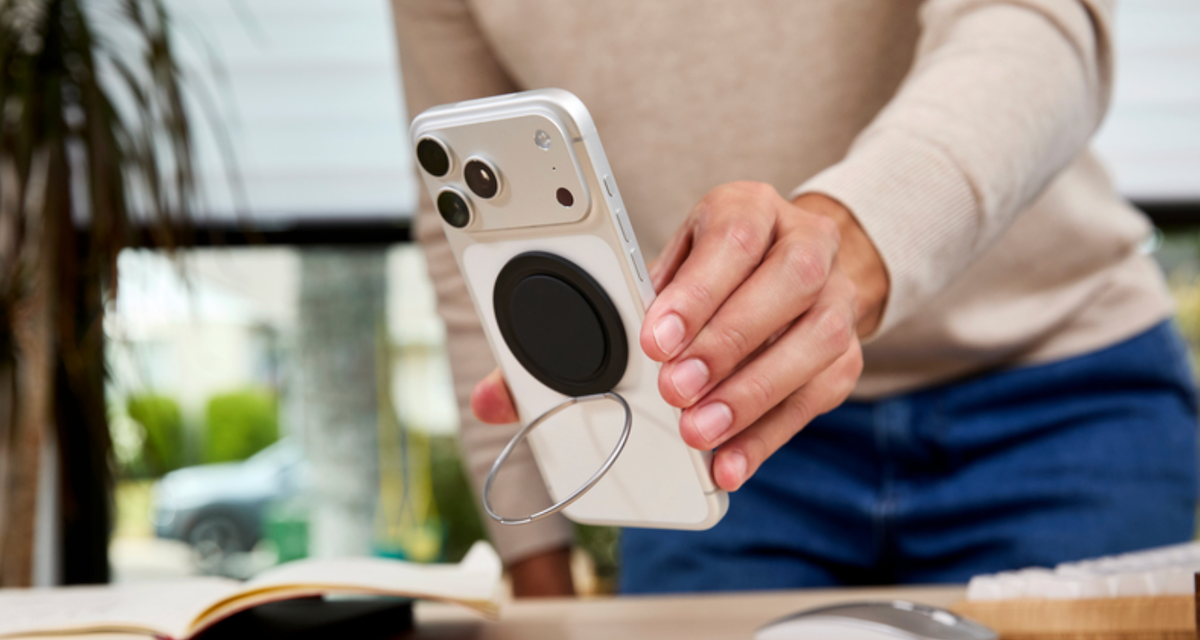
PopSockets wants a bigger grip on the phone accessory market — and it’s betting on limited-edition drops, TikTok videos and magnetic products to get it there.
A large part of PopSockets’ strategy hinges on converting younger shoppers, once a major audience for the company. PopSockets — known for its button-shaped, adhesive phone grips — launched in 2014 after raising money via Kickstarter. Initially, it seeded products to middle-schoolers, who used PopSockets to personalize and prop up their phones. The brand also took off when celebrities including Gigi Hadid were spotted using the accessory.
In its second year in business, PopSockets inked deals with T-Mobile and Sam’s Club. Soon, it expanded into other retailers, including Best Buy and Target, as well as many mom-and-pop stores.
PopSockets continued to grow, and sales were pretty good at the beginning of the Covid-19 pandemic, founder David Barnett said. But a couple of years into Covid, PopSockets found itself losing traction with Gen Z — who were once those middle schoolers who had elevated the brand — as 20-somethings started using other phone accessories or no accessories at all. Folks in their 30s and 40s with more disposable income had become eager customers — “We became known as the millennial mom brand,” as Barnett put it — but PopSockets wanted to get back to the audience that had helped propel PopSockets forward in the first place.
It was then that PopSockets decided to focus on its direct-to-consumer channel and social media presence to reacquaint itself with younger shoppers. It began holding drops on its website once every one to two weeks — something it couldn’t do with wholesalers. PopSockets also overhauled its TikTok strategy, pushing out goofy videos like Barnett dressed as a Blue Man and Barnett wearing a pilot costume. What’s more, PopSockets started focusing on slimmer, magnetic products that more easily fit into people’s pockets; its toothpick-thin Low-Pro launched on July 29 on its website, after a limited-time run at Apple.
PopSockets has taken on different forms since its debut more than 10 years ago. Barnett first conceived of the product when looking for a tangle-free way to store his headphones. After gluing two buttons to the back of his phone case, he took PopSockets through 60-70 rounds of prototypes. The company’s first product was an adhesive phone grip. Now, in 2026, PopSockets has swappable grips, as well as magnetic options compatible with Apple MagSafe and a host of other lifestyle products, including wallets, chargers and mounts.
PopSockets continues to sell in wholesale channels and traces the majority of its revenue to those partners. But the brand sees its website, in particular, as “the tip of the spear” for getting back into Gen Z’s good graces, Barnett said in an interview. It’s a notable reverse from years ago, he said. “When we started the business, we weren’t supposed to mention our website to retailers,” he said. “They [said], ‘That’s competition with us.’ After the pandemic, retailers realized that a brand with a strong DTC presence is a brand they want to have a big presence in their store.”
After dedicating more merchandising and marketing resources to its DTC business, PopSockets ended up seeing “double-to-triple-digit growth” on its website over the last three years, Barnett said. Consumer Edge, using U.S. credit-card and debit-card data, told Modern Retail that DTC website sales for PopSockets were up 38% year over year in Q1 2026, 16% year over year in Q4 2025 and 32% year over year in Q3 2025. Sales for Q2 2026 were down 6% year over year.
One way PopSockets has tried to build sales has been through limited-time drops. The company has print-on-demand capabilities, so it can churn out products featuring licensing deals and collaborations quickly. The drops are featured on a “coming soon” tab of its website; upcoming launches include “Rudimentary” (Aug. 6 at 12 a.m. MST) and “Sew Cute” (Aug. 19 at 12 a.m. MST). Customers can sign up to receive a notification when the drop goes live.
“People are just curious what the next drop is, so it keeps engagement up,” Barnett said. “It also allows the marketing machine to keep content fresh, because every time we have a new offering, we have a fresh set of creative out there on Meta, or wherever we’re advertising, and it will perform better.”
PopSockets has also changed the way it approaches TikTok. For years, Barnett — once a philosophy professor at the University of Colorado Boulder — visited campus and heard that students weren’t satisfied with the brand’s social media. “I heard the same thing every time I visited,” he said. “They’d say to me, ‘Who’s running your TikTok? They don’t know what they’re doing. They’re pushing product. We don’t want to see product. It looks like Instagram.'”
Barnett shared the feedback with the brand but eventually decided he “couldn’t take it anymore” and took over the brand’s TikTok a year ago. He’s tried to take a more casual and zany approach to content, often appearing on camera himself. In one video, Barnett wears an eye patch and dons fluorescent press-on nails. In another video, he spoofs regional dialects of “pop” versus “soda.” Barnett also has a sketch called “The Jon Stuart Little Show,” in which he voices his grievances while wearing a mouse costume. Some videos have racked up 2 million to 3 million views.
“I’m just having fun, and it’s working,” Barnett said. “Gen Z loves it. Gen Alpha loves it. We’re just crushing it now, compared to our competitors, as far as engagement goes, and new followers. So, that’s helping to wake people up to the idea that PopSockets is around and we’re ready to reengage.”
While PopSockets has experimented with TikTok Shop, “it’s not easy to make money on TikTok Shop,” Barnett acknowledged. More often, he said, people find PopSockets’ videos on TikTok and then go to the brand’s website or buy the products at a retailer.
The brand, however, will use its other social media channels, like Instagram and Facebook, to speak about its new product, the Low-Pro. The Low-Pro, which is magnetic and has a kick-out stand, launched in Apple in June. Per the brand, in the first two weeks of launch, the Low-Pro Grip Black ($39.95) became the brand’s No. 1-selling SKU in Apple, outselling its Kick-Out Grip & Stand and its Suck-Up Grip & Mount.
PopSockets started working on the Low-Pro several years ago to appeal to people looking for ultra-thin, collapsible phone grips. It plans to turn the Low-Pro into a full ecosystem, including by developing a case that has the Low-Pro built in and is flush with the side of the phone.
The Low-Pro was designed to bring new customers onboard, rather than address a current issue for existing customers. “Over the years, I’ve heard so many people say they’ll never use [a PopSocket] because they perceive it as not pocketable,” Barnett said. “So, Low-Pro is mostly for new audiences who’ve never tried our product.”
PopSockets is still developing adhesive grips, but it’s continuing to see more business today from magnetic grips. For customers who want either, PopSockets hopes to make products that address common pain points — like trying to hold your phone while running through an airport or texting with one hand — and allow people to express themselves, Barnett said. Some of the brand’s recent styles include collaborations with Ring Pop, Bazooka, Miffy and Pokémon.
“Big picture, we’ve always tried to create a little bit of joy in people’s lives,” Barnett said. “[We’re] seeing really amazing growth, and we’re seeing a lot more Gen Z.”