


‘The store is a lemonade stand’: Brands are lending their retail spaces to other brands for events
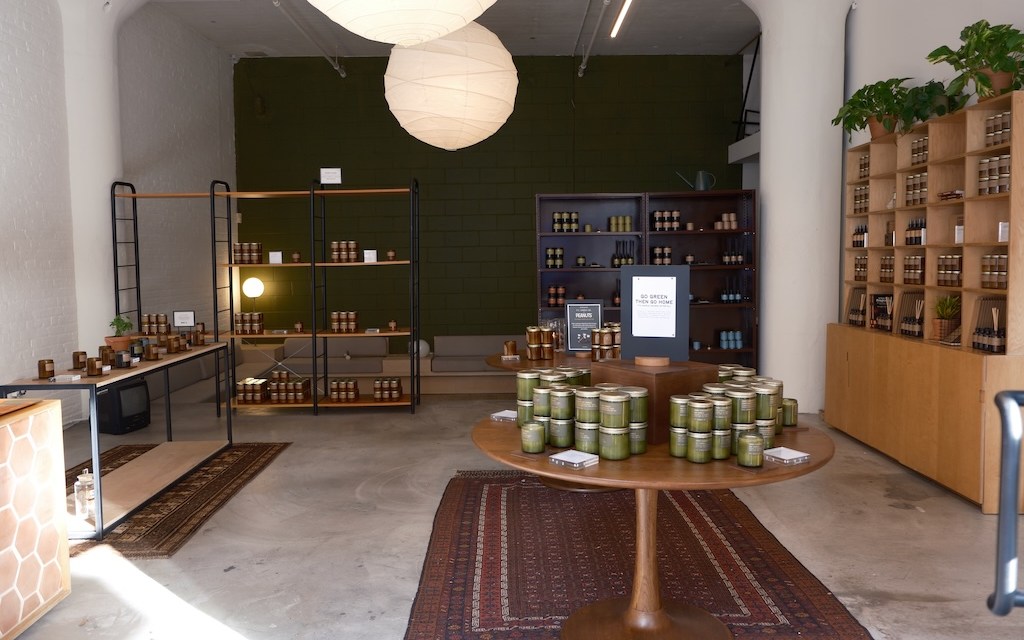
Brands are increasingly transforming their storefronts into communal event hubs.
Businesses like P.F. Candle Co. and Brooklyn-based vintage shop Sorbara’s have been looking for new ways to leverage their prime real estate, and events are one way to do so. The goal is to reach new audiences and generate secondary revenue streams at a time when it’s become harder to break through the noise and win over value-seeking customers. This collaborative approach allows independent retailers to optimize their square footage through creative activations, ranging from matcha carts to book launches, and turn their four-wall stores into experiential destinations.
This year, it has been a priority for P.F. Candle Co. to optimize the use of its three stores in New York, Los Angeles and San Francisco.
P.F. Candle Co. co-founder Kristen Pumphrey said foot traffic has been fickle due to external factors like gas prices and weather disruptions. So the brand has had to get creative in finding ways to bring new people into stores. The brand generally hosts events at least once a month.
“Right now, you really live and die by people just walking by,” said Pumphrey. “This year, it really clicked for us what works in the stores versus why people shop online.”
“We’ve been continuing to focus on free events and letting all of our store managers lead the charge of what they want to host,” said Pumphrey.
In its Los Angeles store, the brand is also allowing other brands to do limited-time pop-ups. “We have the space and can take advantage of the amplification of other brands publicizing it,” Pumphrey said.
A recent example involved Happy Organics, which makes hyper-realistic food candles. The week-long spring residency offered exclusive, hand-painted fruit- and veggie-inspired beeswax candles. The event ended up featured in the Los Angeles Times, which highlighted P.F. Candle Co.’s Echo Park store.
Pumphrey said the events with other brands help bring people into the store and amplify the brand’s offerings. But they also act as a modest revenue source to help offset the rising costs of physical retail operations. “We take a very low cut of sales from the event, about 10% basically for hosting them,” Pumphrey said.
“Pop-ups and events have become a halo strategy for our stores,” Pumphrey said, with weekend pop-ups consistently generating incremental sales compared with normal weekend traffic.
At P.F. Candle Co.’s Echo Park store, weekends with pop-ups perform 17% better, compared to weekends without events. New York pop-ups lift sales by an average of 34%. Meanwhile, San Francisco pop-ups, when paired with larger neighborhood events like the North Beach Festival, have increased sales by as much as 31%.
The company is also saying yes to out-of-the-box events that don’t necessarily scream candles. “People come in for one thing and then see that we have candles and incense, too,” Pumphrey said.
The New York City store manager recently hosted a singing open-mic night that brought in an unexpected crowd. “We’ve never done something like that before,” Pumphrey said. “We’ve also done a lot of vintage pop-ups where we allowed people to host closet sales.” Bringing in matcha carts run by companies like Ren in New York City and Tea for Us in San Francisco has also performed well, generating unexpectedly long lines.
Food and beverage pop-ups have become popular for stores, in general. Draper James, for example, brought in SipNSpritz to serve spritz cocktails from a sales floor cart this summer. The Reese Witherspoon-founded brand also hosted tea brand Tea Forte for a co-branded pop-up at its store.
“The matcha carts work so well because they don’t take up a ton of space and also help generate customer content,” Pumphrey said. They also intrigue passersby who see a crowd forming at the store.
While the event space strategy is year-round, Pumphrey said the company pares back on them a bit during the fall due to candle inventory taking up more space.
“Offering the space to like-minded friends and brands is a way to bring new foot traffic,” Pumphrey said. “That is what we will continue to test out this year.”
Kathleen Sorbara, owner of Brooklyn-based vintage shop Sorbara’s, similarly said that third-party events are a great way to lend out square footage to help recoup rental costs. The store opened in 2024, and since then, Sorbara has hosted a steady run of in-store events that other brands or designers take the lead on.
Sorbara said that independent designers and brands don’t necessarily have the means to sign a multi-year-long lease in this economic climate, especially in expensive markets like New York. So, the vintage shop has found plenty of willing partners.
Sorbara said she relies on organic social media content and the event calendar to drive foot traffic without paid ads. “We typically have an opening event on a Thursday to promote that the designer or brand will be in the space for the weekend,” she said.
This year, the Sorbara’s store helped co-host a book launch for Gene Pressman, the grandson of Barney’s founder Barney Pressman. Last fall, Madewell hosted a denim trade event at Sorbara’s to promote its upcycling program. “I always say the store is a lemonade stand, and this is a fun way to try out new things that our customers react really well to,” Sorbara said.
“But we are pretty selective about who we bring in,” Sorbara said. She added that as a small business owner, she has to weigh the ROI on every vendor or brand that wants to use the space to ensure it’s worth her time and effort to squeeze into the event calendar. “Having the space allows us to help co-host these real-life events,” she said. “It’s also just good PR.”