


Quince is testing physical retail with pop-ups
Quince is on a physical pop-up run across North America this year.
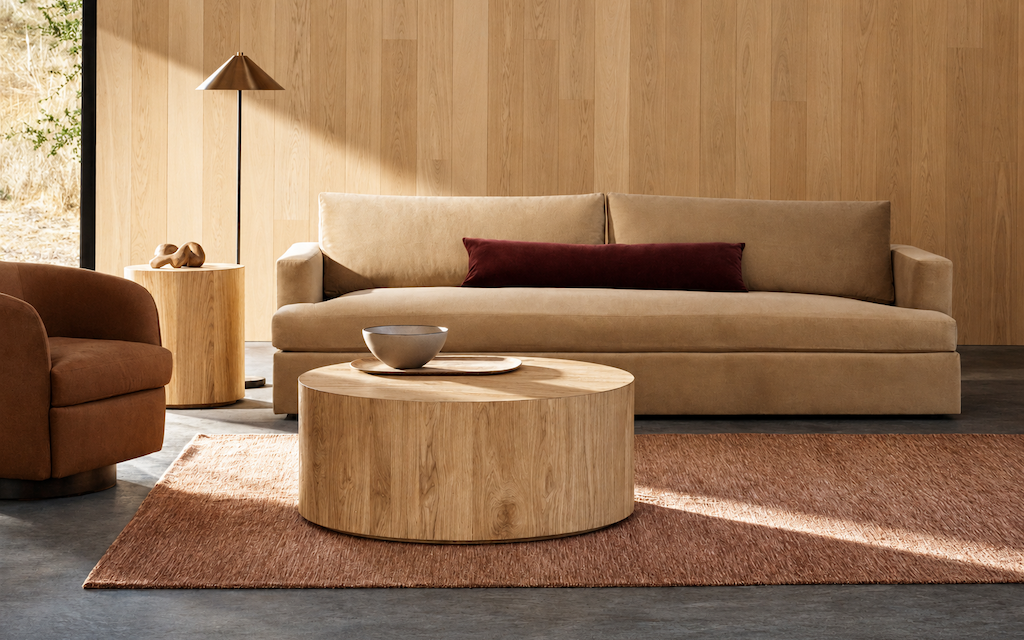
On May 30, Quince hosted its latest physical pop-up in Los Angeles, called Quince Furniture: The Art of Home. According to Quince, the e-commerce brand is bringing its home collection to life with its first-ever furniture showroom experience inside the Sunset Tower Hotel.
The assortment is heavily focused on furniture and Quince’s growing home assortment, including rugs, lighting and tabletop items. These have become some of the fastest-growing subcategories for the company. Guests can shop the collection by scanning QR codes to purchase large pieces. And there will be shoppable accessories like linen bedding, cashmere throws and candles that customers can take home.
Guests at the Los Angeles space are encouraged to lounge on the furniture to test the comfort levels. Quince is also offering complimentary drinks and snacks from local spots, like frozen coffee from Leora, cookies from Fleur Et Sel cookies and coffee from Alfred.
Dakota Kate Isaacs, head of brand strategy and narrative at Quince, spoke to Modern Retail on Friday ahead of the one-day event in West Hollywood. Isaacs said Quince is now investing further in experimental pop-ups due to the growing number of new categories the company has added in recent years. These include wellness, fragrance and even gourmet food like caviar and truffles.
She said that gauging customer insights is Quince’s biggest goal with the physical pop-ups. “With being an online brand, it really comes down to building trust in the quality so that people are willing to try other categories,” she said.
Quince was founded in 2019 as an online-only brand. It operates what it calls a manufacturer-to-consumer model, in which Quince partners directly with factories and uses AI-driven forecasting to predict product demand.
The San Francisco-based startup recently raised a $500 million Series E funding round, valuing it at over $10 billion. As of 2025, the company says its annual revenue surpassed $1 billion.
Isaacs explained that many customers tend to come into the brand through the competitive pricing. But the brand is trying to broaden its appeal beyond the price point. “Showing the products in person helps us build trust in the system as a whole, because the technology is what allows us to go into all these different categories,” she said.
Isaacs said that while buying $50 cashmere online has become the norm for Quince’s audience, “making an investment purchase in something like furniture without seeing and feeling it is different.”
Quince recently tested out this consumer theory at its New York City pop-up in April, which featured fine jewelry and fragrance. The Chinatown event took place at the coffee shop The Mandarin and drew hundreds of people. “We had a line that wrapped around the block, and we heard people saying, ‘Wait, that’s the brand I’ve seen online,'” Isaacs said. She added that the social media content from that event also drew numerous messages from customers asking the brand to come to L.A.
“Unlike a PDP, people can really see the full breadth of what we make,” Isaacs said. For instance, even though the New York pop-up was specifically for jewelry and fragrances, Isaacs said, “We also had our candles in the room, and many of us [staff] were wearing our cashmere,” which sparked conversations about Quince’s platform model.
“It’s part of being a ‘transparent brand,” she said. “And I hate to use that word sometimes, especially in the wake of the Everlane of it all.” But in-person events offer an opportunity for customers to meet directly with Quince’s product team.
“These are the actual people on the phone with the manufacturers, who can tell shoppers where these items are made,” Isaacs said. For example, the majority of the furniture pieces shown at the Los Angeles pop-up are manufactured here in the U.S. “Having experts who can actually speak to the quality across all these categories is a big differentiator from talking to a trained salesperson or customer service agent,” Isaacs said.
Isaacs said the company is sticking with the same pop-up model to keep logistics simple. “We are doing this two-day format, where the first day we’re bringing in select community members or trade people,” she said, followed by a day that’s open to the public to shop.
The next stop on Quince’s pop-up tour is Toronto in June, following the company’s launch in Canada earlier this year. “The Toronto pop-up is the first event that we’re actually doing in Canada, and the entire event is around our 100% linen collection,” she said.
Isaacs said that Quince will continue to test physical retail through pop-ups. “Every single thing that we’re learning is a data point, in some regard,” she said. Whether that leads to a more permanent physical retail presence for Quince has yet to be determined.
“But one of the big goals is showing people that we are not just a one-category brand,” she said.