


Brands Briefing: Caraway makes its first big OOH push as it seeks to make the brand ‘impossible to ignore’
Jordan Nathan, founder and CEO of the cookware startup Caraway, says he likes to set a theme for the company each year. It’s a way to coalesce his team around a north star. This year, the theme is “impossible to ignore.”
Caraway has now entered its sixth year of business, and after starting out as an online-only DTC brand, its products are now found in nearly 1,000 retail stores, in addition to Amazon. Last year was Caraway’s biggest growth year “from a net dollar perspective,” Nathan said, and the company has sold its products into more than 2.5 million households since launch.
With that, Nathan feels the company has built a solid foundation and can now invest in bigger initiatives — like splashier marketing campaigns that will, hopefully, make Caraway impossible to ignore.
“It’s about taking swings and being bolder,” he said. “We’re able to do that because we have such a great foundation in place. And I think with that comes pushing the brand into new territories, whether it’s channels, products, customers or personas.”
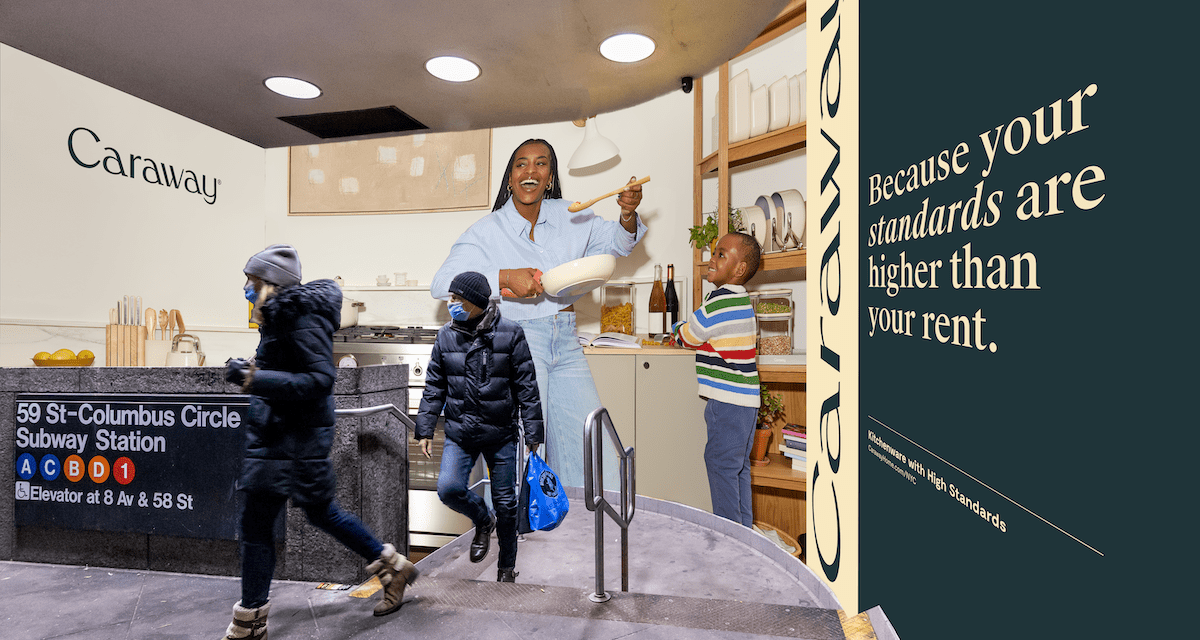
Currently, the company is making its first big push into out-of-home, with a campaign that goes live on March 3 called “Made Better.” It consists of a takeover of the Columbus Circle subway station, ads that will run in a few thousand MTA subway cars, creatives that will run on eight trucks driving across New York City through Adgile Media Group, and other activations like a few in-person events.
The campaign will also tie into what Caraway is doing digitally. The company is making a big influencer push this year, especially tied to upcoming product releases, and will update its website with creative and content from the Live Better campaign. Carway worked with the agency Brains on the ad creative.
Nathan views the campaign as a “kick-off point” for the next step in Caraway’s journey as a brand. The company wants to acquire customers through more than just digital marketing. It also wants to be known for more than just material innovation — Caraway got its start selling ceramic cookware at a time when more consumers were becoming concerned about PFAS in non-stick cookware.
But since then, the company has expanded into more product categories like bakeware and food storage containers; Nathan hinted that, with some of the product launches Caraway has in the works this year, the company will be expanding into other areas of the home.
The tagline “Made Better,” then, is meant to encompass the “why” behind Caraway’s product development — to signify to consumers who have never heard of Caraway before, or only know the company from the Facebook ad, what makes the company different and what ties all of its products together. “Cookware with high standards,” one of the ads proclaims, and notes that Caraway is “tested by professional chemists and busy parents.”
Nathan says that what makes Caraway different than other cookware brands is that it spends three to five years developing its products. “Right now, we’re working on our 2030 pipeline,” he said. “This is our way of putting our stake in the ground that we’re leading the charge against ‘good enough’ within the kitchen and trying to establish Caraway as a modern authority for not just non-toxic, but also design-forward living.”
Pushing into new channels also means Caraway is updating its approach to creative. Nathan said that, on Facebook, the brand typically relies on photos that showcase the product, not people. Now, for the first time, Caraway is using more lifestyle imagery focused on people cooking in the kitchen.
Nathan said Caraway was inspired to do a bigger out-of-home push this year after running ads on the back of a few trucks last year. “When we ran the first one, I had 20 people I knew tell me they saw our trucks while running around New York City,” Nathan said. “I felt like, if there were 20 people in my close circle who saw them, that meant they were probably impactful.”
Chris Toy, founder and CEO of MarketerHire, said out-of-home remains “premium inventory,” in the sense that, “if you have out-of-home, the average consumer consciously or subconsciously looks at it as a sign of maturity.” It stands out more, he said, than the dozens of ads the average consumer may see scrolling through Facebook each day. It signifies that the company is a real brand, one with enough cash to buy up, say, a Times Square ad.
Buying certain out-of-home inventory, like billboards, has also become easier over the years, he said, through companies that have streamlined the process or improved tracking technology.
Still, as with other channels, it all comes down to placement, he said. There’s a difference between doing a wild posting on the side of an alley versus running ads in a high-traffic tourist destination like Columbus Circle.
For Caraway, Nathan hopes the Made Better campaign is just the first example of the brand pushing into new marketing areas. “We’ve got the brand equity, and we’ve got more capital that we can [use] to start taking some bigger swings to help reach new audiences,” he said.
What we’re reading
- Coach is going after Gen-Z consumers around the globe with its latest campaign, called “Explore Your Story,” which features brand ambassadors like actress Elle Fanning and Korean musician Soyeon.
- While the fast-casual food industry is struggling, Cava reported a surprise increase in same-store sales during its latest earnings report.
Just a week after announcing its acquisition of Depop, eBay disclosed that it is laying off 800 workers.
What we’ve covered
- AI is now exacerbating return fraud; here’s what companies like Boll & Branch and Bogg have experienced.
- Claire’s has tapped former Walmart and Macy’s vp of merchandising Jillian Cueff as its new chief merchandising officer.
- Why sexual wellness startup Dame is refunding $10,000 in tariff surcharges to customers.