


How IKEA got closer to its shoppers with new small-format stores, Best Buy partnership
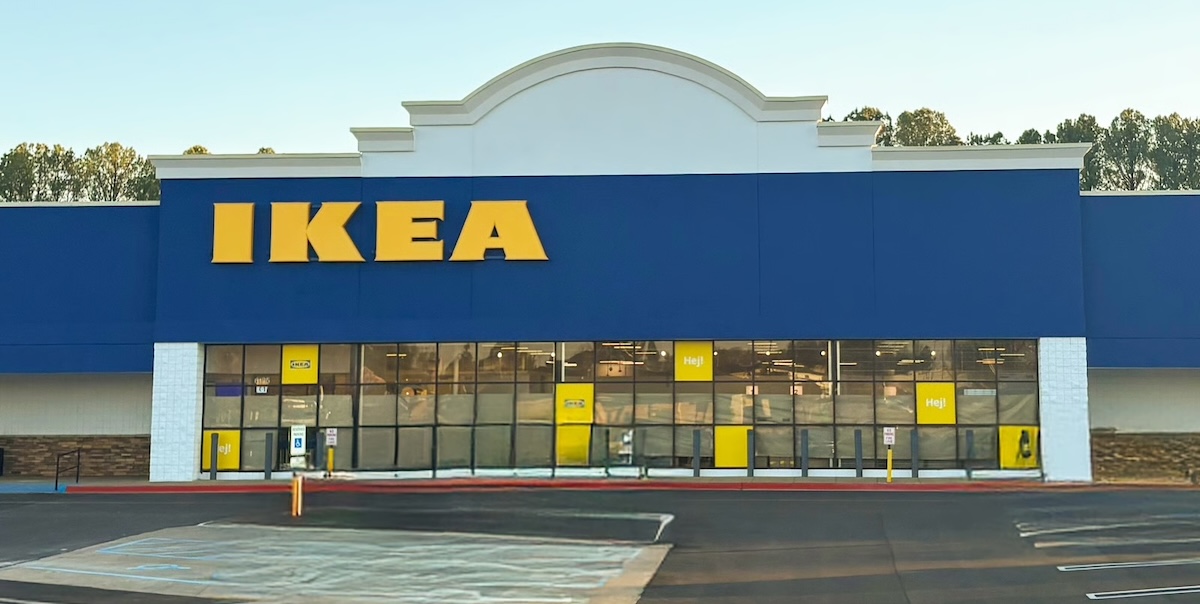
IKEA has reimagined how it shows up to customers, thinking outside of the big, blue box that has long defined its image in the U.S.
On Feb. 17, IKEA U.S. announced plans to open four new U.S. stores in Chicago, Tulsa, Fort Collins and Los Angeles, marking 10 new stores in 2026. This includes its first Los Angeles city-center store and the first store in Oklahoma. The company reported $5.3 billion in total sales, including $1.9 billion in e-commerce sales for fiscal year 2025, which ended in August, in IKEA U.S.’s annual summary released Feb. 17.
Some of the new locations are among the first small-format stores that bring some elements of the larger IKEA big-box stores to a smaller footprint. It’s a middle ground between the larger boxes and the smaller concepts the company has experimented with in the past, like Plan & Order points and The Planning Studio. The company continues to operate Plan & Order points as a small-format store where customers can order products and plan areas like kitchens. Additionally, IKEA late last year launched a partnership with Best Buy to open Plan & Order Points within Best Buy stores. There, customers can work with IKEA employees to plan and design their spaces, order IKEA products and look at room displays.
The Planning Studio, meanwhile, was a previous concept where customers would similarly plan and order products. Last fiscal year, IKEA also opened two new small-format stores in Arcadia, California and San Marcos, Texas.
As an example of what customers may find in the new small-format stores, the San Marcos store opened with more than 2,500 products on display, 2,000 items available for immediate purchase and a small range of food items. This is just a slice of IKEA’s full range of 10,000 products, but still a significant number of products to purchase.
The company also said its IKEA Family rewards program reached 25 million members in fiscal 2025, up 17% year over year.
Modern Retail spoke with Rob Olson, interim CEO of IKEA U.S., about how the retailer embraced its new small-format strategy last year and what to expect from the company moving forward. This interview has been edited for clarity and length.
What was IKEA’s biggest accomplishment last year?
“We’ve worked heavily on bringing IKEA closer, with pickup points [at third-party locations like universities], where if you order something online, you can come grab it easier than normal services. We have also worked on Plan and Order Points, where you can plan a kitchen, plan a wardrobe and sit down more one-on-one, as well as continuing to open stores.
We’re now focusing on smaller-format stores so that we can really come in closer to many Americans. For example, in Dallas, we’ll soon open an additional location in University Park, as well as in Rockwall, to supplement the larger stores we have in Grand Prairie and what we have in Frisco, along with some other pickup points and plan-and-order point solutions.
We’ve focused heavily on creating that accessibility and getting closer to the consumer, but also really enhancing our digital aspects, if you’re on the web. And, we’re really improving and working with how we show visibility and availability of the product, focusing on our services to make sure we can meet the customer in a good way. That is whether you’re ordering online, doing home delivery or adding on installation and assembly.
On the sustainability side, historically, we have done a lot with wind farms, with solar panels. We continue those journeys, but have dove into the service side. And we’re looking at how we supplement the EV for the final mile to get the product to the consumer’s house.
We really dug into the IKEA Family program and enhanced the package we have there. Fifty-six percent of our sales are now through the Family program. And we added a program where you earn points and rewards to use at a later date.
We [Modern Retail] have written a lot about the different small-format stores IKEA has played around with over the years. How has that evolved? How did you land on what you’re doing now with these different store formats and ordering locations?
“The big-box store has been our way forward for many, many years. But as we’ve studied the consumer and seen what they’re looking for, they are looking for that convenience and accessibility, and those big units we can’t bring into the smaller communities, and we can’t penetrate heavily into the bigger communities
In our new, smaller stores, we take a focus on our key articles — the key products that we know the consumer wants — while still giving the inspiration of room settings and showing the solutions within the location. But we’re also layering in QR codes and the ability to take you to the web to see where you might find a broader solution.
And then, we have the accessibility, where we have the more sought-after items there for takeaway immediately, but you can also order anything and pick it up at that location. It’s trying to balance that instant gratification of the top articles the consumer wants, and still having the availability of the entire range for the customer, as well, where they can order and collect on site.
That’s more on the store side. At the Plan and Order Points, you can still order and pick up everything in these locations, so you still have full accessibility. But those are really about having that opportunity to sit down one-on-one with the co-worker and plan your kitchen, as an example.
What are you most looking forward to this year?
“It goes to that convenience and accessibility, again. It is continuing to expand the smaller-footprint locations into markets that, historically, we wouldn’t have been able to.
On Feb. 25, we’re going to open a location in Huntsville, Alabama, which is an amazing opportunity. We’ve been looking at Alabama for a while. The big locations like we normally had, we wouldn’t have been able to come into the market and succeed, where now we can come in with these smaller solutions.
That’s going to help us. Same thing in the Chicagoland area — we’re going to open up in Gurnee Mills, which is right on the border of Wisconsin. That opportunity we wouldn’t have had beyond the Schaumburg and Bolingbrook stores we have today.
The normal, large stores that we open are 300,000-350,000 square feet. So when you go in, the cost of establishment, the cost of operations on a unit that big is a whole different scale than going in with a store that’s closer to 50,000 square feet. You also have an opportunity to be closer to the customer in those smaller locations and to connect and engage with the community in a good way, and to still have access to the full product selection.
On the digital side, we continue to partner to see how we can really improve the personalization and the connection to the customer, so they feel that connection with us in a stronger way, regardless of whether they decide to come into a store, use the app or use the web. We’re working on analytics and digital enhancements to really improve the experience for the customer, from that aspect.”
How is your partnership with Best Buy going? Would you expand it to more locations or other retailers?
“We just opened the first Best Buy locations in early November, so it’s just been a few months. It’s probably too early to say how well it is or isn’t going, but we’re really pleased with what we’ve seen so far, and Best Buy seems to be, as well. We’d let them speak to that, but we’ve really enjoyed the relationship together.
Customers are really enjoying the opportunity to come in so close to where they’re at, and also merge their shopping experience, where you can sit down and plan a kitchen with us, and then you can work with Best Buy to accessorize it from the electronics aspect.
We’ve just added order collection at all 10 locations that we’ve done. I think we’re going to see the customers be even more satisfied now that they have the opportunity both to plan and also to collect their orders at Best Buy. So, so far, so good. We’re quite optimistic about where it’s headed. We are taking the time to evaluate these first 10 together with Best Buy before we determine what the next steps are.”