


The winners and losers of tariffs
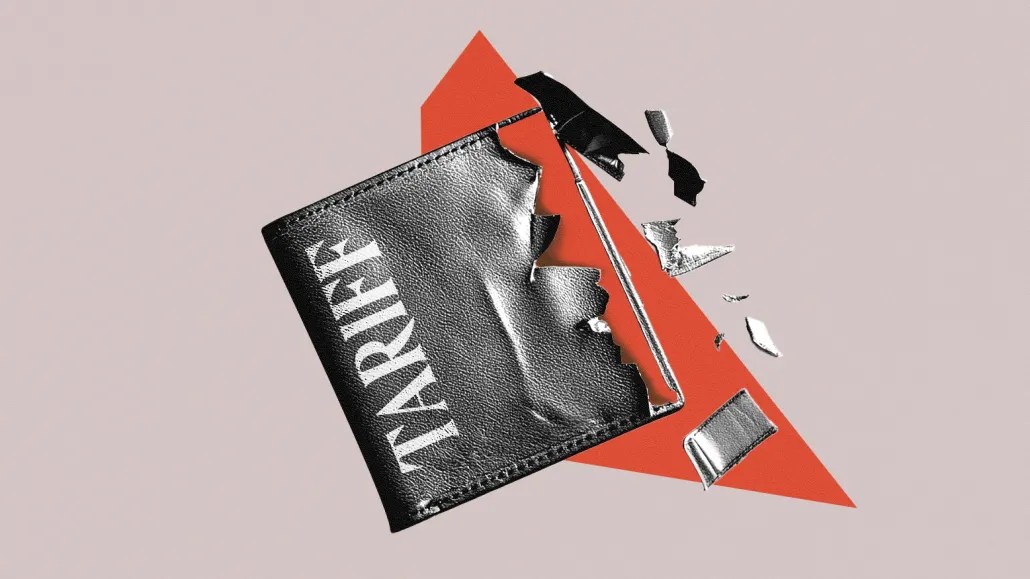
Tariffs completely upended the retail industry in 2025 — and no company was left unscathed.
This year, tariffs kicked in at their highest rate since the Great Depression, with the United States’ effective tariff rate hitting above 17% in August. The beginning of the year started with chaos, as, seemingly every week, there was an announcement of some new tariff that would be levied against China or Mexico or Canada.
Then came “Liberation Day,” when President Donald Trump issued “reciprocal tariffs” on more than 180 countries and territories. Since then, countries have been scrambling to negotiate with the United States, and for the most part, tariffs have come down from the eye-popping levels initially proposed by the Trump administration.
But, that’s provided little comfort to the retail companies that have had to navigate the whiplash of tariffs this year. Even some companies that manufacture their products in America, which, in theory, were supposed to benefit from tariffs, are struggling to manage costs as their raw materials are getting hit with tariffs.
Not every industry experienced negative effects from tariffs. Many resale companies, for instance, reported record numbers of new customers this year as customers became more price-sensitive due to tariffs.
In turn, Modern Retail decided to round up the winners and losers of the changes in tariff policy this year. There could be shifts in this list of winners and losers next year as brand and retail executives wait to see if the U.S. Supreme Court overturns President Trump’s tariffs. Only one thing’s for certain: It will likely be another unpredictable year in retail.
Winners
ThredUp
Things appear to be looking up for online thrift store ThredUp, which, like many of its resale peers, has historically struggled with profitability. On Nov. 3, ThredUp reported record quarterly revenue of $82.2 million, up 34% year over year. October also represented the company’s best-ever month for new-customer acquisition. The turnaround is being driven, in part, by U.S. shoppers seeking out duty-free options.
“Overall, we believe the effective tariffs and the closure of the de minimis loophole have been a boost to acquiring new customers and could be a structural tailwind going forward as prices rise in the apparel market,” ThredUp CEO James Reinhart told investors during the earnings call.
Costco
Thanks to its bulk bargains and private-label prowess, Costco saw big gains in sales and customers this year as shoppers looked for ways to stretch their dollars. Its full-year earnings report in September showed net sales of $269.9 billion, up 8.1% over the prior year. E-commerce sales exceeded $19.6 billion, up more than 15% from last year, and the company reported that more people are signing up online.
One key example of why Costco is seeing increased activity: Its Kirkland Signature line has never been popular, or more varied. KS items typically offer members a 15-20% value compared to national-brand alternatives, Costco says, and it has introduced new SKUs like grass-fed beef sticks and organic extra-firm tofu. “While our members love the treasure hunt items that they find in our warehouses and online, our everyday value items are also extremely important to them, especially in times of economic uncertainty,” Costco’s evp and CFO, Gary Millerchip, said during an earnings call.
Walmart
As even higher-income customers flocked toward value this year, Walmart has seen large gains with this demographic without sacrificing its roots in delivering low prices. The company has focused on marketing to this group, like through its “Who Knew” campaign that shows off items customers may not have known are available on Walmart’s marketplace. “Given tariff-related cost pressures, we’re doing what we said we would do,” Walmart CEO Doug McMillon said in an earnings call in August, per Axios. “We’re keeping our prices as low as we can for as long as we can.”
‘Made in USA’ brands
With the onset of import tariffs in 2025, companies that make their products stateside found themselves at an advantage. While many retailers and brands were hit with the new duties and the accompanying delays, homegrown brands were able to largely carry on production and fulfillment. For example, California-based P.F. Candle Co. was able to take on more orders from retailers that non-American-made competitors were unable to fulfill. Tariffs also increased interest in onshoring. In fact, U.S.-based manufacturers experienced inbound requests from companies interested in bringing production closer to home.
However, there are limitations on how much U.S.-based manufacturing can shield companies from the effects of reciprocal tariffs. As it turns out, even brands that make their products here in the U.S. have to rely on a global supply chain network to source raw materials. For example, packaging, like glass jars and paper, is produced in limited quantities in the United States, forcing many U.S.-based companies to import them from countries such as China. “Made in America” companies that invested in domestic manufacturing were, at the very least, able to lean into this status in their marketing, if even temporarily.
The RealReal
It’s been a difficult year for luxury brands, which have grappled with tariffs across categories like fashion, watches and handbags. But over at The RealReal, business is booming. The upscale secondhand platform is seeing customers flock to its site and stores, eager to partake in luxury without having to deal with added costs. In August, The RealReal CEO Rati Sahi Levesque said, “Resale is a smart choice for a luxury-minded consumer, and price increases in the primary market due to tariffs or other factors make our value proposition even more compelling.”
The RealReal has enjoyed strong financial performance all year. In May, it reported that its total revenue for its first quarter ending in March was up 11% year over year. For the second quarter, that grew to 14% year over year. And for the third quarter, that grew to 17% year over year. In addition, in November, the company raised its outlook for the rest of the year, citing consumer demand, AI efficiencies and marketing efforts.
Losers
Temu
Temu has struggled to regain its footing in 2025 as Trump’s tariff policy erased the de minimis loophole that once underpinned the low-cost marketplace’s growth. Temu’s parent company, PDD Holdings, reported that, while overall revenue rose 9% last quarter, the international arm remains under pressure from the “rapid evolution of trade barriers,” co-CEO Chen Lei said on an earnings call.
After the U.S. ended duty-free treatment for sub-$800 parcels, Temu’s U.S. sales plunged — both web traffic and app usage fell — and the company briefly pulled back on ad spending in the market. To recapture share, Temu has slashed prices on popular items by as much as 60% and stopped charging import fees, per Bloomberg.
John Deere
John Deere, known for selling farm equipment, is seeing steep operating expense increases thanks to tariffs. The company had to lay off more than 200 workers earlier this year and is expecting continued headwinds. In its latest earnings call in late November, the company shared that its full-year net income forecast for 2026 is expected to be in the range of $4 billion to $4.75 billion, including a “projected pretax direct tariff expense of approximately $1.2 billion.”
Best Buy
In May, Best Buy CEO Corie Barry warned that, because China and Mexico were the top two sources of the retailer’s products, the company expected vendors across its entire assortment to pass along some share of tariff costs to retailers, making price increases highly likely for American consumers. The company had previously said that, by cost, 60% its products come from China. Barry has since reiterated this stance: “Of course, we see that the customer ends up bearing some of the cost of tariffs, and we’ve seen this before. And for us, that’s the hardest part. These are goods that people need, and higher prices are not helpful.”
Under Armour
Tariffs have significantly impacted Under Armour, which largely manufactures in Asian countries like Vietnam, Indonesia and China. In August, the apparel and footwear company said it expected tariffs to cut its annual profitability in half from a year ago. It also announced that it anticipated an additional $100 million in tariff-related costs in fiscal 2026. In November, Under Armour said that its quarterly gross margin declined by 250 basis points, “mainly due to supply chain headwinds, driven by increased tariffs and a less favorable channel and regional mix.”
Still, Under Armour isn’t sitting still amid the turmoil. The company has worked to mitigate the impact of tariffs through measures like sharing costs with partners and suppliers, reducing SKUs, and revisiting prices. Speaking on a recent earnings call, CFO David Bergman said, “We don’t expect much of that to be real visible until fiscal 2027 and beyond, … but it’ll definitely help us as we offset a full-year impact next year on the tariff side.”
Small business
Smaller businesses found themselves with very little leverage when reciprocal tariffs hit in 2025. For one, these companies typically have tight manufacturing windows and limited cash flow that doesn’t allow for stockpiling extra inventory. And unlike large retailers, small businesses often do not have the power to renegotiate terms with overseas manufacturing partners. All of these challenges made it difficult for many emerging companies and family-run businesses to grow this year. Some, like Pashion, even put off wholesale expansion due to the inability to raise the needed capital. Meanwhile, weighted blanket brand Bearaby stopped production in India when President Trump unexpectedly imposed a 50% tariff on goods from that country.