


What Amazon’s proposed big-box store could mean for Walmart
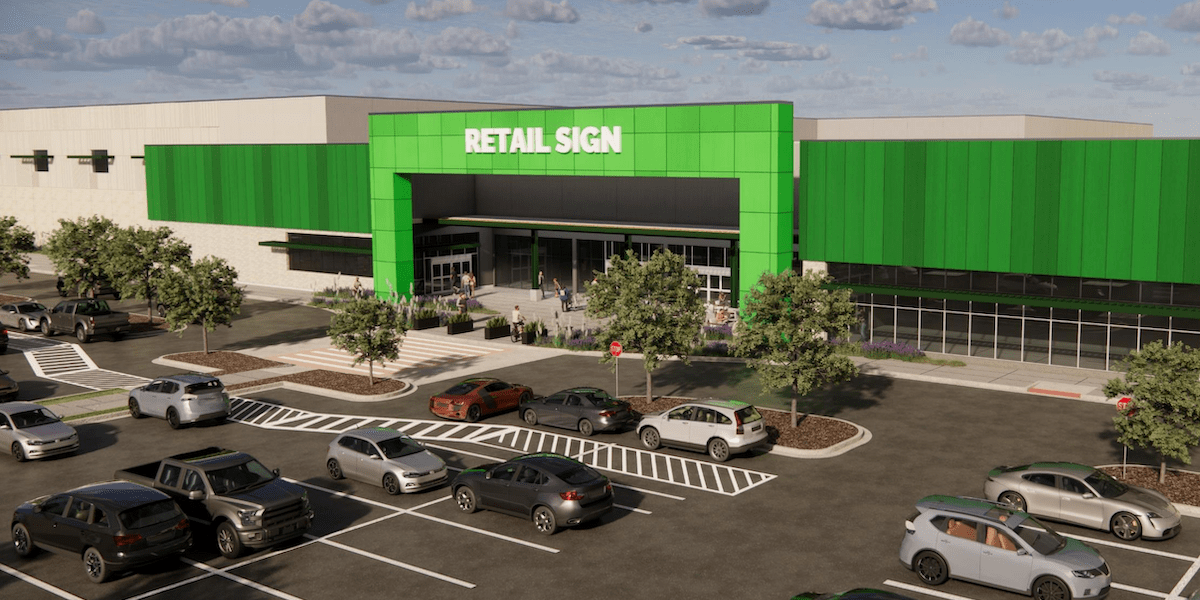
Several former Walmart leaders say they expect the big-box retailer to keep a close eye on Amazon’s proposed big-box store near Chicago.
Public documents published by the Village of Orland Park described a 225,000-square-foot Amazon store that would sell a range of products, including groceries and general merchandise. It could also include dining options, multiple outlets reported earlier this month. The new concept rivals the size of the average Walmart Supercenter, which is 178,000 square feet, according to Walmart’s annual report published in January 2025.
“Amazon has tried a number of different physical store layouts and formats, and the only one that has really worked is the one they bought, which is Whole Foods,” said Scott Benedict of Benedict Enterprises, a retail consultant who held various leadership roles at Walmart between 1997 and 2017. “The one thing … they haven’t tried is this format, a Supercenter format that is really at the heart of Walmart’s success, which is the combination of food and grocery in a wide-assortment scenario.”
While one store opening is unlikely to faze Walmart, which has 4,600 stores throughout the U.S., it could be the start of something that scales with other locations and eventually becomes a competitive threat. Moreover, it’s the entry of Walmart’s longtime e-commerce rival into a space where it currently dominates and has a competitive advantage: Because of its store network, Walmart says it can deliver to the top 95% of households in under three hours.
Modern Retail spoke with several former Walmart executives to get a grasp of how the company is likely responding to this internally. Neither Walmart nor Amazon immediately responded to a request for comment.
“They should be a little worried about Amazon getting stronger in an area that Walmart clearly dominates and has a majority of strength in,” said Karen Kelso, an analyst who covers Walmart for Kantar. She worked at Walmart from 1999 to 2010 as a director for category marketing and as a buyer for Walmart and Sam’s Club. She said if any retailer could replicate what Walmart has, in terms of technology and scale, it’s Amazon.
Still, Amazon doesn’t have a strong track record in retail operations, and it has no experience running Walmart Supercenter-style stores. “It’s completely out of their wheelhouse in a lot of ways,” Kelso said. “No matter how much you want to bring in robots and automation and algorithms and technology, a physical retail store is about people, to some extent.”
The question is whether Amazon will stand by the project in the long term. The e-commerce giant has a history of testing out splashy new retail concepts and quickly shelving them. In 2022, Amazon decided to shut down both its bookstores and 4-star stores to focus on Amazon Fresh and Whole Foods, as well as a fashion concept, which it later shuttered in 2023.
“It feels like, with the exception of Amazon Go, where they opened quite a number of locations, they haven’t had the patience to let a format develop in some of their other experiments,” Benedict said. “That either tells me they were very unsuccessful, to the point that they canned them early, or they didn’t allow them to unfold and really gain a following.”
Amazon will also face other major players in the space in the Chicago area, including Meijer and Target.
“However big any past experiments have been, this one’s bigger, and it’s up against very established, successful competitors,” Benedict added. “It will require expertise in product offering, in marketing and in store operations. … This is a muscle they’re going to have to develop further.”
Kelso expects Walmart to hold strong: “This is what Walmart always says: ‘We run our own race,’ ‘We don’t compare ourselves to anybody,’ ‘We’re clear on our value proposition,’ ‘There’s more opportunity in front of us than behind us.'”
She expects the company to monitor how fast Amazon opens the store and what it looks like, as does Matt Fifer, a former Walmart executive who worked at the company from 1993 to 2005 and has since founded industry networking platforms Conversations On Retail and Winning With Walmart.
“There will be a lot of Walmart people inside that store, and there will be innovation studied and innovation applied,” Benedict said.
Fifer expects that Walmart will most aggressively respond to the new Amazon store concept at the local level.
“The neighboring stores are going to be standing tall. Whether that means that they’ll be remodeled or not, I don’t know,” Fifer said. “But it wouldn’t surprise me to see extra payroll put into those stores, just to make sure the customers currently shopping in that market don’t have a reason to visit the Amazon store other than curiosity.”
Fifer said Amazon’s long-term success with the concept will depend on operations: the assortment, pricing, inventory, cleanliness and the checkout experience.
“Curiosity and novelty will bring a lot of shoppers to check it out, but earning the second, and third, and fourth visit is going to be based on the strength of the operation.”