


The Unilever-McCormick deal ushers in a new era for condiments
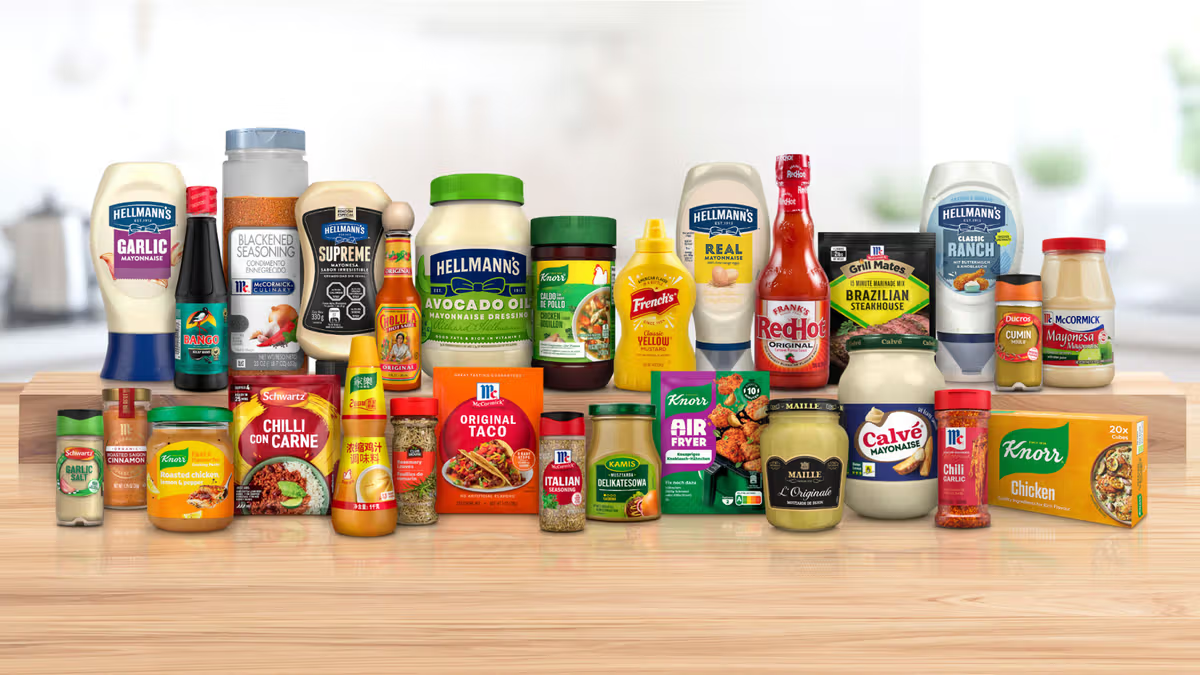
America’s fridges and pantries have seen an influx of condiments and seasonings over the past decade, going beyond the classic ketchup-and-mustard combination.
The U.S. condiment market has grown over 50% since 2019, according to a 2025 report by Mintel. Factors that have driven this growth include social media trends, pandemic-fueled home cooking and a growing interest in unique, global flavors. Younger shoppers, including millennials and Gen Z, are also discovering more elevated and unique condiments and spices through social media. Now, the McCormick-Unilever deal has brought this enduring demand into focus, as industry watchers weigh how consolidation will impact innovation in the coming years.
The merger between McCormick and the food division of Unilever, announced on March 31, is reportedly worth $44.8 billion and due to close in mid-2027. The new joint company is expected to have an estimated $20 billion in revenue.
“The combination with McCormick allows both companies to be the best that they can be, to focus and scale businesses, paving the way for higher growth, stronger returns and more value creation,” Unilever CEO Fernando Fernández said to media following the announcement. The deal also allows Unilever to focus more closely on growing its core personal care brands.
The line between condiments and spices is blurring, leading some experts to predict Unilever and McCormick will create even more overlapping products under their joint umbrella. Unilever’s food business currently includes the Hellmann’s mayonnaise line and Sir Kensington’s. McCormick itself has diversified its offerings beyond its traditional spice jars in the last few years, entering the hot sauce, mustard and mayo categories. In 2017, the company acquired Reckitt Benckiser’s food business for $4.2 billion — its portfolio includes Frank’s RedHot sauce and French’s mustard. In 2020, McCormick acquired Cholula hot sauce from L Catterton for $800 million.
John Owen, associate director of food and retail at Mintel, said the condiments category in particular accelerated in growth around the Covid-19 pandemic. That was a time when many households began experimenting with recipes as at-home cooking increased. “And social media certainly amplifies it,” Owen said.
The definition of condiments has also evolved in the last few years, Owen said, with the rise of prepared sauces and spreads. Products aimed at cooking shortcuts, like prepared sauces and marinades, are also now considered part of the modern condiments segment.
“We’ve seen this share growth happening at two ends of the market,” Owen said. Much of the growth is coming from the small CPG brands that are infiltrating shelves and the private labels competing with their own versions of elevated condiments. “It is a reflection of retailers getting more sophisticated in how they market their private label, as opposed to just giving their customers a cheaper version of Heinz ketchup,” he said.
Walmart’s Bettergoods is an example of this investment, Owen said. The private label currently offers Curry Aioli, Orange Szechuan-style sauce and hot honey seasoning.
Overall, the Unilever-McCormick merger highlights the seemingly insatiable demand for new condiments and spices among Americans. With consolidation at the top, Owen said the category is expected to continue seeing the bulk of innovation from the food startup and private label players. The challenge for legacy brands is in trying to adapt to the evolving condiments and spices trends, Owen said.
Moreover, consumers’ growing appetite for global flavors has influenced the way food manufacturers develop products. “Interestingly, among the fastest growing mayonnaise brands in the U.S. is the McCormick mayonesa with lime juice,” Owen said. The mayo is a top-seller in Mexico, and so McCormick has now brought it into the U.S. market. “That fits with this idea of specific products geared toward cuisine exploration,” he said.
Owen said that the growth from the pandemic may have boosted the category some, but the volume consumption is now back to a pre-pandemic level. “Still, like many other food categories, it’s growing [to be] more diverse in terms of the products that people are interested in and who are winning shares.”
Despite Unilever and McCormick’s incoming market share, Owen said he foresees younger brands continuing to disrupt it with new iterations.
DTC startup Burlap & Barrel, which sells single-origin spices and pantry items, is one company that views the consolidation as an opportunity for smaller spices and condiments startups.
Burlap & Barrel co-founder Ori Zohar told Modern Retail that mergers among large CPG players will likely lengthen their R&D windows, making it more challenging to innovate by jumping on fast-moving trends.
Zohar noted that McCormick itself has experimented with modernizing its assortment through chef collaborations and ventured into single-origin spices in the last few years. “The larger companies typically get, the worse they get at innovation and end up bringing it in through acquisitions of younger brands,” he said. McCormick will gain more prominent retail power under its new corporate structure. “But it also moves them away from the heritage of being a spice company,” he said.
With that, Zohar expects consumers to continue gravitating toward the category as they experiment with more flavors and higher-quality ingredients. “Condiments and spices are the least expensive purchase per serving,” he said, compared to proteins, grains and produce. “This makes these products attractive for home cooks to invest in to help them make better meals.”
In turn, conglomerates will have to try to consistently satisfy consumers’ demand for unique and authentic products to stay relevant as challengers take market share away.
“This area includes mustard, ketchup, mayo, hot sauce, pickles and so forth,” Owen said. “It’s a very diverse category and pretty fragmented in terms of brands.”