


Goodwill plans 100 new stores for 2026 after hitting record revenue in 2025
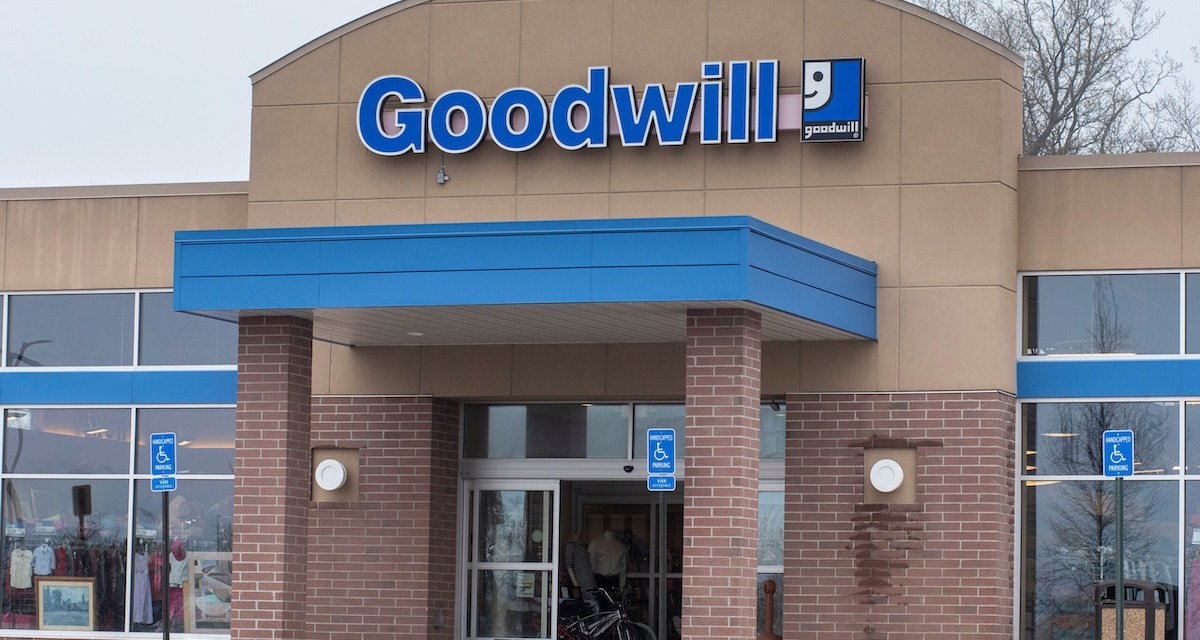
After achieving record revenue in 2025, Goodwill Industries International Inc. expects 2026 to be its most lucrative year yet.
Goodwill made approximately $7 billion in revenue in 2025, making it “the best year” in the company’s nearly 125-year history, David Eagles, Goodwill’s COO, told Modern Retail. As part of that, Goodwill processed 300 million shopping transactions, thanks to a rising number of consumers looking for low-cost, unique items. Goodwill’s online marketplace, ShopGoodwill.com, also logged its best year in 2025, achieving $450 million in gross merchandise value.
Now, Goodwill is charging ahead on growth plans for 2026, especially as it courts new donors, new customers and even new corporate partners. “We expect 2026 to be our biggest year yet,” Eagles said. To help with this goal, Goodwill is planning some 100 new locations for 2026, especially larger-format ones. Goodwill will use these stores to take in, sort and sell merchandise like clothes and furniture. It will move seasonal items to locations across its network, so as not to get bogged down by inventory.
A charitable organization founded in 1902, Goodwill is a federation of more than 150 independent Goodwill organizations across the U.S. and Canada. It sells donated items in more than 3,000 outlets and retail stores, as well as through e-commerce. Goodwill uses that revenue to create job-training programs and provide resources to those looking to build their careers. The company is also working to position itself as a bigger player in recycling and remanufacturing, especially as it competes with branded resale.
Eagles shared more about the company’s plans for the year ahead with Modern Retail. The below excerpts have been edited for length and clarity.
How do you view the state of the Goodwill consumer?
“What we’ve observed in some of our data is that, at the top end, people are being really selective. Everywhere else, in most of our segments, value matters more than ever. And because of that, secondhand is one of the fastest-growing places that consumers are going. We’ve seen a lot of momentum, both from where we are in the economy, but also, there’s been a multi-year trend where secondhand has moved from being a niche choice to a mainstream choice, especially for younger consumers, which is really exciting.
Younger consumers now don’t think secondhand is second best. For them, it’s smart, it’s sustainable, it’s personal, it’s local. … Over two-thirds of Gen Z and millennials bought some secondhand apparel last year. We saw, even during the holidays, some uptick, where a lot of gift budgets were in resale. … We’re also pleased that there’s a lot more diversity on the income side as people are looking for treasure hunts and value.”
How was last year, performance-wise, at Goodwill?
“2025 was the best year in our history, and we’re [almost] 125 years old. We have seen record revenues, record donations, record store transactions and — for us, what’s most exciting — record margin dollars. Now, we don’t mean margin in the for-profit sense. Our margin goes to our mission, and that’s supporting 2 million people per year and helping 130,000 or so [people] get placed into sustainable careers.
We’ve seen this [past] year accelerate for us, even quarter by quarter. … We expect our retail revenue to be over $7 billion in 2025. We’re looking at close to 120 million donation counts. That means 120 million different points where people have donated their items. We expect nearly 300 million shopping transactions in our stores [for 2025].”
Do you plan to build more stores this year?
“We’re at about 3,400 stores right now in the U.S. and Canada. We expect to probably open over 100 stores this year. Of course, we’ll close some, too, so that number will be different [in its final form]. … We’re always trying to optimize that footprint. And retail, overall, is changing. … That’s part of that normal churn that you’d see [with stores].”
Are you looking to have bigger square footage, for future stores?
“If you look across our network, we will see some larger-store formats. Getting fresh and great products out quickly is really important for the shopper. [You want a] diversity of products and experience to really get that treasure hunt. So, the larger format does tend to work. You obviously have to have a very established donor base. You’ve got to have that volume that comes in. There’s a whole process there.”
Speaking of, I imagine you have donors dropping things off in boatloads, all the time. How do you make sure you don’t have too much stuff, at a level that’s sustainable?
“We’ve got a whole ecosystem to support that. We’d rather people drop [things] off, instead of putting something that might be valuable or could be recycled or repurposed [in the trash]. Let us make that decision, with people who want that job experience and skills to move them forward.
For us, there’s all sorts of seasonality to donations. Winter months are a little bit lighter than the spring, when we’re cleaning out our closets. And [donations] don’t always match with the shopping experience. Maybe you’re in back-to-school mode in September, but that doesn’t line up with a high donor season. We do a lot to adjust and maximize that.
There’s value in moving our goods to different places. Winter coats are needed in certain areas. We’re getting increasingly better with our connected network on those things. … And we have stores, but also outlets. We have partners in recycling and repurposing. So, there are a lot of potential outlets for donations.
We also get really interesting shopper spikes. For example, Halloween is actually our highest season for holidays, because people go [to Goodwill] for unique finds to dress up. I would also add that we see high donations in good times and low donations when there’s some economic softness out there.”
What’s your outlook for 2026?
“We expect 2026 to be our biggest year yet. There are a couple of reasons for that. One is that we continue to see demand for secondhand grow. We see shoppers continue to trade down. We see younger consumers making thrift the default choice. And we see a real tailwind for us, where value and sustainability are converging and not competing.
We also see new potential sources of volume. Our donor is the lifeblood [of our organization]. … We want to be very convenient, and we’re within 10 miles of roughly 85% of the U.S. population. We’re very locally embedded. And we want those donors to know we’re the best stewards of donated goods, whether it’s finding a second life [for something] or even recycling or converting products into other things.
The other area [where we see growth] is from corporations and partners. These are brands. These are producers. These are folks who are looking at issues with return volumes. Returns are nearly $1 trillion [a year in the U.S.], which is 3% of our GDP. It’s a real problem for organizations, and [there’s] new legislation, particularly in California, that is increasingly holding them more responsible for what happens toward the end of life of those products. … We are in really meaningful conversations with a lot of larger retailers and brands on some of these issues. We’re co-developing some go-to-market strategies, and we’re in an early pilot mode to figure that out.”