


Chicken is having a moment as the high-protein craze continues
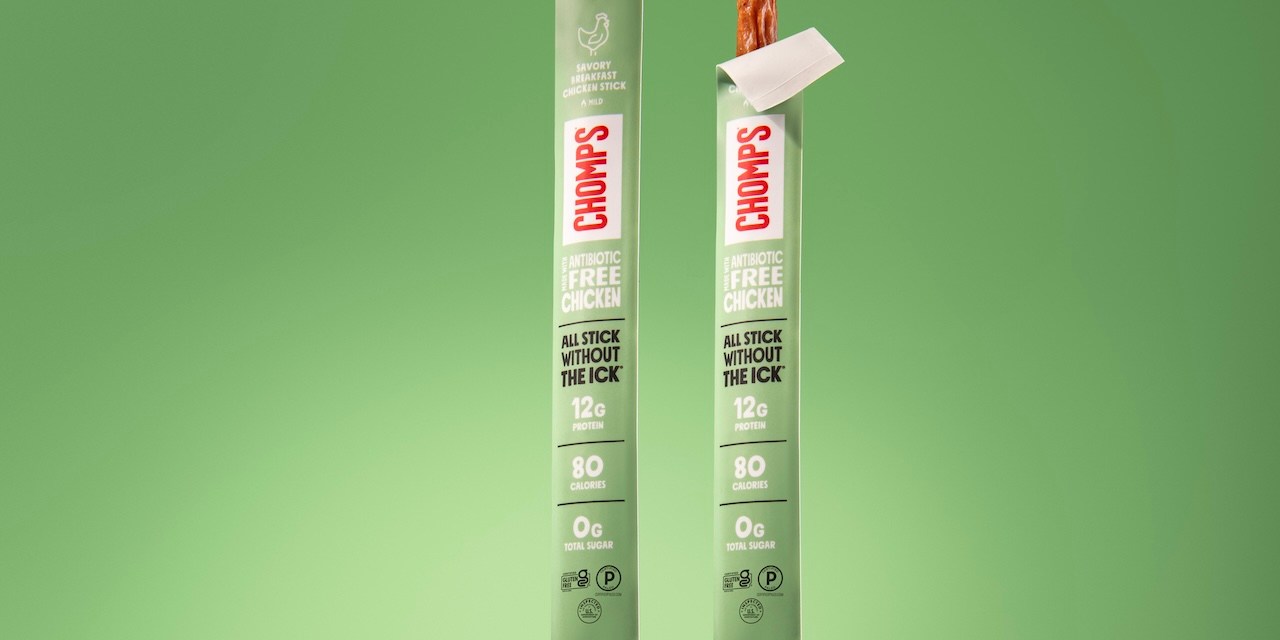
Americans’ obsession with protein is at an inflection point, as brands try to cater to people looking for more natural sources of protein.
At this year’s Expo West show, products made of real poultry were front and center as a variety of players seek to make chicken more than just a dinnertime staple and transform it into a craveable, snackable product. At the show, Chomps debuted its newest product line, chicken sticks. Meanwhile, one of the many first-time exhibitors at Expo West was Juicybite, a startup that offers portable, heat-and-serve chicken breasts in flavors like Secret BBQ, Bulgogi and Gochujang.
As demand for high-protein products continues, startups are looking for ways to differentiate themselves from the countless protein bars and beef jerky packages on the market. And using chicken — not historically thought of as a snack — is one way to do so. What’s more, food trend watchers say that trend consumers are increasingly scrutinizing the protein sources brands are using and are expressing a desire for “real” protein-packed foods.
Chicken on the go
Chicken is the most-consumed protein among Americans, according to the USDA. But it has been largely underrepresented in the beef-dominated meat snack category.
Rachel Winnall, senior brand director at Chomps, told Modern Retail that chicken is “an untapped opportunity” for the brand, having historically been known for its natural beef jerky sticks. And while the company has dabbled in poultry in the past with its turkey flavors, the new chicken sticks mark the brand’s first major investment in this animal protein. Winnall said the chicken stick line has been in development for nearly a decade, as the company worked to get the texture and flavors right without artificial additives.
The jerky brand unveiled three new flavors at this year’s Expo West: Original Chicken, Nashville Hot and Savory Breakfast, Chops’ first-ever breakfast flavor. Winnall said this flavor in particular will help better position Chomps as a savory breakfast alternative. The Chomps stick contains much more protein, compared to popular options like granola and instant oatmeal, Winnall said, at nearly half the calories. Each Chomps chicken stick offers 12 grams of protein, at 80 calories with zero sugar. Those macros also improve on the brand’s flagship beef sticks, which have 100 calories and 10 grams of protein each. Most flavored granola and oatmeal servings net at around 200 calories and less than five grams of protein.
It’s also a healthier, more portable alternative to cooked breakfast sausages.
Winnall said the chicken-based sticks could also help bring in consumers who wouldn’t typically consider beef sticks or jerky, as chicken is a relatively approachable meat for most people.
Juicybite, formerly known as Korkio, was inspired by the format of Korean ready-to-eat chicken packs. These packaged, to-go chicken bites are highly popular across Korea, and widely available in grocery, food service and convenience stores across the country. Now, Juicybite wants to bring the convenient packaging to a wider American audience. It positions itself as an alternative to protein bars and shakes for fitness and nutrition enthusiasts.
This year was the company’s first-time exhibiting at Expo West. The brand currently sells through its DTC website, with the near-future goal of getting products into nutrition-focused spaces like gyms and fitness centers.
Why chicken remains protein king
Kantha Shelke is a trendspotter who teaches in the Specialty Food Association’s education series. Shelke said that with so many high-protein products, products made of “real” protein “fill the authenticity gap.”
“Consumers are increasingly skeptical of highly engineered protein products,” Shelke said. These include bars, shakes and powders with long ingredient decks. “They are gravitating toward recognizable, whole-food formats.”
Shelke said she foresees more consumers reducing their reliance on processed protein snacks as they become more skeptical of fillers and additives. She pointed to chicken snack sticks alone growing 70%, per the latest 52-week Nielsen period, versus 12% for total meat snacks.
“That’s not a blip, it’s a behavioral shift,” she said. “The GLP-1 effect is also an accelerant,” she said, with GLP-1 users eating smaller portions but prioritizing protein density. “Chicken fits perfectly because it can be portioned to four ounces and still deliver meaningful protein, unlike a ribeye,” she said.
Moreover, at Expo West’s NEXTY Awards — which recognize “the most progressive, innovative, inspiring and trustworthy” products in natural food — the judges specifically called out clean-label formulations that prioritize ingredient integrity as a defining trend. Shelke said jerky, meat sticks and meat bites sit squarely in that lane.
Indeed, brands working with real chicken as a protein source see it as a big differentiator among a sea of competition.
Wilde, which makes chicken-based chips, teased its upcoming product expansion to crackers and other chips-adjacent snacks. “What we’re seeing now is consumers starting to ask where that protein comes from, and real animal protein is finally moving into the mainstream,” said Wilde founder and CEO Jason Wright.
Wright went on to say that working with processed protein sources would be “infinitely easier” for the company. “They’re predictable, easy to scale and easy to formulate around,” he said. “Building snacks from real chicken breast is the opposite.” It took years of trial and error, custom equipment, and, ultimately, Wilde building its own production facility to make it work. “But it’s proved to be worth it as consumers are expecting more from their food and turning away from empty snacking,” he said.
The challenges of chickens
Nutritionally speaking, there are pros and cons that brands have to deal with when working with raw poultry.
Shelke said the upsides of creating products from real chicken include: a lean, complete protein with a superior amino acid profile, while being low in saturated fat and fitting the new DGA guidance almost uniquely among animal proteins. Other pros include versatility, being relatively affordable and having a high bioavailability when sourcing.
The USDA projects chicken per capita availability at 102.8 pounds per person in 2026. “This is by far the most consumed animal protein in the U.S., over 2.5X beef,” Shelke said. On the other hand, brands risk supply chain disruptions due to outbreaks of HPAI, known as bird flu.
Shelke noted that rising demand for poultry and the growth of large industrial farms “has created conditions ripe for avian flu spread” over the past few years. “Moisture content in chicken makes jerky-style processing more technically challenging than beef,” she said. “Chicken texture and shelf stability require more precise formulation.”
With these risks, the opportunity is equally as real. “The winners will be those stacking nutritional credibility, ingredient simplicity and supply chain transparency,” Shelke said.