


Brands Briefing: Anthropologie’s tabletop games play
This is the latest installment of the Brands Briefing, a weekly Modern Retail+ column about the growth strategies of modern brands. More from the series →
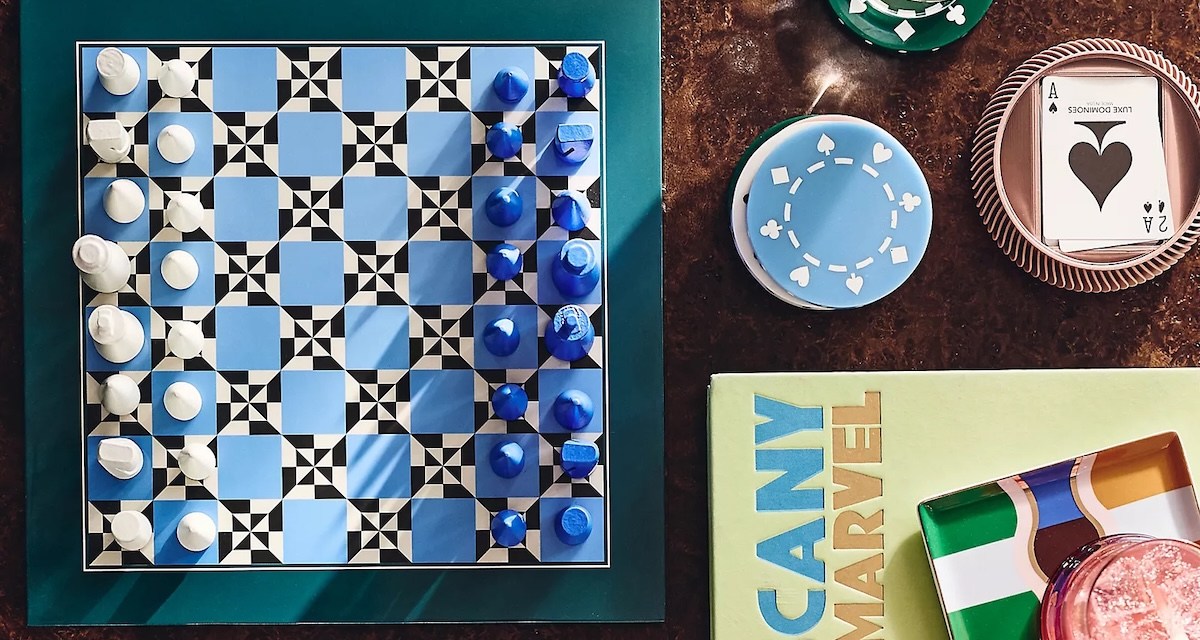
Anthropologie wants a seat at the table — literally. The company is jumping on a rising interest in tabletop games through colorful products that double as decor.
Over the last few months, Anthropologie has seen a spike in sales for games like backgammon, mancala and mahjong as consumers seek out tactile, offline experiences. On Anthropologie’s website, views for “board games” are up 19% year over year, while searches for game-related terms are up 12% year over year. Anthropologie is also adding more games to its assortment to meet demand; game SKU count is up 34% year over year.
Anthropologie has carried games for years, although the section was “humming quietly in the background,” said Katherine Finder, the chief merchandising officer of Anthropologie Home, which includes decor, rugs and lighting. It wasn’t until a year ago that Anthropologie started focusing more on games outside of the holidays, as part of a larger effort to diversify its assortment. Anthropologie’s home customers also tend to shop less frequently than apparel customers, so Anthropologie is betting on games to keep that subset of customers coming back.
Today, Anthropologie is growing its games division to be “a higher percentage of the total than it’s been in the past,” Finder told Modern Retail. “It’s become integrated into our strategies, both online and in stores, all year round,” she said. With more shoppers interested in so-called analog activities, Anthropologie also hopes to become “a destination for a really unique curation of games,” Finder added. Games fall under the category of “gifts, books and pet,” and are growing market share within that section.
Anthropologie carries dozens of games, including Monopoly, dominoes and tic-tac-toe, although its most popular ones have a “classic sensibility,” like chess, said Finder. Many customers end up putting their games on display, thanks to the products’ bright hues and bold graphics. “The way that we think about games is that we don’t want [them] to be something you have to hide and put in a drawer,” Finder said. “You can definitely be proud of having your game [be] shown.”
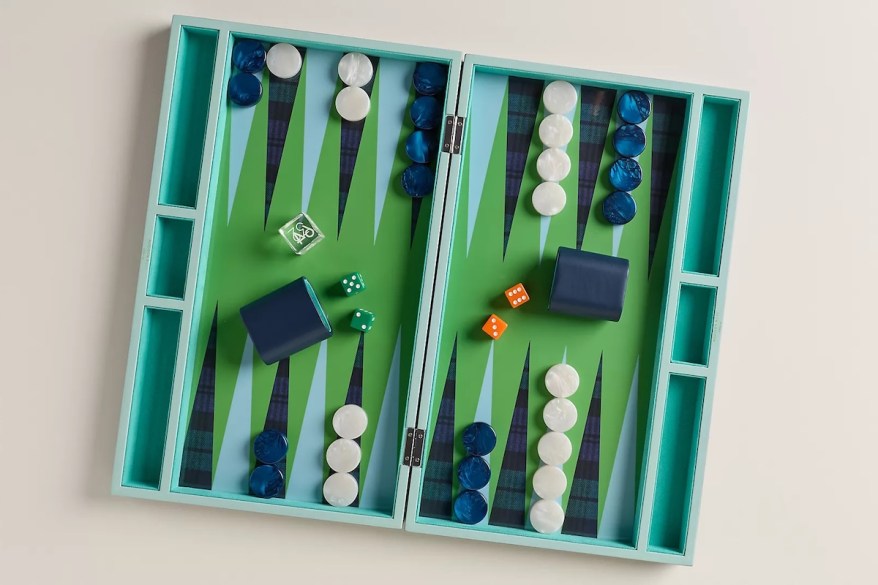
Anthropologie typically develops games about four times a year: in the spring, summer, fall and winter. Sometimes, the design team makes games from scratch. Other times, the company recruits artists to apply new artwork to existing games, like playing cards. Anthropologie also works with partners to make games exclusively for Anthropologie, like a Farm Rio x Anthropologie Jenga Tower.
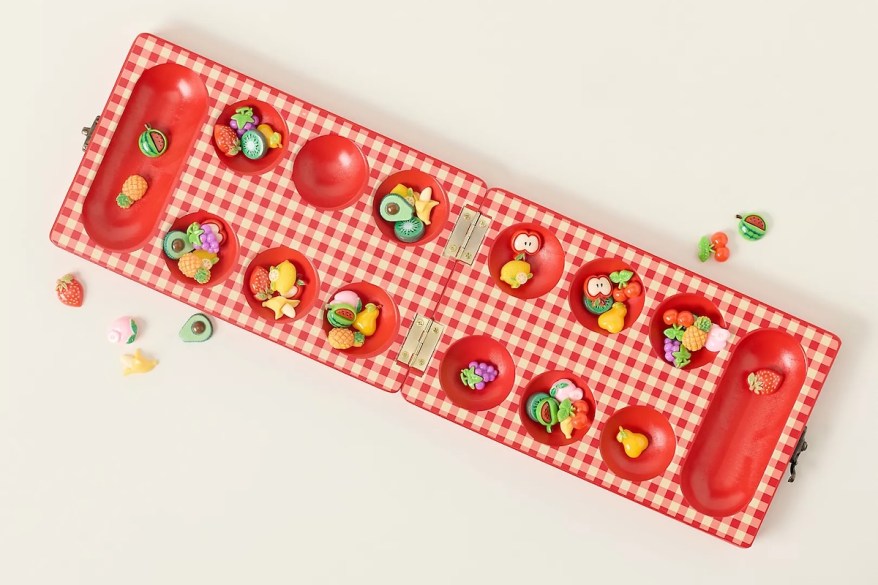
Finder is particularly excited about some of Anthropologie’s newer offerings, like a fruit-themed mancala board. “Instead of little beads, [we have] little fruits, which I think is really fun,” she said. “Outdoor trends this year have been really popular, so [we’re making] things that you can play outside, even in the pool,” she added. “We like to think about, ‘What is our customer doing, and how can we intersect with them?'”
Data helps shape the development process, too. Anthropologie’s customer insights group monitors mentions of games on social media like TikTok, while its marketing team tallies “null search terms” on its website, or items people are looking for that Anthropologie doesn’t have. The company also looks at month-over-month changes in searches for particular games, solicits suggestions from vendors and goes shopping for inspiration.
At times, creating games relies on trusting your gut, Finder said. “Sometimes, data is not going to tell you what to do,” she said. “I think the customer expects us to serve up something maybe they haven’t thought of yet.”
Anthropologie’s rising investment in games mirrors larger trends in consumer behavior. Per Circana data shared with Modern Retail, the global toy industry reached $123 billion in annual sales in 2025, up 8% from the year before. While children under 10 years old are behind the majority of the toy market, the fastest growth is coming from those ages 15 years and older. That segment now represents nearly 20% of total toy sales, in line with the “kidulting” craze.
“The toy industry is not just growing — it’s transforming,” said Frederique Tutt, global toys industry advisor at Circana. The idea of “play,” she added, is expanding “beyond childhood into a form of entertainment, creativity and connection for all ages.” Anthropologie, for instance, finds that its games resonate not only with young people, but with all ages, Finder said. Many of the games’ prices are also more fitting for adults with discretionary income; fish-shaped dominoes start at $68, while an acrylic mahjong game starts at $450.
Anthropologie’s rising game sales also coincide with a larger resurgence of analog activities like collecting vinyls, solving crosswords and crocheting. At a time in which many consumers are overwhelmed by technology, it can be grounding to do something like organize a family game night, Finder said. “People are looking to just be with people in real life,” she said.
Anthropologie is leaning into this messaging when marketing its games. “Every tentpole campaign, seasonally, we’re inserting either games or analog, as a larger story,” Finder said. This past Mother’s Day, for instance, Anthropologie highlighted gifts like board games in its online gift guide. Its upcoming fall campaign will show how people can use games to furnish their living rooms. Anthropologie is also increasingly highlighting analog games in stores, alongside apparel and furniture.
“We want to make sure [shoppers] are discovering new things every visit, and definitely, games can be part of that,” Finder said.
What we’re reading:
- How Edikted became a teen sensation thanks to crop tops, miniskirts, TikTok and its owned stores.
- Oura and Whoop are eyeing IPOs as the wearables boom continues.
- Dick’s Sporting Goods is headed to the Hamptons this summer; the retailer is hosting pop-ups there for some of its owned brands.
What we’ve covered:
- How meat sticks players like Chomps and Singing Pastures are trying to find white space in the red-hot category.
- Brands like Dr. Squatch and Messi Fragrances view the World Cup as an important opportunity to reach the evolving male beauty customer base.
- How Amazon sellers are feeling in the lead-up to Prime Day.