


How hair-care brand Jupiter turned product theft into a marketing campaign
In late 2025, a delivery truck carrying 27,000 bottles of Jupiter’s bestselling Anti-Dandruff Balancing Shampoo was stolen.
For Jupiter, the shipment represented nearly $500,000 in potential retail revenue, with that inventory set to head to Target for holiday restocking. The shampoo bottles were stolen en route from Jupiter’s Los Angeles manufacturer to its Kentucky warehouse, which serves retail partners. “It was a hired driver working for a fake company and posing with real documents,” said Shelby Newell, brand director at Jupiter. Jupiter was able to recover the products last month after hiring a private investigator and with help from California’s cargo theft task force.
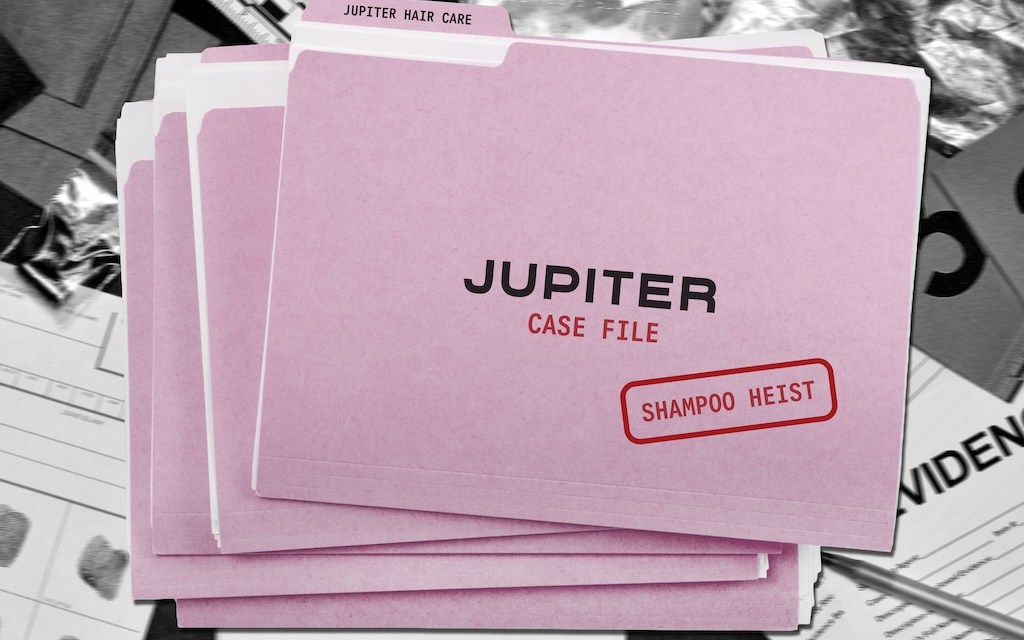
But Newell said the stressful experience inspired co-founders Robbie Salter and Ross Goodhart to push her team to quickly create a month-long, 360-degree campaign publicizing the theft. This week, “The Shampoo Heist” campaign launches in the form of a prompt for a tongue-in-cheek investigation, with the tagline, “Yep, it’s that good.”
Newell said much of the campaign’s theme is a call back to the absurdity of a robbery involving shampoo. “It’s like, ‘Who steals dandruff shampoo?’” she said. “Our founders were really gung-ho about turning this into a campaign.”
The campaign’s arrival is also great timing for the brand to promote its growing retail presence, Newell said. This month, Jupiter unveiled a soft relaunch to promote updated packaging, which began rolling out last year. The company tweaked formulas, revamped its packaging and lowered prices in February 2025, in preparation for its Target launch. Jupiter is now available at about 1,250 Target locations, on Amazon and through its direct-to-consumer website.
Therefore, the campaign is meant to broaden Jupiter’s positioning, which to date has been primarily as a dandruff-care brand. “We wanted to do a refresh and get rid of our old packaging, look and feel,” Newell said.
“Our dry-scalp shampoo is actually transitioning to being positioned as a daily hydration shampoo,” Newell said. It’s an effort to bring more people into the brand, including those who only experience dry scalp occasionally but still want to incorporate a product like Jupiter into their routine.
The “Shampoo Heist” campaign is launching with a video starring creator Erika Priscilla. She plays multiple characters in the fictional news investigation, including the newscaster breaking the story, several suspects and, ultimately, the thief.
Newell said this campaign’s comedic storytelling is meant to help the brand gain cultural relevance and encourage audience participation, all while also educating customers on scalp care and dandruff. “We wanted to build an omni-channel campaign versus just putting out a press release talking about the theft,” said Newell.
The campaign creatives include a digital “case file” with hints and clues regarding the stolen shampoo. There will also be appearances by influencers participating in the fictional investigation. Jupiter will promote “The Shampoo Heist” through paid media, in-store promotions and out-of-home “wanted” posters around New York City. The company is also hosting an in-person scavenger hunt around the city on February 23, with hidden products and a $1,000 cash prize for attendees to find. Additionally, a two-week online sweepstakes will give one winner a lifetime Jupiter subscription.
In today’s hyper-competitive beauty industry, brands are no longer just selling products; they’re selling stories, said Michelle Baumann, chief strategy officer at creative agency VML.
According to Euromonitor, more than 25% of all brands launched in 2024 were in the beauty and personal care category, speaking to how crowded the category has become. “We have seen over 50 celebrity-affiliated beauty brands alone since the pandemic,” Baumann said. With this level of saturation, beauty brands have to get creative and seize the opportunity to turn a crisis into a marketing moment.
Baumann said an unexpected incident like Jupiter’s theft gives the brand a rare opportunity to lean into a real-life incident and cultural moment to draw attention. Baumann also contrasted the organic feel of Jupiter’s campaign with the recent wave of fake apology posts. “The ‘apology’ approach doesn’t offer a chance for engagement; the consumer is expected to just receive the apology with no action,” she said. Meanwhile, Jupiter’s multi-channel approach campaign invites audiences to participate through sweepstakes and scavenger hunts. “This creates a sense of community and gives consumers a reason to interact with the brand beyond the product,” she said.
“The beauty and personal care category is extremely crowded, and so standing out and creating power in the unexpected is everything,” Baumann added.
Jupiter’s Newell said the heist-themed campaign will be a test for the brand’s broader appeal among countless hair-care brands. “This campaign felt like the perfect time to reintroduce ourselves,” Newell said. “Hopefully it will get more eyeballs on our socials and help us gain followers throughout [its run].”