


Brands won this season of ‘Love Island USA’
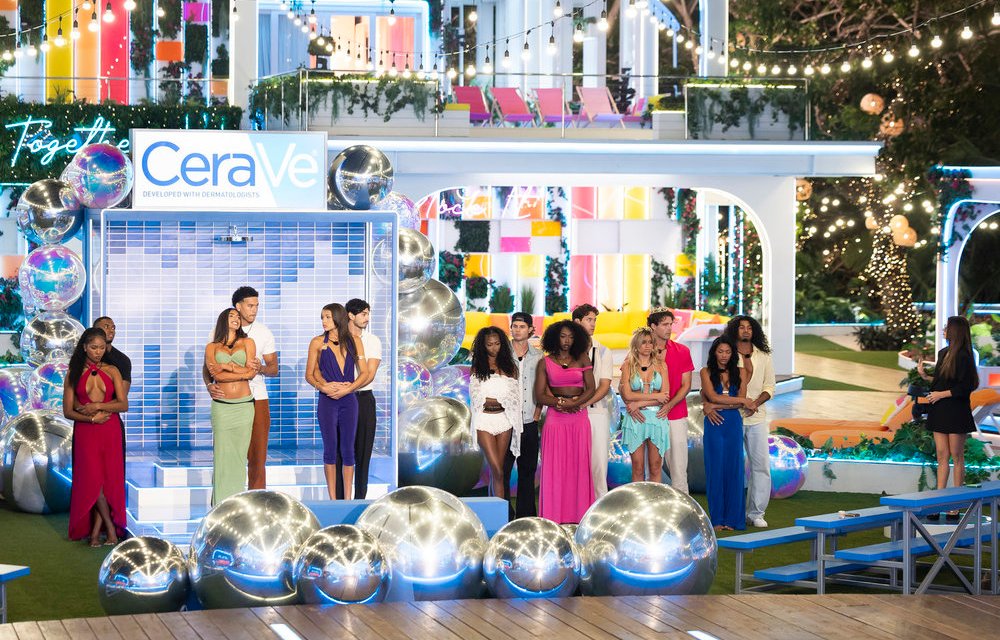
Peacock’s “Love Island USA” has become an advertising juggernaut, and the impact of this season’s sponsorships is starting to be felt beyond the villa.
Now in its eighth season, the franchise’s viewership has grown significantly, with the finale on Sunday, July 12. During the season’s first week, “Love Island USA” generated 1.31 billion minutes of viewing time, according to Nielsen, up 69% year-over-year. In turn, brands are increasingly looking for ways to be part of the conversation around the show, whether through organic social posts or through formal sponsorships.
According to NBCUniversal, ad sales investments across “Love Island USA” and its spinoff “Beyond the Villa” were up 73% compared with last season. The show secured seven integrated partners, nine custom content partners and more than 1,000 media partners.
Even without the data, loyal fans noticed an increase in product placements. “Every challenge is somehow tied to a product,” one Redditor recently wrote on the “Love Island USA” subreddit.
But the numbers also show just how eager brands are to find their way into shows and events that have become appointment viewing. The show airs seven nights a week, and the format — a group of singles lives together in a villa where the goal is to “couple up,” fall in love and avoid elimination, while fans vote on social media in real-time for their favorite couples — creates ample room for product placement, like sponsored challenges or branded walls of beauty products in rooms where contestants get ready.
And brands can’t get enough of the sponsorship potential. Six of the seven integrated partners — which include CeraVe, Coffee-Mate and Maybelline — have returned from last season, and they’re showing up in a variety of ways. Maybelline is the official beauty partner of “Love Island USA” — this season, it supplied products for the Islanders to get ready, and its products showed up in a “Fairytale Ending”- themed challenge. Its ads also appeared in preview clips, and Maybelline was part of the official “Love Island USA” app.
“Returning partners came back because they saw the combination of scale, engagement and impact that Love Island USA delivers,” Kimberly Francella-Faver, svp of brand partnerships at NBCUniversal said in an email. “Love Island USA has become a true cultural phenomenon because of the combination of everything that makes great entertainment — compelling storytelling, a passionate fan community, memorable talent and moments that audiences want to discuss in real time.”
Prebiotic soda brand Poppi’s sponsorship is indicative of how the show has become a phenomenon brands can’t ignore. Last year, one of the fan-favorite contestants was Amaya Espinal, nicknamed “Amaya Papaya.” As the social media buzz around her grew, Poppi decided to create a limited-edition flavor and custom can, called Amaya’s Island Colada.
“The response was incredible and reinforced something we care deeply about as a brand: when you listen to your community and celebrate the moments they’re already creating, the connection is much stronger,” Poppi’s vice president of culture, Sophia Sesto, said in an email.
So, Poppi decided to sign on this year as an official global partner of the “Love Island” franchise, with its partnership spanning both the U.S. and U.K. editions of “Love Island.” The company brought back a limited-edition punch flavor — its best-selling flavor launch last summer — now branded as “Punch Pop X Love Island.”
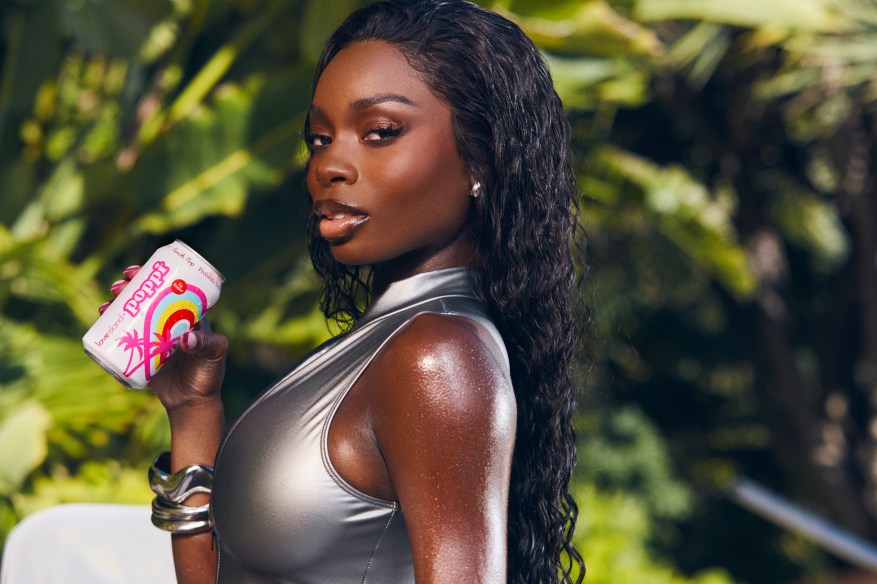
From there, Sesto said that Poppi built a 360-degree campaign that extended well beyond the show itself, including national retail displays, in-show integrations, creator collaborations, a partnership with fan-favorite Islander Olandria Carthen, branded watch parties, sweepstakes, gaming integrations, and live fan experiences across both the U.S. and U.K.
“Rather than treating Love Island as a standalone sponsorship, we used it as the centerpiece of our summer marketing strategy,” Sesto added. “Every aspect was designed to give fans new ways to engage with the show and with Poppi throughout the season.”
Sesto said that across Poppi’s owned social channels, “Love Island” content generated more than 33 million impressions with a 16% engagement rate. Creator content surrounding the campaign, meanwhile, drove more than 212 million views. Weekly giveaways also attracted more than 8,000 new email subscribers and 3,000 new SMS subscribers.
Andrea Ogunbadejo, global head of production at VaynerX, said that the success of “Love Island,” both in the U.S. and the U.K., shows the current demand for “appointment TV” among both viewers and advertisers — that is, TV that’s designed for people to watch together and discuss with their friends. Major sporting events like the World Cup are another example of this.
“I have friends who love ‘Love Island,’ and I’m having full-blown conversations with them about it. And they’re like, ‘Oh, do you watch it?’” Ogunbadejo said. “No, but I know what’s going on. So that’s [an example] of how much it permeates culture.”
In turn, for advertisers, “there’s so much richness for in-person experiential opportunities — people gathering [for events], watch parties” — that can then be amplified and measured through digital advertising, she said.
While it may not make sense for every brand to advertise through a show like “Love Island” — Ogunbadejo said it depends on how much a brand’s audience intersects with the show’s viewership — it’s something that gives brands “an opportunity to have a voice and be part of a conversation.”
Sesto said that at Poppi, partnerships are meant to be an extension of its brand strategy, rather than standalone campaigns, and “Love Island USA” is a prime example of that. “Our goal is to keep Poppi at the center of culture by showing up in the moments consumers already care about,” she said.