


With a record $2.7B in sales, U.S. Polo Assn. is scoring points with younger audiences
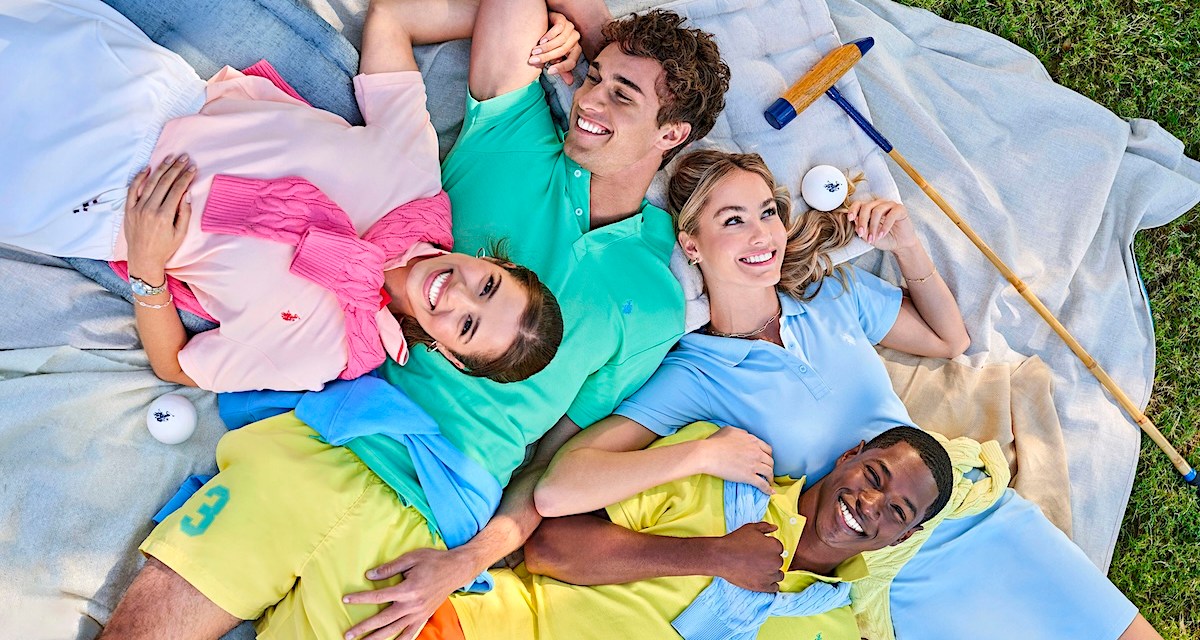
U.S. Polo Assn. is celebrating a record year, thanks to its larger store footprint and growing fanbase of teens and twenty-somethings.
U.S. Polo Assn., which dates back to 1890, reported $2.7 billion in sales in 2025, up from $2.5 billion in 2024. Much of its growth came from its biggest market, North America, as well as its fastest-growing market, India. The apparel company is also seeing increased demand among Gen-Z women and Gen-Alpha boys as it steps up its social-media presence and revamps its store fleet in key cities like Miami and New York City.
U.S. Polo Assn., in addition to being a consumer brand, is linked to the nonprofit governing body of the sport of the same name. Many of the brand’s customers play polo, which has long been associated with an elite social status. But U.S. Polo Assn. is working to establish itself as a lifestyle brand that’s open to anyone. Many of its typical polos retail for $48 and under, compared to $110-plus at Polo Ralph Lauren.
“Our great price-to-value proposition really matters to working families and young consumers all over the world,” said J. Michael Prince, the president and CEO of USPA Global, the company that manages and markets the U.S. Polo Assn. brand globally. “We’ve got a great team, great partners [and a] really strong brand, and we continue to build brand awareness.”
Today, the brand operates 1,200 stores and 60 e-commerce sites worldwide. About 55% of the brand’s business comes from traditional wholesale accounts, while 25% comes from its retail fleet. The remaining 20% comes from e-commerce, up from 2% in 2018 — an increase Prince traces back to forging a better link between online and in-person shopping.
Next up, U.S. Polo Assn. is targeting $4 billion in global retail sales as it courts the next generation of fans. Prince shared more about the company’s future plans and past performance in an interview with Modern Retail. The following excerpts have been edited for length and clarity.
Let’s start with the year you just had: a record $2.7 billion in sales. What do you attribute that to?
“When I came in as CEO in 2018, I had a global summit and brought in all the partners around the world, and I put [forward] the goal of $2 billion by 2025. … And, to your point, we hit $2.7 billion in 2025, so we greatly exceeded that initial expectation.
I think what’s really worked for the brand is that sport-inspired authenticity to the sport of polo. … We’ve been able to elevate the brand globally [and] connect it to sport, which is its birthright — it’s the official brand of the United States Polo Association — but [we’ve also been able to] offer young millennials, Gen Z and Gen Alpha that great price-to-value proposition, so you can buy a really good brand for a great price. That has really resonated worldwide.
And our consumer base is really consistent. If I look at the billion-dollar-plus of growth we’ve had over the last seven years, roughly, it’s come from that young millennial, Gen Z, Gen Alpha, [and] moms and dads buying for their kids. And then, I feel like we’ve just done a good job with global brand consistency, focusing on investment in stores, investment in social media, building brand awareness and really working together with our partners worldwide.”
You said younger people have helped propel the brand forward. Do you get the sense that a lot of them are polo players, or are they more interested in the lifestyle?
“It’s the connection to sport. I think it’s the lifestyle. A lot of brands say they’re aspirational. I like to say we’re inspirational. I think we inspire that next generation of consumers. And what’s great about our content [is that] we’re sponsoring polo events all over the world, from the best players in the world to collegiate polo in the United States — where we work with 75 college teams across America — [to] women’s polo, and what we call high-goal, low-goal polo. … And then, we put the sport on ESPN in 2022. Now, millions of viewers and sports fans and consumers all over the world have the ability to see the brand and the sport together on linear platforms and streaming and digital platforms, as well, and I think that’s also mattered.”
Can you talk to me about your store strategy?
“One thing we’ve really tried to do is, when you walk into our stores, there’s global consistency, and there’s an experience, and there’s a connection. You might say, ‘Well, what does that mean?’ It means, for instance, our polo shirt wall. We have 1,200 stores worldwide now. Every store has the beautiful polo shirt wall and the icon that says [the language from our campaign], ‘The polo shirt. An icon born from the game.’ … What we try to incorporate is a simplistic shopping experience, but [one] that’s engaging, [has] pops of color, beautiful imagery, brand consistency and things you remember. It’s just not, ‘I’m going to go buy a shirt.’
And a lot of brands have been closing stores globally, going bankrupt, reshuffling their fleet. We’re averaging about 50-60 new stores every year. We made a public announcement about our new flagship store in Miami. … [And] we just reopened and remodeled our beautiful Times Square store. … In October, we’ll do a proper launch with media VIPs, influencers and a celebration with the general public.
I will say, one of our strategic advantages, globally, [is scale]. If you were starting a new fashion brand and you wanted to compete with us, and we already had 1,200 stores, the cost of capital to do that is in the hundreds of millions of dollars. … So, I feel like, as a brand, the stores provide us a strategic advantage that a lot of brands don’t have today.”
What are some of your growth priorities for the rest of 2026 and even 2027?
“We feel like the $4 billion goal is a realistic goal over time, and we look at it in places where we see key country opportunities, where we’re under-penetrated or we see tremendous opportunity in front of us.
One great example is India. We’re the largest men’s brand and second largest boys’ brand in the marketplace [there]. That’s about a $400 million market for us. We think it’s a billion-dollar opportunity within the next 10 years. … [Another] area [where] we see tremendous opportunity is boys’ [apparel]. We’re performing well in boys’ around the world. There isn’t as much competition in boys’ as there is in men’s and women’s, and we see the ability to take our playbook and apply it to key countries all over the world.
And another place we’re winning, category-wise, is with women. That young millennial, Gen-Z female consumer has really started engaging with the brand in the last two years. We’ve noticed it in all our markets. We feel like we won’t be her go-to brand, but we feel like we could be her polo shirt, polo dress, T-shirt [brand] — one of those destinations when she’s not looking for more of a luxury play or looking for fast fashion. So, we sort of fit in between.
And then, we’ll continue to open 200-300 more stores over the next five to 10 years. [With] e-commerce sites, we’ll get to 100 over the next five to 10 years.”
You mentioned appealing more to women and boys, in particular. Are you using certain marketing tactics to reach those groups?
“What we’ve realized we want to do more of is [to] talk about our great product. We did these beautiful 135th anniversary campaigns last year. But what I love about the polo shirt campaign [is] that it talked about the origins of the shirt, coming from a sport of polo, and [how] it’s this iconic fashion item that’s been around since the early 1900s, late 1800s. [We’re] taking those campaigns and really pinpointing product conversations, because everyone can relate to product. Our partners can, the consumer can, so you’ll see more of that.”
Are you doing more with social media to drive that message home?
“Social media is interesting. It was like e-commerce for us. When I came in, we had a few million followers, and we just hit 15 million globally. That young consumer and that young sports fan is really following us across all platforms. Instagram was always a big growth engine for us. Facebook grows less quickly, and it’s a different demographic. But what we’ve seen tremendous growth out of has been TikTok, as well as YouTube, … because you can do bite-sized content. … We still do the traditional media. We do linear programming with ESPN and Star Sports India and Eurosports. We’re also doing some streaming, as well. And then, the other thing we’ll start looking at is some of the FAST [free ad-supported streaming television] channels. That’s a place we haven’t necessarily played in, but it’s something we’re evaluating.”
What challenges are you dealing with, as you work toward that long-term, $4 billion goal?
“The world has always been uncertain, but I feel like it’s more consistently uncertain [nowadays]. For instance, we have a great business in the Middle East, and with everything going on [with the war and the oil supply], that’s impacted the business, and our Middle East business is off. Globally, we’re up enough to offset that. … So I say, always, ‘Thank goodness we have a diversified model.’ That was one of the things we really wanted to focus on when I came in: diversifying the revenue streams around the world, geographically [and] by distribution channels, so you can take a hit in the Middle East and still have record years in other places.
I think AI has the opportunity to positively impact the business and the brand. But I also think, if you use it incorrectly, in the wrong way, and don’t think through it thoughtfully, it can have negative [effects], as well. It’s something to keep an eye on.
And then, as a brand in this environment, your biggest challenge is always to make sure you remain relevant and important to the consumer and to sports fans. I get out of bed every day thinking, ‘How can we make sure that a 25-year-old still thinks we’re interesting, cool [and have] great product? [How can we] keep telling our story in a thoughtful way, engaging that consumer as much as we can, [with] Gen Z, and then Gen Alpha, and keep it going?'”