


‘We aren’t impacted’: Lettuce brands are on an awareness push amid the cyclospora outbreak
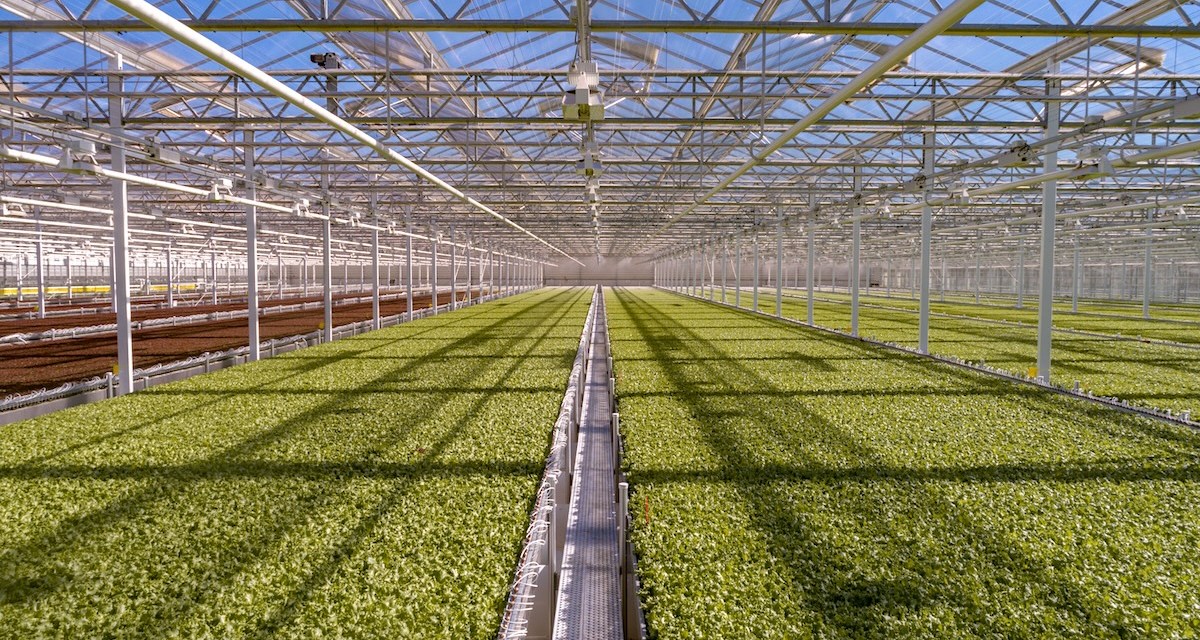
Lettuce growers and salad chains are embarking on a consumer education push to share that their products are safe amid a cyclospora outbreak that has sickened thousands of people across the U.S.
Gotham Greens, which was founded in New York, recently took to social media to say that its products are grown in controlled greenhouses and therefore not affected by the outbreak. Meanwhile, Little Leaf Farms, which is based in Massachusetts and also uses controlled greenhouses, has published several Instagram videos with its CEO, explaining why its lettuce is OK to eat. And fast-casual chain Sweetgreen published an open letter from its founders, saying, “Our food has not been identified in connection with the current cyclospora outbreak.”
Companies hope this messaging will reassure consumers wondering what they can and cannot eat as news of the parasite dominates headlines. The U.S. has received reports of more than 4,173 laboratory-confirmed cases of cyclosporiasis (the illness caused by the parasite cyclospora) since May 1. Some of these cases have been linked to iceberg lettuce in nine states, per the CDC, although there has been mixed messaging from health officials on whether the supplier Taylor Farms is responsible.
More than a month into the outbreak, federal officials are still conducting investigations into the source of the illness. Unaffected produce brands and lettuce growers are now embarking on trust-building campaigns to distance themselves from the outbreak. Already, some companies are seeing their efforts pay off. Gotham Greens said its website traffic from July 9-19 was up more than 800% from the prior 10 days, while its engagement rate on social media was up double-digits.
Gotham Greens decided to issue more information about its products after noticing “an increase in questions from consumers,” its vp of marketing, Jodi Genshaft, told Modern Retail. The company has received 1,300 messages through social media and email. Gotham Greens sells greens and herbs, in addition to salad kits, dressings, dips and cooking sauces. These are grown and packed in indoor hydroponic greenhouses in nine U.S. states. The company says its products don’t encounter soil, dirt, manure or chemical washing agents, and that it uses independent testing to monitor its water.
Gotham Greens is hoping its messaging can “restore confidence in fresh produce,” while also building trust with both loyal shoppers and new ones, Genshaft said. “We believe that consumers deserve to know how and where their food is grown,” she explained. “Giving people greater transparency into how their food is produced empowers them to make better, safer and more informed decisions for themselves and their families.”
Across Threads, Facebook and Instagram, Gotham Greens’ posts about the outbreak have garnered more than 9,000 likes. One Threads user commented, “Bought some today and it was so fresh! I am a first time customer, and you immediately became my preferred brand.” On Facebook, another commented, “You just earned yourself another customer. Going out tomorrow to find your greens.”
Meanwhile, Little Leaf Farms, which has greenhouses in Massachusetts and Pennsylvania, published a post about its lettuce process, as well as three Instagram videos featuring CEO and founder Paul Sellew. In the videos, Sellew wears a hairnet and stands in a greenhouse before rows of lettuce. He talks about the company’s growing process and why the brand’s lettuce doesn’t need to be washed before eating. “I eat it every day unwashed, and it’s perfectly fine,” Sellew said.
Little Leaf Farms sells to some 8,000 grocery stores across the United States and cuts and delivers its lettuce within 24-36 hours, per the company. It uses treated rainwater and human-quality drinking water for irrigation, and its leaves do not get wet. “[Our product] is separate and distinct from the field product, which is where, historically, all these food safety incidents have come from,” Sellew told Modern Retail in an interview.
In Little Leaf Farms’ 10-year history, “We’ve never had a food safety incident,” Sellew said. But he also acknowledged that consumers have questions about all types of produce right now. Putting out social-media videos has been a way for Little Leaf Farms “to get out ahead of it,” he said. “I’m not really a social media person, but many people get their information from social media. … For us, it’s an opportunity to educate people about our process. We welcome the scrutiny. We want people to know what we’re doing.”
Users are responding favorably to Little Leaf Farms’ content. Collectively, the brand’s education-related posts have racked up more than 77,000 likes on Instagram. “I definitely appreciate you being transparent about how your lettuce is grown,” one Instagram user commented. “People are scared and are depriving themselves of fruits and vegetables because they are unsure of the source they’re receiving them from.”
Customers do have mounting concerns, given a general lack of clarity on the origin of the outbreak. On July 17, Taylor Farms voluntarily recalled iceberg lettuce after federal investigators linked it to a multi-state cyclospora outbreak. Taco Bell, which contracted with the company, then removed Taylor Farms lettuce from its menu. On July 18, the FDA said a sample of iceberg lettuce from Taylor Farms had tested positive for the parasite; it later declared that to be a false positive.
Then, on July 22, officials said they had identified a new outbreak with 72 cases, but did not specify a source. Overall data is also limited, as the CDC cut back on tracking cyclospora in 2025. The CDC has said the only surefire way to kill the parasite is to cook produce to a temperature of at least 158 degrees Fahrenheit.
None of this necessarily inspires confidence, communications executives say. Some shoppers, concerned about the lack of information on where the outbreak is coming from, are avoiding buying fresh fruits and vegetables entirely. Others are flocking to farmers’ markets because they know products are coming directly from the source.
The current state of the cyclospora outbreak is “a classic case of reputation spreading faster than contamination,” said Andy Barr, who works in public relations and crisis communications. Barr told Modern Retail that many customers will hear news of a lettuce outbreak and worry, “which is why unaffected brands are moving quickly to separate their supply chains from the story.”
Companies possibly linked to the outbreak face a challenge of “transparency and being seen to take rapid action,” Barr said. But companies not linked to the outbreak “recognize that customer confidence can quickly fall across an entire industry,” he explained. “Their comms objective isn’t to defend themselves from blame — it’s to remove uncertainty before it changes buying behavior.”
However, that buying behavior is already changing, inspiring brands to step up their efforts. According to Placer.ai, on July 18, foot traffic was down at several fast-casual restaurants specializing in salads and bowls, including by 24% at Chopt, 5.9% at Chipotle and 4.7% at Cava, compared to the day-of-week average for Jan. 1 to July 6. Foot traffic was down 29.8% at Taco Bell. The company is now offering a $1 lettuce-free deal to kickstart sales.
Sweetgreen — which saw foot traffic comparatively drop 4.7%, per Placer.ai — posted a statement about the outbreak on July 17. On X (formerly Twitter), the brand wrote, “From the outset of the investigation, we have been in close contact with our suppliers to determine whether any ingredients in our supply chain have been identified as part of the investigation. To date, none have been.”
Then, on July 21, Sweetgreen wrote an email to customers, saying, “Our food has not been identified in connection with the current cyclospora outbreak.” Sweetgreen posted on X again, on July 22, saying, “We know you have questions. We’re on it.”
Still, many brands’ businesses have been affected as uncertainty runs rampant. Little Leaf Farms’ Sellew shared that sales are down, “due to the fear that is out there in the market right now.” “We have not been as negatively impacted as the overall category has been, but nevertheless, it has been impacted,” he said.
“How long will it last?” he asked. “We’ll see. This investigation has to come to some kind of conclusion, and as the word comes out that our product is safe to eat, hopefully, sales will recover and people will get back to their normal eating patterns.”