


Utah and Idaho have become key growth markets for Target, Kroger
Much has been written about the growth of the Sun Belt, as retailers have flocked to cities like Austin, Nashville and Miami in recent years. However, the South isn’t the only part of the country seeing rapid population and retail growth.
From 2024 to 2025, Idaho grew 1.4% in population to just over 2 million people, making it the No. 2 fastest-growing state in the U.S. by percentage growth, according to the U.S. Census Bureau. Utah ranked No. 5 with 1% growth to 3.5 million.
As always, retail follows rooftops. As a result of rapid population and housing growth in Utah and Idaho, particularly post-pandemic, major retail chains are opening new stores in the region, in areas they once may have glanced over.
Utah saw $79.8 billion in sales at retail real estate properties in 2024, while Idaho saw $50 billion, according to ICSC, a trade organization for shopping centers, malls and main streets. 2024 was the most recent year of data the organization had available. Utah shopping centers, malls and main streets saw $400 million in construction and redevelopment spending that year, according to the ICSC report, and Idaho properties saw $210 million.
Walmart just opened a new store in Eagle Mountain, Utah, in August 2025, one of its first new stores nationally after several years of focusing on remodels. Walmart has also broken ground in West Haven, Utah, on a new Supercenter set to open in early 2027. Fitness chain Life Time just opened its first location in Idaho, near Boise, in April. Travel center giant Buc-ee’s is reportedly looking to build its first store in the state, as well.
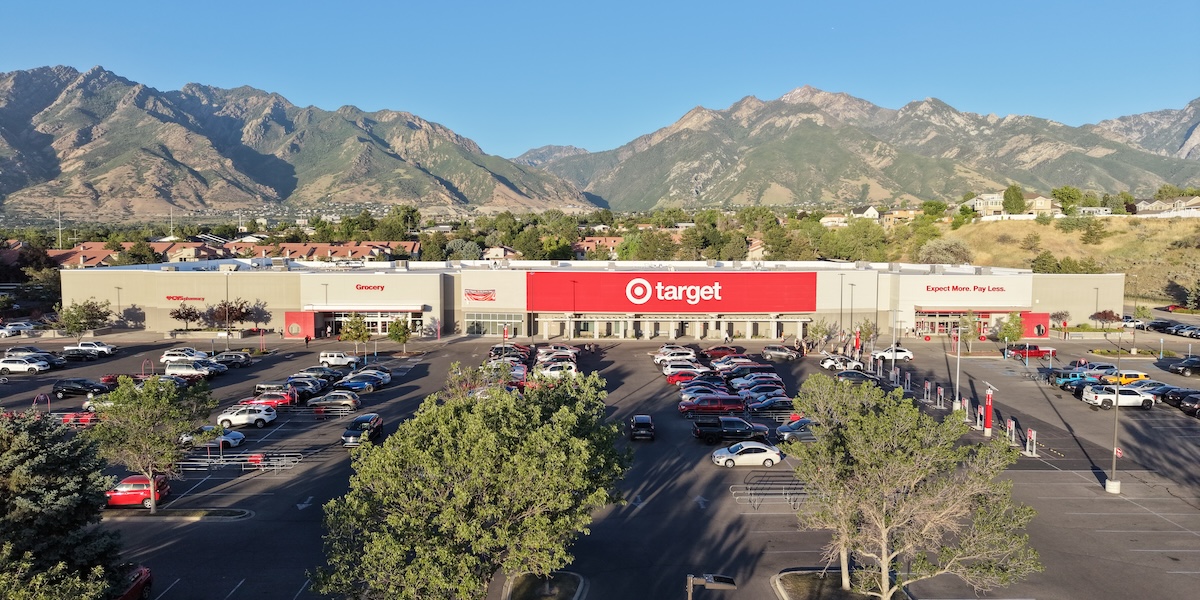
Target plans to open its 18th store in Utah in July, and has opened three new stores in the state over the past five years in Spanish Fork, Provo and Salt Lake City’s Sugar House neighborhood. It also has four more stores under construction in Logan, Herriman, Lehi and Farr West, and has remodeled two stores in West Jordan and Salt Lake City.
The chain is not new to either state — it has been in Utah since 1996 and Idaho since 1990 — but over the past five years, Target has grown its headcount 11% in Utah to 3,000 employees and 10% in Idaho to about 1,000.
“We are really helping create some of the commerce ecosystem in some of these fast-growing suburbs,” said Clare Lenox, group vice president for Target in its Mountain West region, which includes stores in Utah and Idaho as well as several other states. She said the company is working to make sure everyone in the region has a Target store within close proximity.
“Think about all the new development that is happening in so many of my communities across Utah and Idaho,” Lenox said. “We’re really excited about some of the newness that we have coming to life in our home areas, and how we can help decorate a new home or help with even seasonal transitions between summer, fall, etc.”
Lenox said Spanish Fork, for example, “was not a town that was very populated just 10 years ago, and now has this amazing community that has lots of busy families in it.” Target has been especially focused on “busy families” as it has looked to turn around its sales slump this year. The company has been making tweaks to departments like food and baby, as well as services like same-day delivery, to cater to this demographic.
“Farr West Utah, which is on the docket for next year, is very similar — a suburb that maybe 10 years ago wasn’t in existence in the same way it is today, with rapid population growth,” Lenox said.
In Idaho, Target opened its seventh store in the state in 2021, but it has two more under construction in Pocatello and Meridian. The retailer also recently remodeled a store in Coeur d’Alene and will wrap up a remodel of its Nampa store next month — its first in the Treasure Valley (the area including Boise) with a full grocery department.
Mark Schlag, a vp at commercial real estate brokerage CBRE who oversees the firm’s retail group in Idaho, has been a retail broker in Boise for around 30 years. “As we push toward almost a million [people] in this MSA, it’s attracting a lot of tenants … that have a lot of their customers that are already familiar with them from [California and other states] that have moved there,” he said. In-N-Out Burger has opened several locations in the state over the past few years.
Schlag said he has noticed the restaurant business has also elevated itself over the last decade. “We get a lot of interest from Seattle restaurateurs, San Francisco restaurateurs,” he said. They’ve seen that they can come here and have success.”
He said Boise has been a “boom town” since the pandemic, largely driven by out-of-state migration from Seattle, San Francisco and Los Angeles, likely for factors such as affordability and the outdoor lifestyle. The state also has a large tech workforce; semiconductor manufacturer Micron is building a $50 billion new expansion to its headquarters campus in Boise, which is projected to add about 4,000 new jobs at the company as well as opportunities with suppliers and other partners, according to the Idaho Statesman.
Retail inventory in the Boise area has expanded by 4.3 million square feet, or 10.8%, over the past decade, according to CoStar data provided by CBRE. Another 440,000 square feet is underway, which would increase inventory by another 1%.
But as is the case throughout the U.S., construction costs have made it difficult for some franchises or local tenants to open new stores. The average price to fit out a store grew to $155 per square foot nationally in 2025, up 4% year over year, according to Cushman & Wakefield, which attributed the increase in construction costs to economic uncertainty and anticipated tariff costs.
“We’re still less expensive, from an affordability standpoint,” compared to coastal markets, Schlag said.
Construction costs have delayed Kroger-owned grocery chain Smith’s ability to move into markets as quickly as it may have hoped, Smith’s real estate manager Kyle Szanti told Modern Retail. Even then, he said the company hopes to build a new store in Utah every year moving forward.
Smith’s — which operates across the Mountain West region — started opening up new stores in 2024 for the first time since 2017. It opened two in Utah in 2024, another two in 2025 and has one opening this year. Next year, the chain will open three new stores in the state. Szanti said the grocer is opening stores all across Utah, as it is seeing growth throughout the state. This includes both the Wasatch Front (home to major cities in Northern Utah like Salt Lake City and Provo), as well as Southern Utah. “We’re really looking to keep that momentum up,” he said.
Another Kroger banner, Fred Meyer, has 11 stores in Idaho — seven of which are in the Boise area — as well as stores in Idaho, Oregon, Washington and Alaska. The chain has one store under construction in Caldwell, a city west of Boise, and has plans to announce a second store in Caldwell later this year, according to Fred Meyer president Todd Kammeyer.
“For us, it’s a favorable market where a lot of new households are growing, and it is a place where we can build stores that we feel will perform well because of that increasing population base,” Kammeyer said. “The new sites we’re looking at are definitely in new, developing residential areas. We’re going into some areas that have a good existing base but also have a lot of growth potential around them.”